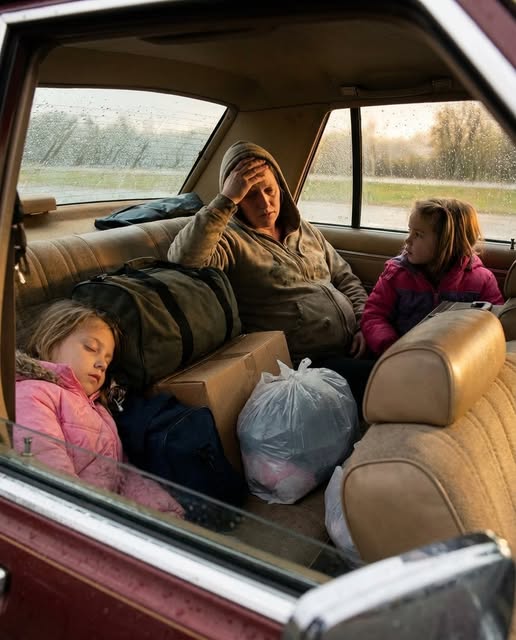
When I was 33 and pregnant with my fourth child, my life took an unexpected turn that I could never have anticipated. My husband and I were living with his parents while trying to save for our own home—a plan that seemed practical at the time, but slowly, the arrangement began to feel suffocating. We already had three wonderful daughters who filled our lives with joy, curiosity, and energy, yet my mother-in-law frequently made remarks that weighed heavily on me. She hinted that our family “needed a son to carry the family name,” a comment that initially I tried to dismiss as casual, even if uncomfortable. But as the months went on, the pressure only intensified. Every conversation seemed to circle back to whether I would finally provide a boy, and with each remark, I felt a growing sense of unease in the very home that was supposed to be a safe and loving environment for my family.
The tension became impossible to ignore. Even when adults attempted to mask their comments as jokes during dinner, my daughters sensed it, their innocent eyes picking up on the stress and uncertainty around them. The air in the house was thick with expectation, and I began to feel isolated, trapped between trying to maintain peace and advocating for my children’s emotional wellbeing. When I asked my husband to confront his mother and address the situation, he brushed off my concerns, claiming I was overreacting. That moment was a wake-up call: I realized that, despite being surrounded by family, I was navigating this situation alone. The home that should have been a sanctuary for my children felt increasingly like a place of conditional love and expectation.
The breaking point arrived gradually but undeniably. One day, a confrontation escalated into a larger argument, and I knew I could no longer allow my children to be subjected to the ongoing tension. I made the difficult decision to pack our bags and leave, unsure of exactly what the future held but resolute that we needed a healthier and safer environment. With the support of my parents and a few trusted family members, I began the painstaking process of rebuilding our lives. It wasn’t easy—there were nights of uncertainty, moments of doubt, and emotional exhaustion—but stepping away from the negativity gave me the strength and clarity to focus on what truly mattered: creating a home where my daughters could feel safe, loved, and free to be themselves.
Over time, change began to manifest in subtle but meaningful ways. Conversations with family members who had previously remained silent shifted toward understanding, and eventually, someone finally stepped forward to remind everyone involved that respect, kindness, and unconditional love mattered far more than outdated gender expectations. That gesture, small as it may have seemed, brought a sense of clarity and closure that allowed me to stop carrying the weight of constant worry. It reminded me, and hopefully others, that children deserve to grow up in environments where they are valued exactly as they are—not for conforming to societal or familial expectations, but for simply being themselves.
Looking back, the most meaningful outcome of this challenging chapter wasn’t whether our fourth child would be a boy or a girl—it was the courage I found to protect my children and to construct a future where they could feel loved, secure, and affirmed. The experience reinforced a fundamental truth: the health of a family isn’t measured by traditions, titles, or outdated ideals—it’s measured by the safety, support, and unconditional love that parents provide. By choosing to prioritize my daughters’ wellbeing, I discovered the resilience within myself and the importance of establishing a home where every child can thrive, unburdened by arbitrary expectations.