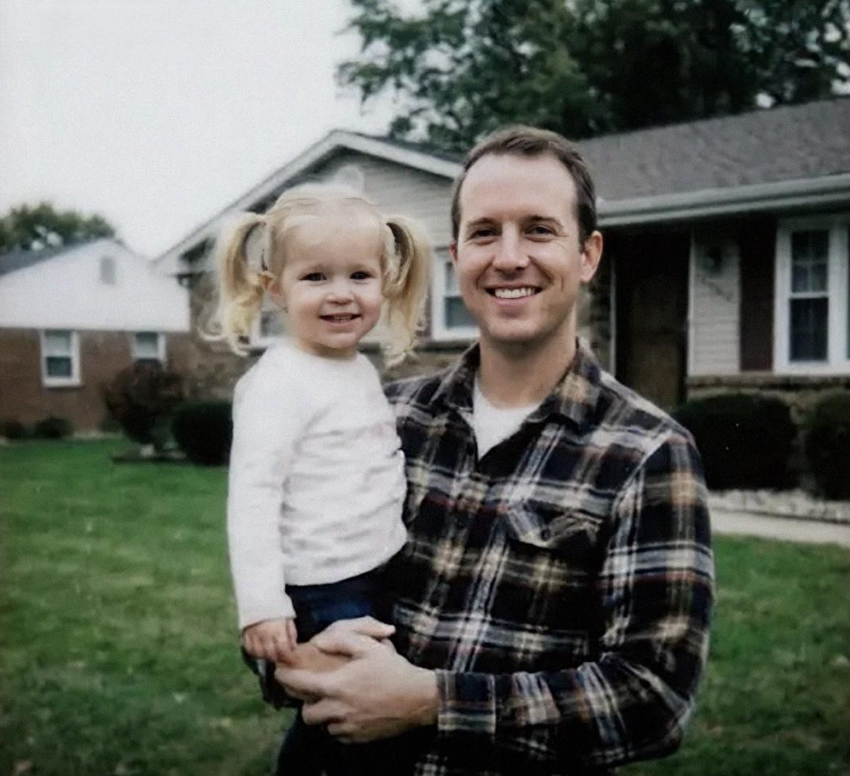
When my husband announced he wanted to sell the house my daughter inherited from her late father, I initially laughed, thinking he was joking. But he wasn’t joking. His plan was cold and simple: liquidate the only tangible memory Lily had of her dad so he could bankroll his adult son’s extravagant wedding. My first instinct was anger, but I paused, letting a strange calm settle over me. Instead of arguing immediately, I formulated a response he would never anticipate — one that ultimately dismantled his entire plan.
My name is Anna. I’m 46 years old, a widow for ten years, a mother to one daughter, and the guardian of a promise I made to a dying man — a promise etched into my soul and into the foundation of the home that had cradled our family for decades.
My first husband, David, battled cancer with quiet courage that still makes my throat tighten when I think about him. Even on days when he could barely lift his head, he’d smile at me with the kind of tenderness that made me feel stronger than I actually was. His voice, thin and cracking like fragile parchment, always tried to soothe, even when he was the one who needed comfort.
“We’ll get through this, Annie. We always do,” he whispered on the nights when pain seemed relentless.
But that night, despite his words, we didn’t.
Lily was five years old when David passed. Big brown eyes that mirrored his, messy ponytails that always seemed to escape into her face, and a little stuffed rabbit she never let go of. She didn’t understand death, only that her daddy wouldn’t be coming home again. On his final night, David’s hand was cold, his fingers fragile as birds’ bones as he held mine.
“Two promises,” he murmured, each word deliberate. “Take care of Lily. And take care of the house.”
He had prepared meticulously — the will, the trust, the paperwork outlining every detail of his wishes. The house was in Lily’s name, with me as trustee. No loopholes, no conditions, no compromises. It was hers. Her inheritance. Her father’s love made tangible in wood, brick, and memories.
After he passed, the house became sacred. Every corner, every creaky floorboard, every patch of sunlight on the living room rug carried a memory: Lily’s first steps, pancake Sundays in the kitchen, long summer evenings on the porch as storms rolled over the trees. It wasn’t just a home; it was a promise, a living reminder of love and family continuity.
Life gradually steadied. Grief softened into something bearable. Lily grew into a kind, artistic teenager who often sat by the window sketching quietly, a mirror of her father’s patience and gentleness. Sometimes, I could swear I saw David’s shadow lingering over her shoulder, silently approving her growing into the woman he had hoped she would become.
Then came Greg.
At first, he seemed like the answer to a lonely widow’s prayers — charming, considerate, always ready with a laugh to lighten heavy moments. He had a son, Eric, in his late twenties, and for the early months, he treated Lily with polite distance. He wasn’t cruel, but there was a notable lack of warmth. I convinced myself that blending families took time, that bonds formed slowly, and that patience was the key.
We married after three years of dating. That’s when the cracks began to appear.
Greg’s comments started small, subtle. He’d remark on the “burdensome” upkeep of the house, suggest downsizing, claim it was “too big for just the three of us.” At first, I dismissed them as passing frustrations, but the pattern grew. Every casual remark felt like a seed planted carefully to grow resentment toward the one constant in my daughter’s life: her father’s house.
Then Eric got engaged.
Suddenly, Greg transformed. He became animated, even giddy, obsessed with his son’s upcoming wedding. Lavish venue, imported flowers, a designer gown, an expensive band — the works. And he didn’t just suggest helping financially; he assumed it, with me somehow complicit.
One evening, as I sorted bills and tried to ignore the tightening knot in my chest, Greg cleared his throat.
“Anna, we need to talk about Eric’s wedding.”
I already knew what was coming.
“We’re short on funds,” he said. “Eric and his fiancée have big dreams. I want to help.”
“How much?” I asked, bracing myself.
“About $120,000.”
My chest went cold. “We don’t have that.”
Greg’s next words nearly froze me in place.
“Actually… we do. We just need to sell this house.”
I blinked. “This house?”
“Yes. Lily’s almost grown. She doesn’t need it now. We could move somewhere smaller, fund the wedding, and still have plenty left over,” he said, as if it were the most natural idea in the world.
“This house belongs to Lily,” I said. “Her father left it to her.”
Greg laughed. “Anna, she’s fourteen. She doesn’t even understand what ownership means. You decide. You’re her mother.”
My hands gripped the edge of the table. “This is her father’s legacy.”
“It’s a house,” he snapped. “You’re being sentimental. Eric is starting his life. Don’t you want to support him?”
“Not at the expense of my daughter’s inheritance.”
Greg’s temper flared. “You twist everything! I’m talking about helping family.”
“Lily is my family,” I said. “Eric isn’t.”
Silence fell, sharp and loaded.
Finally, I allowed a calm I hadn’t felt in years. “All right. If selling the house is so important to you, we’ll talk about it. But there’s one condition.”
Greg raised his eyebrows, smug, thinking he had won. “What condition?”
“Tomorrow morning, you and Eric will sit at this table and make a list of every meaningful thing you’ve done for Lily — every reason you think you deserve to take her inheritance.”
He scoffed. “Ridiculous.”
“Then it should be easy,” I said.
All night, Greg fretted. He paced, called Eric, tried to justify himself to the shadowed walls of our home. By morning, both men sat stiffly at the kitchen table, as Lily got ready for school, blissfully unaware of the betrayal she almost suffered.
“Let’s hear it,” I said.
Eric mumbled one thing. Greg added another — both trivial, inconsequential, and painfully insufficient.
“This is the legacy of her father,” I said. “And you can’t name a single meaningful thing you’ve ever done for her.”
At that moment, a firm knock came at the door. Greg frowned.
“My late husband’s lawyer,” I said, letting Mr. Clarke enter. His presence was quiet but firm.
“According to David’s will, this house is in an irrevocable trust. It belongs solely to Lily. Anna is trustee. Neither of you have any authority to sell or transfer it,” he said, locking eyes on Greg.
The room went silent. Greg’s face drained. Eric bolted. Greg fumed, unable to comprehend his failure. Two days later, he left, claiming he “needed space,” and moved in with Eric.
The house exhaled a quiet, profound peace. Lily and I returned to our rhythm, uninterrupted by tension or threats. On a warm evening, as we watched the sun dip behind the trees, she rested her head on my shoulder.
“I love this house,” she whispered. “It feels like Dad is still here.”
“He is,” I told her. “And he always will be.”
I kept my promise — to the man I loved, to the daughter we raised together, and to the future he entrusted me with. Every corner of that house carries him. Every wall, every creak, every sunlight-dappled morning is proof that love can endure, even when selfishness knocks at the door.
And sometimes, standing in that living room with Lily at my side, I can still hear David’s voice in the quiet: “We always do.”