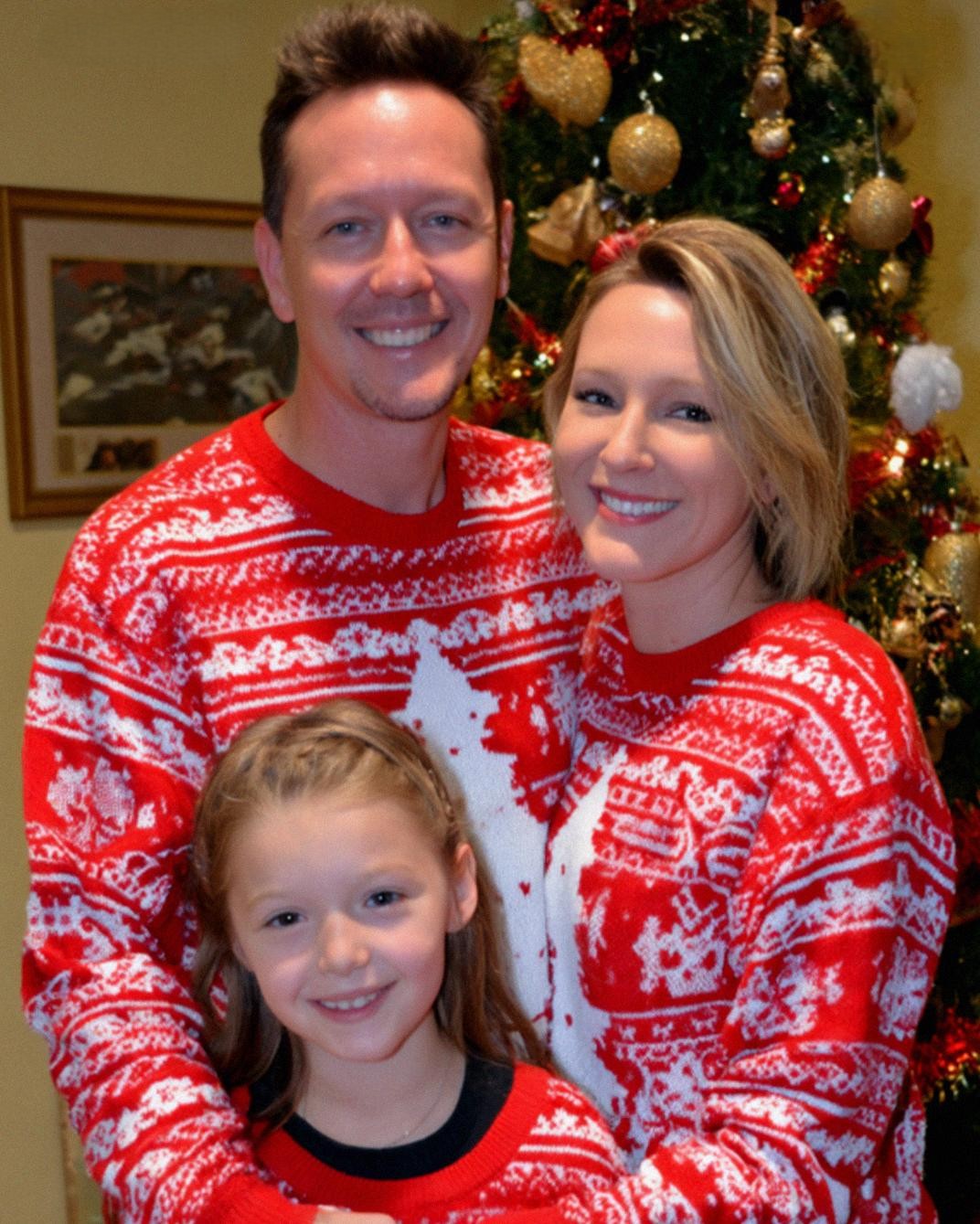
Christmas morning had always followed the same comforting rhythm in our house. Soft music hummed in the background. Cinnamon rolls baked in the oven, filling the air with sweetness. Wrapping paper littered the living room floor, gifts peeked out from under the tree, and mugs of steaming cocoa waited on the table. It was predictable, in the best sense—safe, familiar. I had convinced myself this was what happiness looked like.
I was wrong.
My husband, Greg, and I had been together twelve years. We weren’t dramatic people. Our lives were built on quiet routines: school drop-offs, shared mugs of coffee, Sunday morning breakfasts, evenings that needed no filling. We had one daughter, Lila, who was eleven and still believed in Santa—not because she was naïve, but because she loved the magic. Every year, she left cookies and a handwritten note for him by the tree. This year, her note read, “Thank you for trying so hard.” I cried when I read it.
A week before Christmas, a small package arrived. Cream-colored wrapping paper, thick and elegant, the kind you feel guilty tearing. No return address. Just Greg’s name written in graceful, unfamiliar handwriting.
I handed it to him casually, thinking little of it. The moment his eyes landed on the name, he froze. His thumb traced the letters as if they burned.
“Callie,” he whispered.
That name hadn’t been spoken in our house in over a decade.
Callie. His first love. The woman he described as the one who taught him heartbreak before he understood real love. He’d told me about her once, early in our relationship, on a warm night when honesty felt easy. They’d broken up after college—no explanation, no closure. He said it nearly broke him—but meeting me later showed him what commitment actually meant.
He slid the package under the tree without another word.
I didn’t push. Lila’s excitement was too fragile, too precious. I told myself it was nothing.
Christmas morning arrived, wrapped in lights and laughter. Lila insisted on matching red flannel pajamas. Greg played along, smiling for her sake. We opened gifts slowly, savoring each ritual moment. Everything felt normal—until Greg reached for that box.
His hands shook. Violently.
When he opened it, color drained from his face. Tears welled instantly, spilling down his cheeks before he could stop them.
“I have to go,” he whispered.
Lila looked confused. “Dad?”
Greg knelt, cupped her face, kissed her forehead. “I love you more than anything. I’ll be back. I promise.”
Then he rushed out.
I followed him into the bedroom, panic rising. He pulled on clothes, movements frantic.
“Greg, stop. Talk to me. What was in that box?”
“I can’t,” he said. “Not yet.”
“You don’t get to leave on Christmas without explaining.”
He finally looked at me, pale, broken.
“I’m sorry,” he said. And then he left.
The door closed softly, somehow louder than a slam.
Lila and I sat in silence. The cinnamon rolls burned. The lights blinked as if nothing was wrong. I told her Daddy had an emergency. She nodded, but something in her went quiet.
Greg didn’t come home until nearly nine that night.
Snow clung to his coat. He held the box out to me with trembling hands.
“Are you ready to know?” he asked.
Inside was a photograph. A woman I recognized immediately—Callie. Older, tired, regret etched into her expression. Beside her stood a teenage girl, fifteen or sixteen. Same chestnut hair as Greg. Same nose. Same eyes.
On the back, a note:
“This is your daughter. We’ll be at the café from noon to two. If you want to meet her, this is your only chance.”
My hands shook.
Her name was Audrey.
Greg told me everything. How Callie discovered she was pregnant after they broke up. How she convinced herself it was better for her wealthy fiancé to believe he was the father. How the truth stayed hidden until Audrey demanded a DNA test “just for fun.”
That truth shattered our quiet world.
Greg took a DNA test that same day. So did Audrey. When the results returned, there was no doubt. Greg had a daughter.
Callie’s marriage collapsed immediately, and she compounded the chaos by sending papers demanding child support for the years Greg hadn’t known Audrey existed.
Greg was furious—but focused. “I won’t let this hurt Audrey,” he said. “She didn’t ask for any of this.”
He began meeting Audrey regularly. Coffee shops. Museums. Long walks. Slowly building something fragile, something new.
The first time she came to our house, Lila hid behind the curtains. Then, shyly, she walked up, handed Audrey a plate of cookies, and said, “You look like my dad.”
Audrey smiled. That was the beginning.
They built a gingerbread house together that afternoon.
That night, Greg asked me if I was angry.
“No,” I said honestly. “You didn’t choose this. But you’re choosing what comes next.”
That Christmas rewrote our lives.
Not neatly. Not gently.
But it gave us Audrey.
And somehow, love found a way to expand instead of break.
Sometimes, life hands you the truth wrapped in cream-colored paper. And sometimes, if you’re brave enough, you open it—and discover your heart is bigger than you ever imagined.