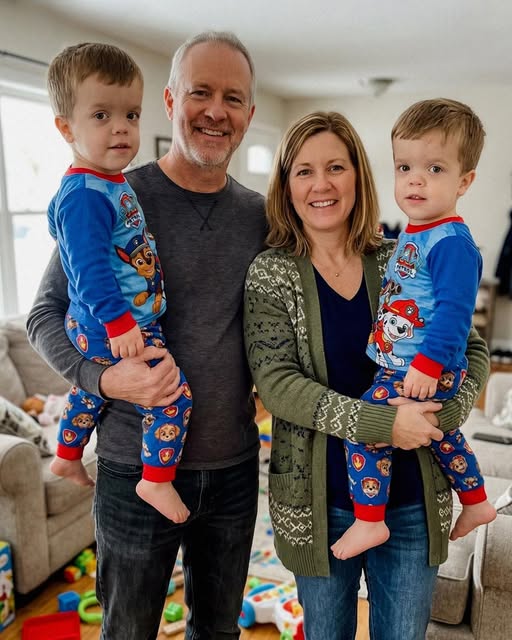
For ten years, my husband Joshua and I lived in a home defined by its silence. It wasn’t the kind of silence that felt peaceful at first—it was the kind that slowly settled into the walls after years of disappointment. We had gone through the painful journey of infertility together, and eventually reached a quiet, reluctant acceptance. Life became structured around work, routines, and distractions. I buried myself in my demanding executive career, while Joshua found comfort in fishing, spending long hours by the water as if searching for something he couldn’t name. We functioned as a team of two in a world that constantly reminded us of the family we never had.
Or at least, that’s what I believed.
Everything changed when Joshua suddenly began to unravel that acceptance. Almost overnight, he became fixated on the idea of having a child. He would stop at playgrounds and watch families with an intensity that unsettled me, his expression shifting into something almost desperate. At home, he began bringing adoption brochures to the breakfast table, pushing them toward me again and again, insisting that we should try once more. His persistence grew stronger each day. Eventually, he convinced me to leave my high-pressure job, arguing that being home would strengthen our chances of being approved and preparing me for motherhood. I was hesitant—deep down, I was afraid of reopening a wound that had only just begun to scar—but I loved him. And I wanted to believe him when he said our “too-quiet” life was finally ready to change.
When Joshua discovered the profile of four-year-old twin boys, Matthew and William, something in him shifted completely. He became relentless. He spoke about them as if they were already ours, already waiting for us, while I saw something different—two frightened children who had already experienced more loss than they should have at that age. Still, Joshua’s urgency carried us forward at a rapid pace. Within weeks, we were approved, prepared, and standing at the threshold of becoming parents.
The day the boys arrived, our home transformed. Suddenly there were LEGO towers on the floor, the smell of pancakes in the kitchen, and the cautious laughter of children learning whether they were safe. But trust didn’t come easily. Matthew and William often referred to me as “Miss Hanna,” as if I were still part of a temporary world. Joshua, on the other hand, seemed perfect at first—kneeling on the floor with them, playing dinosaurs, promising them permanence with a warmth that felt completely genuine.
But just three weeks into our new life, something began to break.
He started disappearing.
Late nights at the office became routine. Phone calls were taken behind closed doors. He avoided my gaze at dinner, and by the time the boys were asleep, he would retreat into his office as if our home no longer included him. I was left alone to manage everything—the tantrums, the spilled juice, the bedtime fears, and the heartbreaking moments when William would cry for his stuffed bear and ask if I would still be there in the morning. I felt as though I was drowning in a life Joshua had built, while he slowly drifted away from it.
The moment everything shattered came on a Tuesday afternoon.
The boys were napping. The house was quiet. I was walking down the hallway when I heard Joshua’s voice coming from behind his office door. He was crying. At first, I thought it was work-related stress, something I could help him carry. But then I heard the words that changed everything.
“I can’t keep lying to her,” he said. “She thinks I wanted a family with her, but I didn’t adopt the boys for that. I can’t let her figure it out after I’m gone.”
My body went cold.
Then I heard something worse.
“How long did you say, Doc? A year? That’s all I have left?”
In that moment, the truth revealed itself in fragments that barely made sense at first. Joshua wasn’t planning to leave me for someone else. He was dying.
He had been diagnosed with terminal lymphoma—and instead of telling me, he had built an entire future around his absence. He pushed for adoption not out of shared hope, but out of preparation for his death. He had convinced me to give up my career, my independence, my identity, all so I would not be alone when he was gone. And in doing so, he had brought two innocent children into our lives as part of a plan I never agreed to—turning them into emotional placeholders for a future he had already decided I would live without him.
The grief I felt in that moment was not simple sadness. It was rage layered over heartbreak, shock, and betrayal. He had made life-altering decisions for me, without me, robbing me of the chance to stand beside him in truth—or even to understand what we were facing together.
I couldn’t confront him. Not yet. Instead, I packed a bag for myself and the boys and went to my sister Caroline’s home. For two days, I existed in a strange emotional limbo, replaying everything I had heard, trying to make sense of it. Eventually, I accessed his laptop and found the medical records he had hidden.
Stage IV lymphoma.
But there was more. A note from his doctor, Dr. Samson, referencing an experimental clinical trial—one that offered hope, but required funding and carried significant risk. It became clear why Joshua had chosen secrecy: he believed he was already out of options.
Looking at Matthew and William playing quietly on my sister’s floor, something shifted inside me. The grief was still there, but it was joined by determination. I called the doctor and insisted Joshua be placed in the trial. I used my savings, my severance, everything I had. I refused to accept that his story had to end the way he had silently written it.
When I returned home, Joshua looked hollow—like a man already halfway gone.
I didn’t soften.
I told him I knew everything. I told him I had heard him. And I told him exactly what his silence had cost us.
“You let me quit my job,” I said. “You let me build a life with these boys. You let me believe this was our dream—but you were already planning my life without you.”
He broke down, insisting he was trying to protect me. But I told him the truth he didn’t want to hear.
“That wasn’t protection,” I said. “That was control disguised as love.”
I told him the boys needed a father who was present—not a man already rehearsing his exit. And if he wanted to stay in this family, he had to stop living in secrecy and start fighting for life in the open.
The months that followed were painful in ways I never expected.
We told our families. The truth shattered them. There was anger, disbelief, heartbreak. Joshua’s sister was furious at his secrecy. My mother was devastated that I had been left in the dark. We drained our savings and committed everything to the clinical trial.
Treatment was brutal. I watched Joshua weaken physically as chemotherapy and experimental procedures took their toll. I shaved his head while the boys laughed nearby, unaware of the gravity behind the moment. There were nights filled with silence and tears, nights of fevered shaking, nights where I questioned everything. But there were also moments of honesty—raw, unfiltered, real.
For the first time in our marriage, there were no secrets between us.
Slowly, almost miraculously, the treatment began to work.
Then one spring morning, the doctor called.
Remission.
I collapsed on the kitchen floor and cried—not just for relief, but for everything we had almost lost.
Today, our house is no longer quiet. It is loud in the best possible way. Toys are everywhere, voices overlap, and life fills every corner of the space we once thought was empty. Matthew and William now call us Mom and Dad without hesitation.
Joshua is still healing—not just physically, but emotionally. He carries the weight of a man who understands that his attempt to protect us nearly destroyed us instead. He often says I am the strongest person he knows, but I don’t see it that way.
Strength, to me, isn’t silence.
It’s truth.
Joshua tried to build me a future without pain by hiding the truth. But in the end, it was honesty—even when it hurt—that saved us. And now, our family isn’t held together by fear or secrecy, but by something far stronger:
reality, shared and lived together.