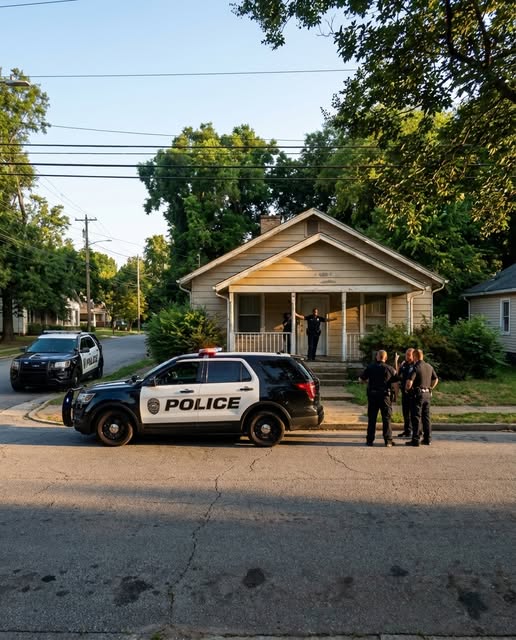
When I moved into my grandmother’s house after she passed away, I thought I knew exactly what I was stepping into. I expected long, quiet days filled with sorting through old photographs, folding clothes that still carried her scent, and sitting in rooms where time seemed to move more slowly. I imagined a kind of peaceful sadness—the kind that comes with remembering someone who meant everything to you.
But instead of peace, I found something else entirely.
It started in her bedroom, on an ordinary afternoon when sunlight filtered through the curtains just the way it always had. I was going through her dresser, carefully opening each drawer, deciding what to keep, what to donate, and what I wasn’t ready to let go of yet. That’s when I noticed something unusual.
Tucked beneath a stack of neatly folded sweaters was a small bundle of envelopes.
There were five of them.
Each one was sealed. Each one had a name written on the front in my grandmother’s careful, steady handwriting. And beneath them, placed almost like an afterthought but clearly meant to be found, was a single note.
It read:
“After I’m gone, deliver these.”
I remember sitting there for a long moment, holding that note in my hands, feeling something shift inside me. It wasn’t just curiosity—it was a sense of responsibility. My grandmother had never been a dramatic person. She didn’t leave things to chance, and she certainly didn’t make requests like this without a reason.
Still, I hesitated.
Part of me wondered if I should open them first. Another part of me felt like that would be a betrayal. In the end, I decided to respect her wishes.
I would deliver them.
I had no idea that this simple decision would lead to something far bigger than I could have imagined—something that would bring police to my door less than an hour later.
At first glance, the neighborhood looked exactly as I remembered it from years ago. Quiet. Orderly. Lawns trimmed, fences painted, nothing out of place. It was the kind of place where people waved politely but kept to themselves.
But as I stepped outside with the envelopes in hand, something felt… different.
Subtle, but unmistakable.
Curtains shifted slightly as I walked by. A door down the street closed a little too quickly. The air carried a kind of tension I couldn’t quite explain, like something unspoken was hanging just beneath the surface.
I told myself I was imagining it.
Grief does strange things, I thought.
Still, I couldn’t shake the feeling.
The first envelope had a name I recognized—one of my grandmother’s neighbors. I walked up the path to their house, my footsteps sounding louder than usual against the pavement. When I knocked, there was a pause before the door opened.
The person standing there looked surprised to see me.
I introduced myself, explained that I had moved into my grandmother’s house, and handed over the envelope.
The reaction was immediate.
Their face changed—not dramatically, but enough that I noticed. The kind of shift you only see when someone recognizes something they weren’t expecting to see again.
“Where did you get this?” they asked.
“My grandmother,” I said. “She asked me to deliver it.”
They hesitated, then took the envelope with unsteady hands.
“Thank you,” they said, but their voice didn’t match the words.
I walked away with a strange feeling in my chest, like I had just stepped into something I didn’t fully understand.
Less than an hour later, there was a knock on my door.
This time, it wasn’t a neighbor.
It was the police.
Two officers stood on the porch, their expressions calm but serious. They asked if they could come in, and before I even fully processed what was happening, I stepped aside and let them enter.
They asked about the envelope.
Who had I given it to? Had I opened it? Did I know what was inside?
I shook my head, trying to keep up.
“No,” I said. “I just delivered it. It was my grandmother’s.”
They exchanged a look.
That was the moment I realized this wasn’t something small. These weren’t just letters filled with memories or kind words.
There was something else in them.
Something important.
After they left, I sat at the kitchen table with the remaining envelopes spread out in front of me. My hands felt colder than they should have. The house, which had once felt familiar and comforting, now felt different—like it was holding onto secrets I had only just begun to uncover.
This time, I didn’t hesitate.
I carefully opened one of the envelopes.
Inside, there were multiple sheets of paper. Not a letter in the traditional sense, but something more structured. Detailed. Intentional.
There were notes. Dates. Descriptions of events.
It read less like a message and more like a record.
A record of things that had been happening in the neighborhood over time—incidents, patterns, observations. Everything written in my grandmother’s precise handwriting, as if she had been documenting it all carefully, piece by piece.
I opened another envelope.
More of the same.
Different names. Different details. But the same level of care, the same sense that none of this had been written casually.
As I read through them, a clearer picture began to form.
There had been tensions in this neighborhood—ongoing issues that no one had fully addressed. Situations that may have been dismissed or overlooked. And through it all, my grandmother had been paying attention.
Watching.
Recording.
She hadn’t ignored what was happening. She hadn’t pretended everything was fine.
She had chosen to document it.
Quietly.
Thoroughly.
Patiently.
In the days that followed, I worked with the authorities to hand over everything she had left behind. Piece by piece, her notes helped fill in gaps, connect details, and bring clarity to situations that had remained unresolved for far too long.
What struck me the most wasn’t just what she had written.
It was how she had done it.
She never made a scene. Never demanded attention. Never forced anyone to listen.
Instead, she prepared.
She made sure that when the time came—when she was no longer there to speak—her voice would still be heard.
And it was.
A few days later, I stood on her porch in the early evening, looking out at the same street that had once felt so ordinary.
It still looked the same.
But it didn’t feel the same.
It felt quieter—but not in an empty way. In a settled way. Like something that had been hidden for a long time had finally been brought into the open.
And in that moment, I understood something I hadn’t before.
My grandmother hadn’t just left me a house.
She had left me something far more important.
The courage to face what others choose to ignore.