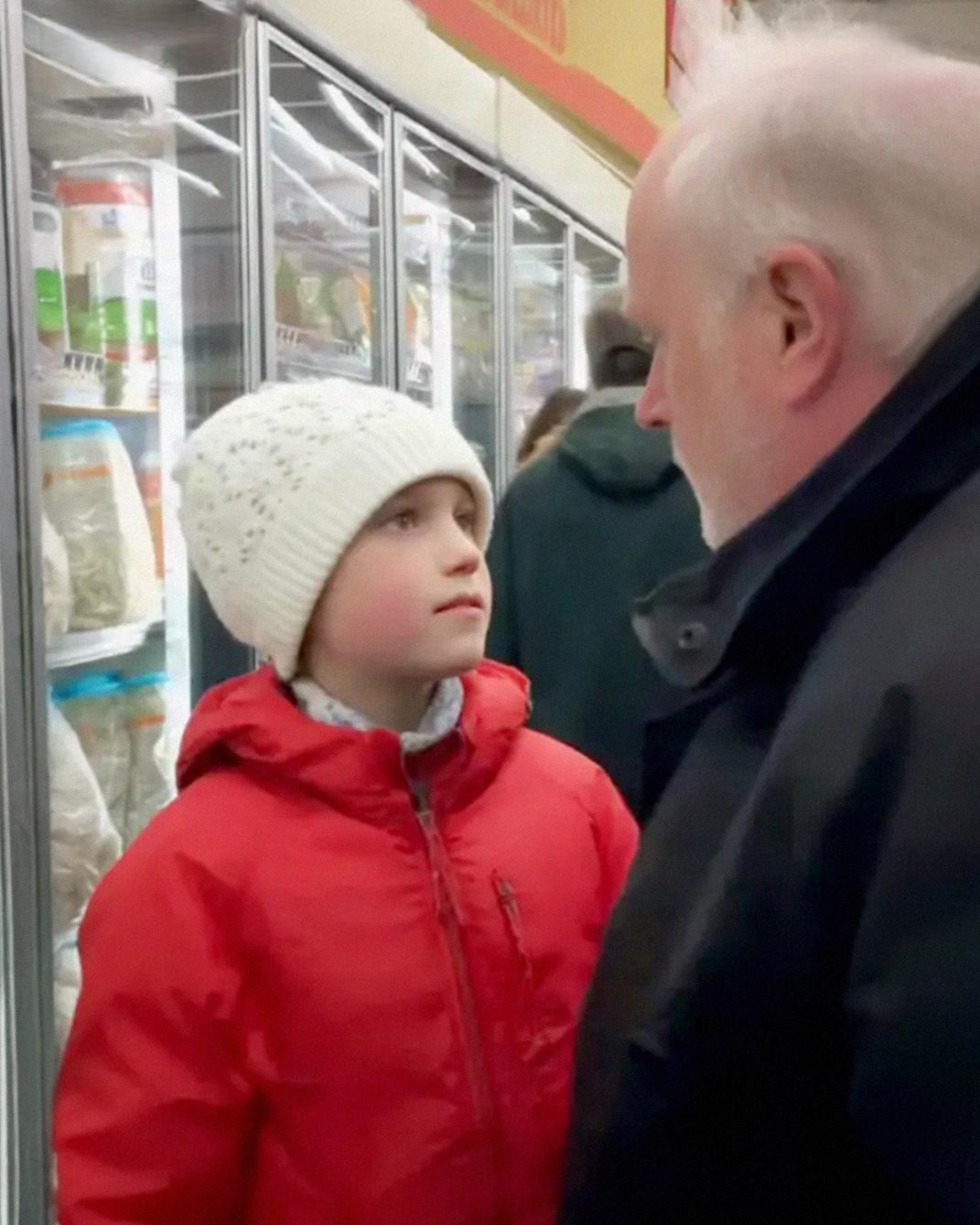
My father cut me off the day I chose to become a mother to a child he insisted “wasn’t truly mine.” For four long years, there was nothing—no phone calls, no holidays together, no birthday wishes. Then, one completely ordinary day in a grocery store, my son said something so pure and so honest that it brought my father to tears in front of total strangers.
The first time my father met Thomas, he turned the meeting into an interrogation. He sat stiffly at the head of the table, hands clasped, eyes cold and calculating. Thomas answered every question patiently—about work, his past, his future. I sat there tense and uncomfortable, feeling every silent judgment my father was making.
Caleb sat next to Thomas. He was six then, his feet swinging under the chair. He didn’t speak much. He watched closely, absorbing everything like he was trying to understand a new world. My father noticed right away.
“He doesn’t say much,” he remarked, not with curiosity, but doubt.
“He’s a good listener,” I said. “He pays attention.”
My father made a noncommittal sound, clearly unconvinced.
When I went into the kitchen to clear the dishes, he followed me. I already knew what he was about to say.
“So,” he began, leaning on the counter, “where is the boy’s mother?”
“She left when he was very young,” I answered calmly.
“Left?” he repeated, raising an eyebrow. “And his father raised him alone?”
“Yes.”
He shook his head. “That’s not normal.”
My jaw tightened. “She passed away a few years ago. A car accident.”
Something in his expression hardened, as though that detail only reinforced what he already believed.
“So now you’re raising another man’s child,” he said sharply. “You could have more. You should be having your own children, not taking in someone else’s.”
That was the moment I stopped trying to justify my life to him.
Thomas proposed soon after. We married quietly, just the way we wanted. My father disapproved of that too—the dress was too simple, the venue too modest. To him, every choice I made proved I was settling.
But I wasn’t settling. I was building something genuine.
Our family grew naturally. I never tried to replace Caleb’s mother. I simply showed up. I made lunches, helped with schoolwork, sat beside him during sleepless nights when fear crept in. One evening, after I tucked him into bed, he asked me something that changed everything.
“Can I call you Mom?”
I said yes, crying as I did.
A year later, I made it official. I adopted him in a small courthouse ceremony that meant more to me than any wedding ever could. When I told my father, his disappointment turned cruel.
“He’s not your child,” he said. “You’re wasting your life.”
“He is my child,” I replied. “In every way that counts.”
“There are boundaries,” he said flatly. “Blood is one of them. Don’t contact me again until you come to your senses.”
And just like that, he was gone.
Four years went by. Caleb grew taller and stronger, more confident. We bought a home. Built traditions. Shared laughter. Lived our lives. My father saw none of it.
Then one afternoon, while shopping for groceries, I saw him.
He looked older—smaller somehow. His hair was completely white. But his eyes were unchanged. Still sharp. Still judging.
I froze.
Caleb noticed. “That’s your dad, isn’t it?” he asked softly.
I nodded.
“Why don’t you talk anymore?”
“He doesn’t accept our family,” I said carefully.
Caleb thought for a moment. Then, before I could stop him, he walked straight toward my father.
My heart sank.
He stood in front of him and looked up. “Julia is my mom,” he said simply.
My father scoffed. “No, she isn’t. Blood matters.”
I stepped forward, ready to pull Caleb away, but he wasn’t done.
“She’s my mom because she chose me,” he said. “She makes my lunches. She stays with me when I’m scared. She never leaves.”
My father tried to speak, but Caleb continued.
“You’re her father, right?” he asked.
“Yes,” my father answered stiffly.
“Then you’re supposed to choose her too,” Caleb said. “I don’t get how someone who stopped choosing their own child gets to decide who a real parent is.”
That’s when my father broke.
His shoulders fell. His face crumpled. Tears streamed down his cheeks right there among the fruits and vegetables.
“I never thought about it like that,” he whispered.
I stepped forward. “You don’t get to judge my motherhood,” I said. “If you want a place in your grandson’s life, you’ll have to learn what it truly means to choose someone.”
Then I turned and walked away.
Behind us, my father called my name—quietly, uncertainly.
I didn’t turn back.
Because those four years of silence taught me something important: being chosen is stronger than blood. And choosing someone—fully, intentionally—is the boldest form of love there is.
And I had already made my choice.