Recovery from a C-section is not a “vacation,” though my sister-in-law, Becca, clearly seemed to treat it like some kind of all-inclusive concierge stay. By the third day after returning home with my newborn son, Spencer, I had learned the reality of one-handed survival. I could hold a warm bottle, push a laundry basket with my foot down the hallway, and comfort a crying baby while my surgical staples still pulled painfully at my abdomen. What I hadn’t learned, however, was how to say “no” to the chaotic storm that is my husband’s sister.
It was Easter weekend when the front door suddenly opened and Becca walked in uninvited, bringing three screaming children and her husband, Matthew, who looked like he would rather be anywhere else. They didn’t ask if we were ready for visitors; they simply announced that hotels were “too expensive” and took over our guest room. My husband, Thomas, looked at me with that familiar mix of guilt and helplessness, but I was too exhausted, too sore, and too focused on my newborn to argue. That silence cost me more than I realized.
The disruption was immediate. Within hours, juice was spilled into my sofa, and Matthew was complaining about our coffee. Becca sat comfortably in my favorite chair, watching me clean up after her children, and even had the nerve to tell me I was letting myself go and that I needed to “get back into a routine.” I was recovering from major surgery, bleeding, and barely sleeping—yet she treated my condition like an inconvenience to her holiday.
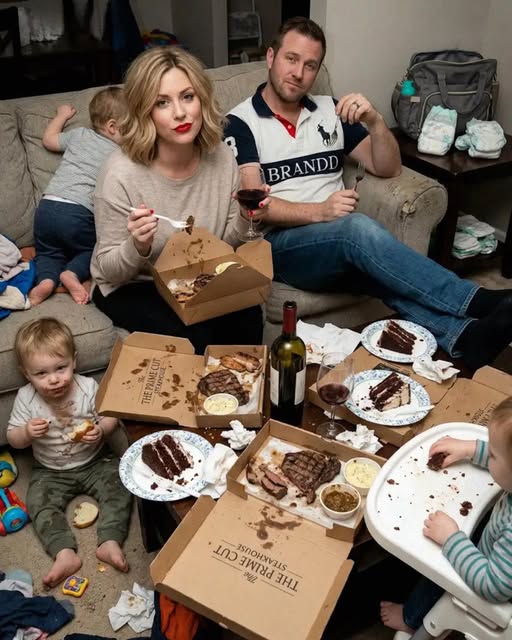
The breaking point came when my phone lit up with a bank notification: Steakhouse Lumiere, $2,000. My stomach dropped. That money wasn’t extra—it was my son’s future: his crib, stroller, and essentials. I confronted Becca in the kitchen, where she casually admitted she had placed the order, saying “family deserves nice things.” When my husband demanded answers, she dismissed us as overreacting.
That was the moment everything shifted. I didn’t shout. I didn’t argue. I simply stepped away, went into the nursery, and called my bank. I reported the charge as fraud. Then I noticed another transaction—first-class airline upgrades for their return flight. I reported those as well, froze the card, and confirmed the restaurant order so the food would still arrive.
Easter dinner became an uncomfortable display of excess. Expensive steaks and gourmet sides were served while Becca acted as if she were entitled to it all. I stayed quiet, cleaning up while she continued to treat the situation like a vacation, unaware that consequences were already in motion.
On the day of their departure, I drove them to the airport. Becca was smug, confident, and completely unaware of what was waiting for her. At check-in, everything unraveled. The airline flagged the upgraded tickets as fraudulent and voided them. Suddenly, their luxury travel plans were gone, replaced with the reality of having to pay full price for standard seats—or risk missing the flight entirely.
I didn’t stay to watch the fallout. I simply told Becca there was a “surprise” waiting for her and left them there to deal with the consequences. Later, I learned she was scrambling for help, while Matthew began to realize the truth about what had happened.
When my mother-in-law called to accuse me of handling things too harshly, I told her I was done enabling behavior that crossed every boundary. My priority was my child, not family drama disguised as entitlement.
A week later, the situation was resolved. The fraudulent charge was reversed, and the money was returned. Spencer now has his crib assembled, his stroller ready by the door, and our home has returned to peace.
Becca wanted an “elite experience,” and in the end, she got one—just not the kind she expected.