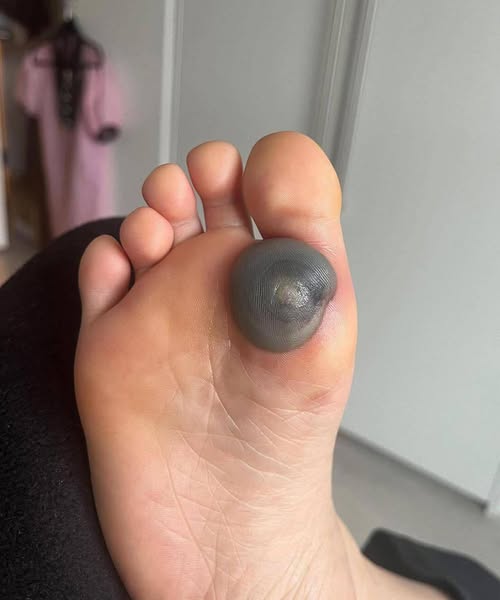
Seeing a sudden, dark blister filled with blood appear on your child’s skin can be deeply unsettling. One minute their skin looks perfectly normal, and the next, there’s a swollen, purplish-black bubble that looks like a storm trapped beneath the surface. It’s natural for a parent to feel alarmed. You may try to reassure yourself that it’s “just a blister,” yet its size, color, and tense appearance make it feel far more serious. In that moment, you’re torn between wanting to make it go away and worrying that touching it could cause harm.
To respond appropriately, it helps to understand what a blood blister actually is. Medically, it’s known as a subepidermal hematoma. Unlike ordinary blisters that contain clear fluid, blood blisters form when a stronger impact damages tiny blood vessels beneath the skin without breaking the skin itself. Blood leaks into that space, creating a raised pocket under pressure. In simple terms, it’s a bruise that has risen to the surface but remains sealed beneath intact skin.
These blisters usually result from physical trauma. Common causes include fingers caught in doors, toes squeezed by tight shoes, or hands exposed to repeated friction from tools or sports gear. For children, it can happen in an instant—falling at the playground or gripping bicycle handlebars too tightly. Because the skin isn’t broken, the body seals the blood inside, protecting the area from bacteria while healing begins.
Blood blisters inside the mouth often cause even more concern. Known as angina bullosa haemorrhagica, these can form on the tongue, cheeks, or roof of the mouth. They’re commonly triggered by accidental biting, irritation from dental devices, or eating very hot or hard foods. Though they look dramatic against the soft tissue of the mouth, they are usually harmless and caused by minor trauma.
The most important rule when dealing with a blood blister—especially in children—is to leave it alone. Popping it may seem like a quick solution, but it greatly increases the risk of infection. The skin covering the blister acts as the body’s best natural dressing, protecting the sensitive tissue underneath from bacteria. Breaking that barrier turns a protected injury into an open wound.
Instead, care should focus on cleanliness and protection. Gently wash the area with mild soap and water, then pat it dry. If the blister is in a spot that rubs easily, cover it loosely with a breathable bandage or a padded dressing designed to reduce pressure. Over the next one to two weeks, the body will gradually absorb the trapped blood. The blister’s color will darken, then fade, and eventually the outer skin will peel away, revealing healed tissue underneath.
While most blood blisters are harmless, patterns should never be ignored. If they start appearing frequently without clear injury, they may be a sign of an underlying issue. In people with conditions such as diabetes, healing can be impaired, turning a simple blister into a serious problem. Circulatory issues or blood-clotting disorders can also cause blood vessels to rupture more easily than normal.
There are warning signs that require prompt attention. Increased warmth, red streaks spreading from the blister, or fluid turning yellow or green suggest infection. Severe, worsening pain or the presence of fever can indicate that the body is struggling to control inflammation or infection.
If a child wakes up with a single blood blister on a hand or foot, it’s often the result of unnoticed minor trauma from the previous day. However, multiple blisters, clusters of purple spots (petechiae), or unexplained bruising elsewhere on the body should prompt an immediate visit to a pediatrician. This isn’t being overly cautious—it’s listening to the body’s signals.
Doctors can perform basic tests to rule out clotting or platelet disorders and may safely drain a blister if it becomes too large or is at risk of rupturing on its own.
In most cases, the frightening “dark spot” is actually evidence of the body’s remarkable ability to isolate and heal an injury. With gentle care and patience, it resolves on its own. More importantly, it serves as a reminder to stay observant. Our skin reflects our internal health, and changes on its surface can carry important messages.
If the blister heals normally, it becomes nothing more than a brief scare. If it lingers or keeps returning, it may be an early warning worth paying attention to. Either way, that dark bubble is a signal—to protect, to observe, and to respect the fragile systems that keep the body functioning as it should.