For two years, I thought I had already survived the deepest pain a parent could know. I was mistaken. Grief is not a single moment—it’s a long hallway lined with doors you assume will stay closed. On Christmas Eve, one quiet sentence from my granddaughter reopened everything I had fought to keep sealed, and the truth it revealed felt so unreal that the ground seemed to shift beneath me.
I am sixty-seven years old, an age when most men picture slowing down, not relearning how to make school lunches or sitting beside a child’s bed to calm midnight fears. Yet that has been my life for the past two years. My granddaughter, Willa, has lived with me since her mother—my daughter, Nora—died. She is six now: curious, bright, and unfiltered in the way only children can be. Some days she lives in glitter and imagination. Other days, she asks where heaven is and whether her mom can still see her.
Nora was my only child. I raised her with my wife, Carolyn, who died just a year after Willa was born. Breast cancer doesn’t wait for families to prepare. After Carolyn passed, Nora and I became each other’s support system, bonded by shared loss. She was a single mother, left before the ultrasound photo had even dried, trying to balance work, motherhood, and a constant sense of exhaustion. I helped however I could—watching Willa, cooking meals, learning to braid hair from late-night videos—because that’s what you do for family.
Then, four days before Christmas two years ago, everything shattered. A drunk driver. A green light ignored. Nora was declared dead at the scene. I remember standing in a hardware store, holding stocking stuffers, while my world collapsed in slow motion. The funeral was closed-casket. They said it was better that way. I buried my daughter and brought her child home.
Since then, Willa and I survived through careful routines—school mornings, bedtime stories, mugs of hot cocoa. Some nights she cried softly against my chest. Other nights she asked questions I could only answer with gentle half-truths. “Is Mommy still in heaven?” I would say yes, because honesty without mercy can be cruel to a child already broken by loss.
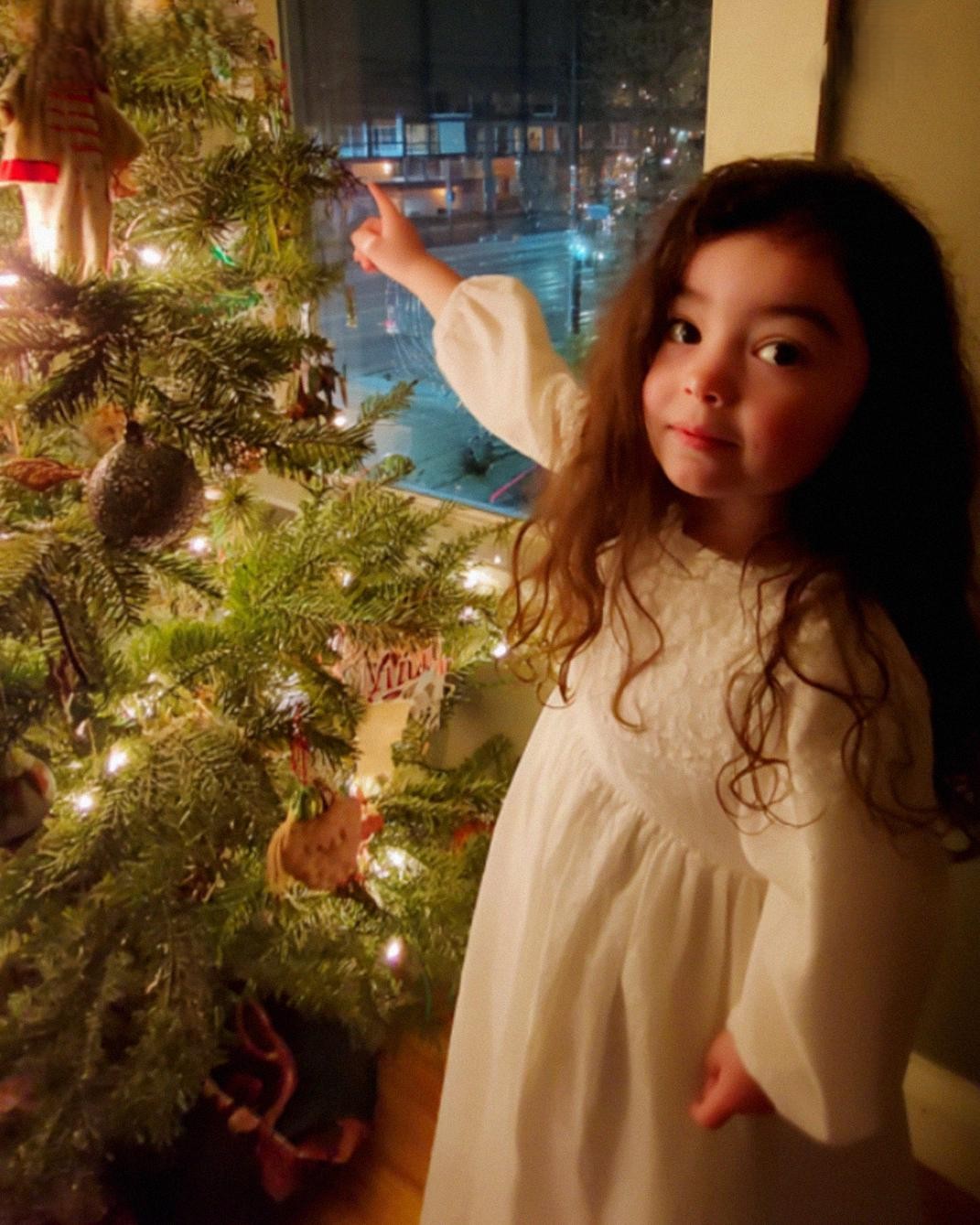
This Christmas, I wanted things simple. No crowds. No forced joy. Just the two of us. On Christmas Eve, we pulled old ornaments from the attic—delicate memories from decades past. Willa hummed to carols on the radio as she decorated the tree. Then she stopped.
She walked to the front window and pressed her hands against the glass. Her voice dropped to a whisper. “Grandpa… Mommy’s back.”
Children imagine things—I knew that. I smiled gently, not turning right away. “What do you mean, sweetheart?”
“She’s by the mailbox,” Willa said, certain now. “Like before.”
I turned.
Beneath the streetlight, snow falling softly, stood a woman. Her coat was too thin for the cold. Her posture—God help me—was unmistakable. One foot turned inward, hands gripping her coat. The way Nora always stood when she was nervous. When she looked up and met my eyes, the ornament slipped from my hand and shattered.
It was her.
I told Willa to stay inside and ran out without a coat, my breath burning my lungs. I shouted her name. She panicked and ran. I chased her down the icy sidewalk until she slipped, and I grabbed her arm.
“Dad,” she said, shaking.
We stared at each other like two people who had survived entirely different disasters. I asked how. I asked why. The words barely formed.
She explained in fragments. She hadn’t died in the crash. Months before disappearing, she had met a wealthy man—charming, powerful, and dangerous. He promised safety, money, freedom. One condition: she had to erase her past. No family. No child. He had connections—fake documents, access to systems I never believed could be manipulated. He staged her death. She agreed, convincing herself Willa would be safer with me.
I wanted to scream. I wanted to rage. Instead, I felt empty. She had allowed her daughter to believe her mother was dead. She had let me bury my only child.
Fear controlled her—fear of him, fear of what might happen if she came back. And before I could stop her, she disappeared into the snow, leaving me under the streetlight with a truth heavier than the lie I had lived with for two years.
That night, I told Willa it was someone who only looked like her mother. She didn’t believe me. Children rarely do.
The next morning, the phone rang. Nora’s voice. She wanted to meet. She wanted to return. This time, she stayed. She chose her child over fear. Reality over escape.
When Willa saw her mother again—alive, kneeling in front of her—the sound she made can’t be captured by words. That Christmas wasn’t perfect. It was painful, chaotic, and overwhelming. But it was real. And it was ours.
Some losses teach you how to endure. Others show you how fragile truth can be. And sometimes, the impossible finds its way back to you on Christmas Eve, forcing you to decide whether love is stronger than fear.