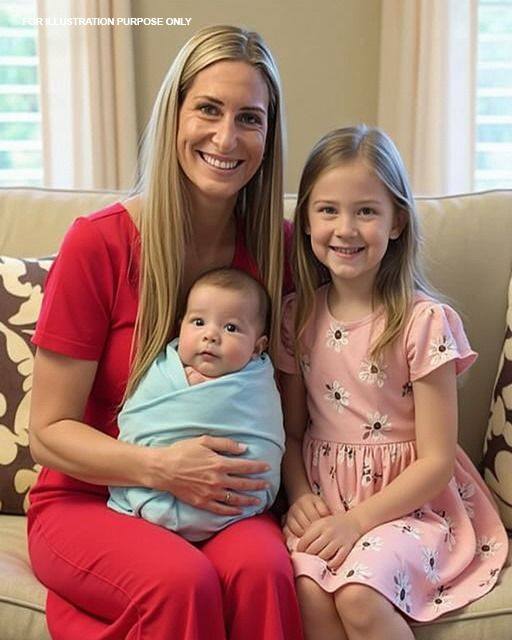
When my sister Julia first called me with the news that she and her husband, Brian, were adopting a child, I remember the spark of excitement in her voice. She had always wanted to be a mother, but years of infertility had left her drained—physically, emotionally, and mentally. Adoption seemed like a blessing, a chance to finally experience the motherhood she had dreamed about for so long.
A few months later, they welcomed Sophie, a sweet little girl just two years old, into their home. I still remember the first time I met her—her wide brown eyes, hesitant smile, and the way she clung to Julia’s shoulder while peeking at me with equal parts curiosity and caution. From that very moment, I was smitten. Though I wasn’t a mother myself, I had enough instinct to know how precious Sophie was. I showered her with attention and small gifts, took her on playdates with my friends’ children, and offered to babysit whenever Julia asked.
At first, Julia seemed like the perfect mother. Social media posts overflowed with pictures of Sophie—her first day at preschool, Halloween costumes, birthday candles—and captions brimming with love: “my angel,” “my miracle,” “the best thing that ever happened to me.” Everything seemed perfect, exactly as it should be.
Then, everything began to shift.
About three years after Sophie came into her life, Julia got pregnant. Naturally, we were thrilled for her. This was the child she had always longed for, the one she had envisioned for so many years. But as the pregnancy progressed, I began to notice subtle changes. Sophie, who had once been the center of Julia’s world, slowly faded into the background. Conversations, posts, and photos became overwhelmingly focused on the unborn child, Daniel. Julia’s love seemed to pivot entirely toward him.
At first, I tried to excuse it. Maybe it was the hormones, the exhaustion, the stress of preparing for a newborn. But when Daniel was born, the reality became painfully clear: Sophie had become invisible.
Julia obsessed over Daniel, calling him her “miracle baby,” her “dream come true,” constantly doting, while Sophie was treated like a background character in her own home. I saw it firsthand one afternoon: Sophie ran to Julia, holding a drawing she had made.
“Mommy, look! I drew our family!” she said brightly.
Julia barely glanced up, rocking Daniel in her arms. “That’s nice, honey. Go put it on the fridge.”
Sophie’s smile fell, and quietly she set the drawing aside. I felt a surge of anger I could hardly contain. This wasn’t the woman who had once adored Sophie, who had called her a miracle herself.
As months passed, the neglect became impossible to ignore. Sophie’s clothes grew tight, her hair tangled, shoes worn thin, while Daniel’s wardrobe overflowed with new items. Affection was equally lopsided—Julia showered Daniel with kisses, cuddles, and attention, while Sophie received quick, distracted pats and half-hearted smiles.
One evening, Sophie called me, her tiny voice trembling.
“Auntie… can I live with you? Mommy doesn’t love me anymore.”
I was shattered.
That night, I confronted Julia.
“What’s happening? Sophie feels unloved,” I said.
Julia sighed dramatically. “Oh, come on. Don’t be ridiculous. She’s just jealous. Daniel is my first biological child. It’s different.”
Different. That one word cut through me like a knife. Sophie sat silently in the corner, her knees hugged to her chest, and I wanted to scoop her up and never let her go. But I wasn’t her parent—I could only stand on the sidelines, powerless.
Then came the moment that would change everything.
One Friday morning, Julia called me.
“Hey, would you mind taking Sophie for a while?”
I blinked, incredulous. “For how long?”
“Oh, I don’t know… just until things settle down. She’s acting out. I can’t handle it right now.”
I wanted to scream. “She’s your child! You can’t just drop her off because she’s inconvenient!”
Julia dismissed me. “You don’t understand. You don’t have kids. It’s different when it’s your own blood.”
I swallowed my outrage, thinking of Sophie, and reluctantly agreed.
When Sophie arrived at my house, she carried a tiny suitcase and a look of confusion.
“Mommy said you’d take care of me,” she whispered.
I held her close. “I will, sweetheart. For as long as you need.”
Days turned into weeks, then months. Julia never inquired about Sophie once—no calls, visits, or even birthday cards. Slowly, Sophie adjusted, but the emotional scars were deep. She asked me late at night, “Why doesn’t Mommy love me?” I had no words to fully soothe her, so I simply held her and repeated, over and over, that she was loved.
Meanwhile, Julia’s life began to unravel. Brian lost his job, financial strain exposed cracks in their marriage, and Julia found herself overwhelmed by Daniel, whose tantrums, sleepless nights, and relentless demands she had underestimated.
One day, she called frantically.
“Can you come over? Brian left. I can’t handle this alone.”
I went—not for her—but to see firsthand the chaos she had created. The house was a disaster: unpaid bills, scattered toys, and Julia, pale and frazzled, trying to manage Daniel.
“I thought it would be easier with my own child,” she sobbed. “I should never have let Sophie go.”
I stood silently, fury rising. “Do you hear yourself? You abandoned Sophie, your daughter, because she wasn’t your blood!”
Julia cried, overwhelmed. But I did not comfort her. She had made her choices.
As for Sophie, I promised her safety, love, and stability. I filed for guardianship, and eventually adoption. Julia signed over her rights without protest, leaving me to give Sophie the childhood she deserved.
Sophie flourished. Her laughter returned, confidence grew, and the question “Why doesn’t Mommy love me?” vanished from her lips. She had me—and that was all that mattered.
Julia’s life, meanwhile, became increasingly difficult. Brian never returned. She struggled emotionally and financially, and though she sometimes tried to play the victim, those who knew the truth recognized her failings.
In the end, Julia lost the best thing in her life. I gained a daughter I never knew I needed. Karma had her consequences, but love—real, unwavering, consistent love—had saved Sophie.
And that’s what mattered most.