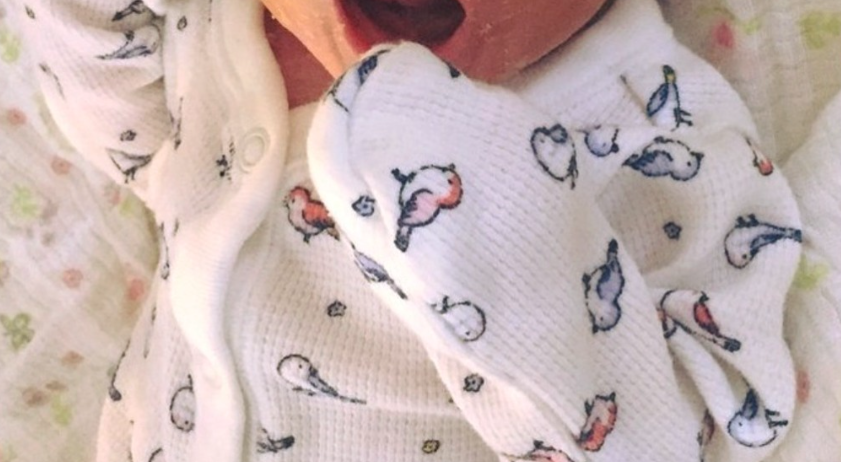
Jennie Wilklow expected the same moment every mother dreams of—the overwhelming relief when her newborn is finally placed safely in her arms. After months of discomfort, anxiety, and counting down the days, that single moment usually makes everything worth it. But for Jennie, that moment never came. Instead, the birth of her daughter, Anna, began with confusion, fear, and the devastating realization that her child’s life would be nothing like the safe and predictable future she had imagined.
Her pregnancy had been completely normal. Every checkup, every ultrasound, every cheerful reassurance from her doctors suggested the same thing: a healthy baby girl. Jennie and her husband let themselves dream freely about their daughter’s future, unaware that everything was about to change. When Jennie suddenly needed an emergency C-section at 34 weeks, she braced herself for typical preterm complications—breathing issues, weak lungs, maybe a stay in the NICU. Nothing could have prepared her for what happened instead.
At first, everything seemed fine. Jennie heard a strong cry. A nurse whispered, “She’s beautiful,” and for a fleeting moment, she believed the worst was behind her. But within seconds, the atmosphere shifted. Nurses exchanged tense glances. Movements became urgent. Instructions came rapid and clipped. Their attention moved away from Jennie and locked entirely on the newborn in their arms—because Anna’s skin was changing right before their eyes.
Her skin was hardening. Within seconds it had become tight, inflexible—and then it began to crack. Deep, painful fractures appeared across her tiny body. Her mouth was pulled into a fixed ‘O.’ Her eyelids struggled to blink. Nurses rushed to protect her from infection, dehydration, and unimaginable pain. Jennie, still groggy from the surgery, didn’t understand what was happening. She kept asking if everything was okay. The vague reassurances she received were enough to hold off her terror—until she was sedated.
When she woke, the truth was waiting.
A doctor explained that Anna had been born with Harlequin ichthyosis—a rare and severe genetic disorder that causes the skin to grow more than ten times faster than normal. Babies with this condition historically survived only a few days. The thick shell-like plates they are born with make it difficult to breathe, eat, and fight infections. Jennie looked to her husband for hope, but he could barely speak. When the doctor left, he finally whispered, “This is bad.” Those three words crushed her.
For the next forty-eight hours, Jennie searched desperately for answers. She read medical journals, survivor accounts, and heartbreaking stories that ended far too soon. Every prognosis felt unbearable. She had imagined her daughter growing, laughing, playing—now she was being told she might only have days. At her darkest moment, Jennie admitted she wondered whether it might be kinder if Anna didn’t have to suffer at all. It was the kind of thought only a mother drowning in despair could ever understand.
But Anna refused to give up. Hour by hour, she held on. Then she improved. What doctors had assumed impossible slowly became real. Days turned into weeks, and nurses began calling her a miracle. When her parents finally brought her home, they made a silent promise: if Anna was willing to fight for her life, they would fight just as fiercely to give her the best life possible.
Caring for her required constant attention. She needed to be coated in petroleum jelly every two hours to keep her skin from cracking. She needed long, warm baths multiple times a day. Even clothing, friction, or a change in temperature could hurt her. Jennie found herself mourning something small but symbolic—she wanted to dress her baby in normal, cute outfits like every other mother. That dream represented normalcy, and it felt painfully out of reach.
But gradually, something inside Jennie shifted. Her grief turned into determination. Instead of mourning what Anna might never do, she began celebrating what she could do—and what she would do. If Jennie lowered the expectations the world had for her daughter, Anna’s future would shrink around those limits. So Jennie raised the bar. Anna would not grow up believing she was fragile or different. She would grow up believing she was strong.
Jennie created an Instagram account to share their journey—not for sympathy, but for connection and education. She wanted the world to see Anna as she saw her: not a diagnosis, not a tragic story, but a bright, expressive, remarkable child who had already defied odds. In photos and videos, Anna’s personality came alive—her spark, her humor, her stubbornness. Followers didn’t see a medical condition; they saw a little girl.
Today, Jennie no longer asks, “Why us?” The answer, she says, became clear: “I got her because of the love I already had in my heart. Anna was meant for me, and I was meant for her.” What once felt like cruel fate transformed into a calling—to show the world that beauty comes in many forms, that strength can grow from impossible beginnings, and that differences can be powerful, not tragic.
Anna continues to grow, learn, and astonish everyone she meets. She is living proof that a diagnosis is not a destiny. Each day she thrives is a reminder that love, resilience, and hope can reshape even the hardest path. And Jennie continues to share their story—not for pity, but to remind the world of a simple truth: beauty is not perfection. Beauty is courage. Beauty is survival. Beauty is a little girl whose skin hardened minutes after birth—but whose spirit, and whose mother’s love, proved unbreakable.