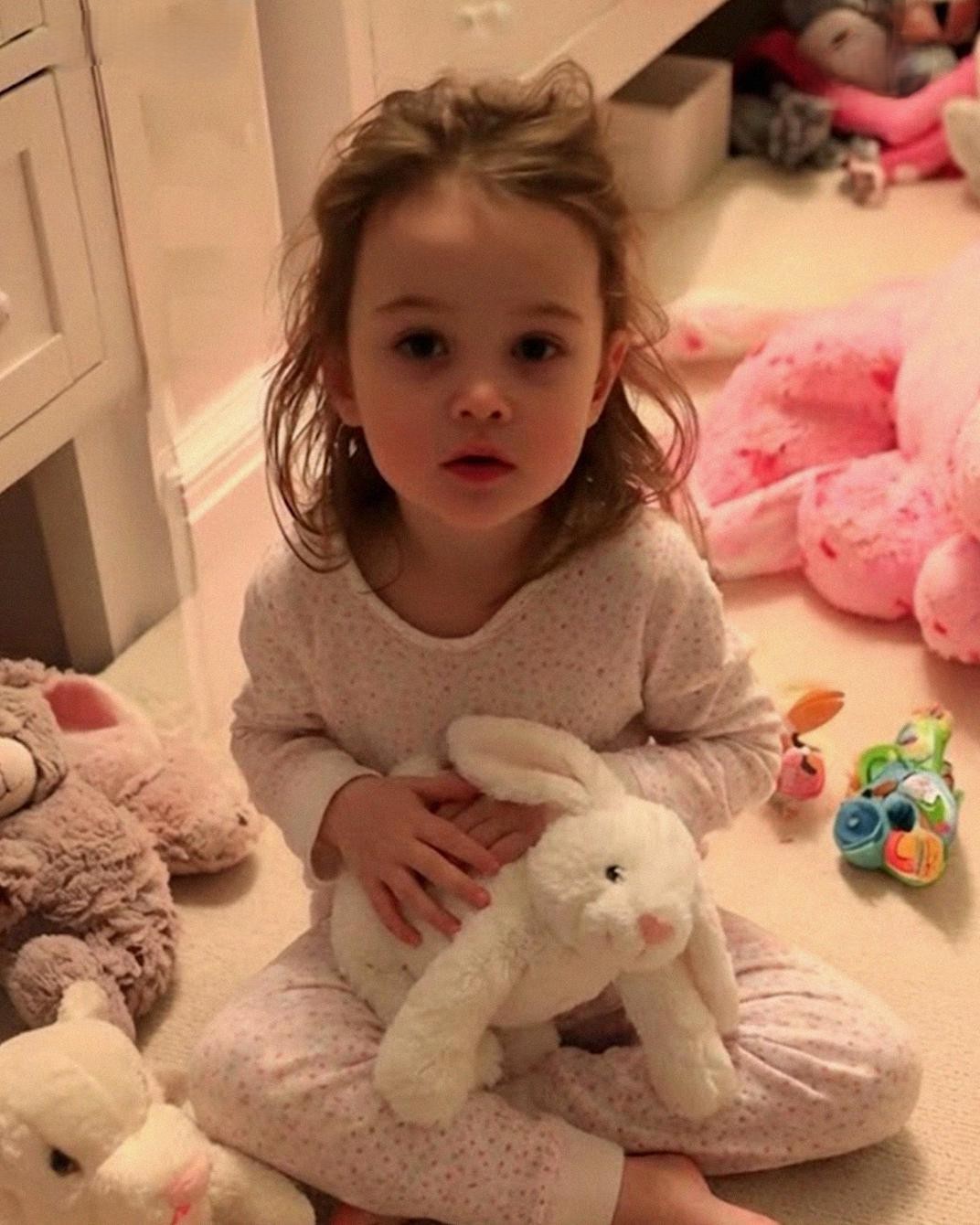
When Sophie spent that weekend at my mother-in-law’s house, I expected the usual summary: too many sweets, a bedtime that stretched far too late, and a brand-new obsession with some forgotten toy Helen had pulled from her “just in case” stash. Helen lived about forty minutes away, in a peaceful neighborhood where every lawn looked identical and every neighbor waved as if it were rehearsed. She was the kind of grandmother who kept every crayon drawing, stocked extra pajamas for surprise sleepovers, and believed no child had ever eaten quite enough.
Sophie loved her deeply. And Helen returned that love without reserve.
So when Helen asked to keep Sophie for the weekend, I didn’t think twice. I packed Sophie’s overnight bag with her favorite pajamas, her stuffed rabbit, and enough snacks to survive a minor disaster. Sophie bounced by the door like she was headed somewhere magical.
“Be good for Grandma,” I said, kissing her forehead.
“I’m always good, Mommy,” she replied, already racing up the steps without looking back.
The house felt strangely quiet without her. Evan and I caught up on chores we’d ignored for weeks and finally watched episodes of shows we’d abandoned halfway through the season. We ate dinner without cutting food into tiny pieces or negotiating “just one more bite.” It was calm. Almost healing.
That calm didn’t last.
I picked Sophie up Sunday evening. She burst out of Helen’s front door with sticky hands and tangled hair, talking nonstop about cookies, board games, and cartoons she was apparently allowed to watch “until very, very late.” Helen stood behind her, smiling warmly, hands folded like she’d done exactly what was expected of her.
Everything seemed normal. Sophie was happy. Helen was herself. The drive home was filled with chatter.
Later that night, while I folded laundry in the hallway, Sophie wandered into her room. I could hear toys shifting, drawers opening, her quiet little conversations as she built imaginary worlds on the floor. Then she said something so casually that it almost slipped past me.
“What should I give my brother when I go back to Grandma’s?”
My hands stopped mid-fold.
I stepped into her doorway. Sophie sat on the carpet, carefully arranging toys into small piles. She looked up at me, and the moment our eyes met, her face changed—like she’d realized she’d crossed an invisible line.
“Sweetheart,” I said gently, “what did you just say?”
“Nothing,” she blurted, suddenly focused on a plastic pony.
“I heard you,” I said softly. “You mentioned a brother.”
Her shoulders tightened. She kept her eyes down. “I wasn’t supposed to say that.”
My heart began to race. “Say what, honey? You can tell me anything.”
She swallowed. “My brother lives at Grandma’s,” she whispered. “But it’s a secret.”
The room seemed to shrink. We have one child. Sophie does not have a brother.
I sat beside her so my voice wouldn’t sound sharp. “What do you mean your brother lives at Grandma’s?”
She tugged at the seam of her pajama pants. “Grandma said I have a brother. She said I shouldn’t talk about him because it would make you sad.”
She looked up at me, worried, like she’d broken something fragile.
I pulled her into my arms. “You didn’t do anything wrong,” I told her. “Not at all.”
Inside, though, my thoughts were spiraling. There were only a few explanations, and every one of them felt unbearable.
I didn’t sleep that night. Evan lay beside me, breathing steadily, while I stared at the ceiling replaying our life together. Eight years of marriage. Sophie’s birth. The way Evan had cried when he first held her. How steady, how reliable he had always seemed.
Had there been someone else? Another child? Had Helen been hiding a second life behind her warm smiles and lace curtains?
I couldn’t bring it to Evan—not yet. Some questions can’t be taken back once asked.
The days that followed felt heavy. I went through the motions—breakfast, school drop-offs, polite smiles—while fear gnawed at me. Sophie didn’t mention it again at first, but I began noticing things.
A doll placed carefully aside. Two toy cars lined up instead of one.
“What are you doing?” I asked one afternoon.
“Saving toys for my brother,” she said simply.
Each time, my stomach tightened.
I started watching Evan differently, searching for signs. His phone face-down. The pause before he answered questions. The nights he said he’d be late. I couldn’t tell if I was finally seeing what I’d missed—or if fear was inventing patterns.
By midweek, I couldn’t take it anymore. I needed answers, and I needed them from Helen first.
I drove to her house without calling.
She opened the door wearing gardening gloves, surprise flashing across her face. “Rachel—I wasn’t expecting—”
“Sophie said something,” I cut in. “She said she has a brother. That he lives here. What’s going on?”
The color drained from Helen’s face. She slowly pulled off her gloves, suddenly looking older than I’d ever seen her.
“Come inside,” she said quietly.
We sat in her living room, surrounded by framed photos of Sophie. Normally they made me smile. Now I scanned the walls like something might reveal itself.
“Is there a child Evan never told me about?” I asked. “Someone I don’t know?”
Helen’s eyes filled with tears. “It’s not what you think.”
“Then what is it?”
She took a shaky breath. “There was someone before you. Before Evan met you.”
My chest tightened anyway.
“He was young,” she said. “In love, or what he believed was love. She became pregnant. They tried. They planned.” Her voice broke. “It was a boy.”
“Was?” I asked.
Helen nodded. “He was born too early. He lived only a few minutes.”
The truth settled heavily—not betrayal, but grief.
“Evan held him,” she whispered. “Long enough to memorize his face.”
I sat there, stunned. “I didn’t know,” I said. “Evan never told me.”
“He never talks about it,” Helen said. “Afterward, everything fell apart. He buried it to survive.”
“And you?” I asked.
“He was my grandson,” she said softly. “I never forgot.”
She explained there had been no funeral, no grave. So she made her own place of remembrance—a small flower bed in the backyard, a wind chime that sang quietly in the breeze.
“I didn’t think of it as a secret,” she said. “Just remembering.”
Sophie had noticed the flowers, asked questions. Helen had given her a simple, child-sized answer. She hadn’t meant to burden her with secrecy.
I drove home exhausted—but relieved. There was no betrayal. Just a loss that had never been spoken.
That night, after Sophie fell asleep, I told Evan I’d gone to his mother’s.
He knew immediately.
“She told me,” I said. “About the baby. About your son.”
Evan closed his eyes and nodded. “I’m sorry.”
“Why didn’t you tell me?”
“I didn’t know how,” he said. “I thought if I kept it buried, it wouldn’t touch our life.”
I took his hand. “We’re a family. We carry things together.”
He cried then, quietly, and I finally understood his silence hadn’t been about hiding from me—but surviving his grief.
The next weekend, we went to Helen’s house together.
No secrets. No whispers.
We stood in the backyard by the small flower bed. Sophie held my hand, sensing its importance. Evan and Helen explained it gently—that there had been a baby, that he was real, that it was okay to talk about him.
Sophie listened, then asked, “Will the flowers come back in the spring?”
“Yes,” Helen said. “Every year.”
“Good,” Sophie said. “Then I’ll pick one for him.”
Later, Sophie still set toys aside “just in case.” And I stopped correcting her. Because grief doesn’t need to be silenced. It needs space. Honesty. Light.
That weekend didn’t erase the loss. But it changed how it lived in our family. It stopped being a shadow and became what it should have been all along—a story held gently, together, without shame.