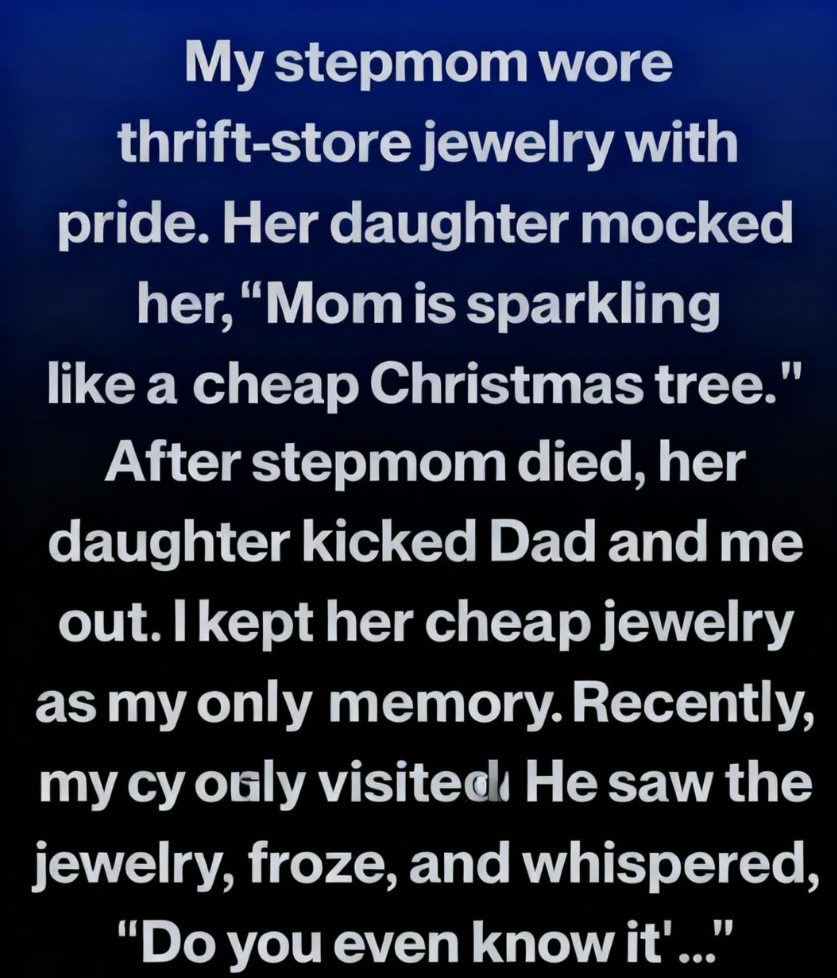
My stepmother carried a magnetic, steadfast confidence that allowed her to wear inexpensive, often brightly colored jewelry from thrift stores with the poise and grace of a queen adorned in royal gems. Her habit drew constant, sharp ridicule from her own daughter. I still recall the cutting remark, delivered with a sneer of self-righteous judgment: “Mom is sparkling like a cheap Christmas tree.” Yet, I remember even more vividly how my stepmother would simply smile, her fingers lightly grazing the cluster of beads around her neck, treating the plastic and glass as if they were flawless pearls plucked from a royal treasure.
She lived by a simple, profound philosophy: true beauty and worth are not printed on a price tag. Real value lay in the object’s story—the journey it had been on, the hands it had passed through, and the quiet happiness it had already witnessed.
Our weekends were often spent together, exploring the crowded, musty aisles of secondhand shops. We would giggle conspiratorially over tangled necklaces, mismatched earrings, and forgotten brooches. “Every piece deserves a second life,” she’d tell me, her voice full of conviction, “just like people do.” Those afternoons became invaluable lessons. They taught me that dignity is self-proclaimed, not granted by others, and that a quiet, deeply rooted confidence can shine far brighter and longer than any act of cruelty or judgment.
The atmosphere at home was one of unconditional acceptance, a sanctuary built on grace rather than wealth. My stepmother showed me, without lectures, that real glamour came from choosing joy, no matter what others thought. She wore her jewelry with celebratory defiance, a testament that she defined her own worth.
Then, the unthinkable occurred. After her passing, the silence of the house was quickly overtaken by ruthless, cold aggression. Her biological daughter acted with shocking speed and cruelty, using harsh words and locked doors to force my father and me out, as if familial love and ties could simply be discarded. I was young, overwhelmed by grief, and utterly powerless against the sudden, forceful assertion of her will.
In the chaos of my departure, I managed to take only what fit in a single bag. Buried deep among my sweaters was a small, unremarkable cardboard box—her jewelry collection. Inside were cheap plastic bangles, tarnished chains, and a brooch missing a stone. By market standards, it was worthless. Yet, for me, these pieces were priceless anchors of memory. Each held the warmth of her presence: the clinking of bracelets as she cooked, the unapologetic sparkle she wore even to mundane errands, and the quiet joy of choosing herself despite constant, scornful judgment. As the rest of my home and security vanished, these humble treasures became my sole tangible connection to the love I had lost.
Years passed. I moved through a series of small, anonymous apartments, slowly rebuilding. The jewelry box, too precious to hide, sat on a simple tray by my living room window. The pieces weren’t worn daily, but they were visible—a quiet, daily reminder of her enduring spirit.
One afternoon, my cousin visited. As we spoke, his gaze fell on the jewelry display. He grew silent, eyes fixed intently on a multicolored bead necklace slightly separated from the rest. He leaned closer, his expression changing from casual interest to profound recognition.
“Do you even know it’s…” he whispered, pausing as if the words carried secret weight.
He then revealed a chapter of my stepmother’s life I had never known. Years before, she had helped his mother through severe financial hardship. Resourceful and compassionate, she had refused repayment. Instead, she created and sold handmade crafts—knitted goods, beaded necklaces—at local flea markets, quietly supplementing his mother’s income for groceries and emergencies.
The necklace he recognized was particularly special. Made from glass beads passed down through generations of women in our family, it was not a symbol of wealth, but of resilience, survival, and mutual support. The “cheap” sparkle mocked by her daughter was actually a language of necessity and fierce, self-generated hope. The mockery had stemmed from ignorance of the deepest kind of value—human kindness and sacrifice.
That night, I handled the jewelry with renewed reverence. I rearranged the pieces—not because their monetary value had changed, but because I now understood their significance. The next morning, I chose one faded plastic bangle and slipped it onto my wrist. I felt her central lesson settle over me: worth is not assigned by mockery, nor erased by loss. It is claimed through meaning, memory, and the ripple effect of kindness carried forward.
The daughter who mocked her mother’s joy is now only a distant echo of unnecessary cruelty. But the woman who wore happiness without seeking approval still speaks. In every tarnished chain and repurposed bead, I see a steady reminder that love outlasts judgment, and even the humblest, simplest sparkle can light a powerful, guiding path home.