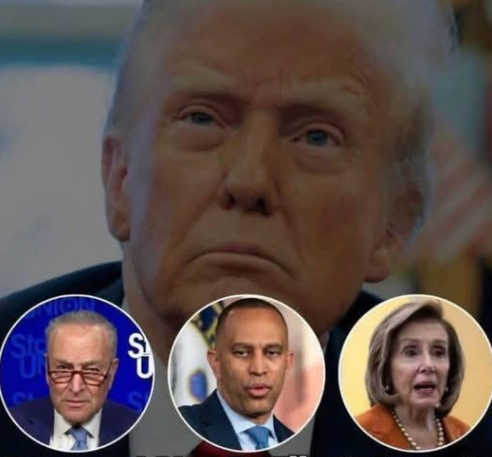
Democrats did not anticipate this moment. What was expected to be a routine confirmation instead turned into a political shockwave when Donald Trump’s former Republican ally moved smoothly through the Senate with the support of more than a dozen Democratic senators. At the same time, the party is facing a separate but equally alarming trend: young voters, particularly Gen Z, are leaving the Democratic coalition in large numbers. The disconnect between leadership decisions in Washington and the frustrations of younger voters has become increasingly difficult to ignore.
On social media platforms and city streets alike, Gen Z voices are growing louder and angrier. Many young voters feel betrayed by a party they once saw as a vehicle for change. In New York, frustration has begun to crystallize into a quiet but growing rebellion against Senate Majority Leader Chuck Schumer. What once appeared to be stable party unity is now showing visible cracks, especially among voters who feel excluded from decision-making processes.
The confirmation of David Perdue as ambassador to China became a flashpoint. Backed by a coalition of Democratic senators, the vote highlighted a widening divide between Democratic leadership and the voters they claim to represent. For many young Americans, this decision symbolized everything they distrust about modern politics: backroom agreements, bipartisan compromises with Trump-aligned figures, and an establishment that appears more focused on maintaining power than responding to grassroots demands.
To Gen Z voters, this moment was not an isolated incident. Instead, it reinforced a growing belief that Washington’s aging political class is more comfortable negotiating with figures connected to Donald Trump than engaging seriously with its own base. Political commentators like Brett Cooper have pointed out that younger voters don’t simply feel overlooked—they feel politically displaced. Many believe they are stuck between a radical fringe that doesn’t reflect their values and a cautious political center that seems unwilling to fight aggressively for meaningful change.
This sense of political homelessness has created a vacuum within the Democratic Party. Younger voters who once powered massive turnout campaigns now feel disconnected from party leadership, unsure where their energy belongs. The tools that once mobilized them—social media messaging, moral urgency, and symbolic representation—no longer feel enough when policy decisions appear to contradict those values.
Into this space steps Alexandria Ocasio-Cortez. Recent polling shows her decisively outperforming Chuck Schumer in a hypothetical 2028 primary, signaling a dramatic shift in voter sentiment. To many younger Democrats, she represents a return to emotionally driven, digitally fluent politics that once energized youth participation and gave the party its progressive identity.
However, this shift also presents a risk. The same social media strategies and grassroots energy that helped Democrats build their modern brand are now being used to challenge party leadership from within. Dissatisfaction is no longer whispered in private meetings—it is posted, shared, analyzed, and amplified in real time.
If Democrats fail to reconcile the gap between symbolism and tangible action, the consequences could be severe. The party faces the possibility of an internal conflict not fought quietly behind closed doors, but openly and publicly. Any future civil war within the Democratic Party will not be hidden—it will unfold online, livestreamed, and watched by millions, with young voters at the center of the reckoning.