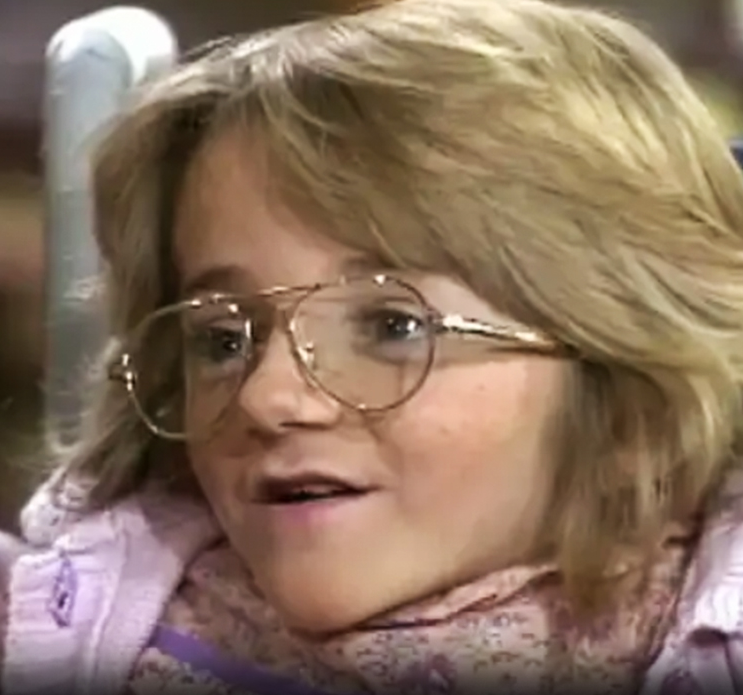
Melanie Watson broke hearts long before she ever broke a bone on set. The former Diff’rent Strokes actress, born with a brittle bone disorder, has passed away at just 57, leaving a legacy of quiet courage and boundary-breaking performance that is only now being fully recognized. The depth of what she carried—both physically and emotionally—and the impact she made on the representation of disability in television, is only becoming clear in the wake of her death. She faced not just constant physical pain, but fear, isolation, and an entertainment industry that too often failed to see her as fully human. Her brother’s confirmation of her final days in a Colorado hospital has left fans grieving, but also reflecting on the sheer bravery it took for her to simply appear on set. Melanie didn’t just play a role; she demanded that television confront disability honestly, without soft focus, sentimental framing, or pity. And now, as tributes pour in from colleagues and fans alike, one stark question lingers: why did it take her passing for so many to truly see her?
Watson’s life was shaped by fragility, but it was never limited by it. Born with osteogenesis imperfecta, a condition that makes bones prone to breaking, she refused invisibility. From an early age, she understood that her presence alone challenged societal assumptions about ability and strength. Stepping into millions of living rooms as Kathy Gordon on Diff’rent Strokes, she brought authenticity to a role that could easily have been reduced to a stereotype. Her wheelchair wasn’t a prop or a storytelling shortcut—it was her reality. And by simply showing up, she quietly defied an industry that preferred to either erase disability from the screen or present it in predictable, cliched narratives.
Behind the camera, Watson carried burdens that audiences could never see. She navigated a world that demanded compromises and small performances of “normalcy,” including being asked to walk on crutches for a storyline she had not agreed to. Yet she did it, not for the sake of compromise, but because she understood the larger impact her visibility could have. She later reflected on these choices as a gift: the gift of being the first one out there, showing people like her at home that their lives, their struggles, and their stories mattered. For countless viewers, seeing her on screen was revolutionary—it told them that disability was not something to hide, not something to pity, but simply a part of human experience deserving of honest representation.
Watson’s impact extended beyond her performances. She became a quiet advocate by example, showing both audiences and industry professionals what authentic representation could look like. She did not lecture or campaign publicly; she simply lived her truth in every scene, every interaction on set, and every decision about how she presented herself. In doing so, she helped pave the way for actors with disabilities who followed, proving that talent, resilience, and authenticity could not be diminished by preconceived notions of what someone “should” be able to do.
Her passing at 57 marks the end of a remarkable, too-short chapter, yet the doors she opened for the visibility of disability remain wide. They invite new generations of actors, writers, and creators to step through, to tell stories that are real, nuanced, and unafraid. In a world that often prefers polished perfection and neat narratives, Melanie Watson’s life was a reminder that truth and courage often exist in the cracks, in the challenges faced with dignity, and in the quiet acts of showing up despite adversity.
As the tributes continue, one lesson becomes clear: her legacy is not measured solely by the roles she played, but by the barriers she dismantled simply by being herself. Melanie Watson taught audiences that disability is not an obstacle to visibility or talent—it is part of the human story. Her work challenges us to see people in their full complexity, to acknowledge the courage behind everyday acts, and to celebrate resilience that does not always seek recognition. The industry may have taken too long to fully appreciate her, but her example will continue to inspire and guide, ensuring that her contributions are remembered long after the cameras stop rolling.