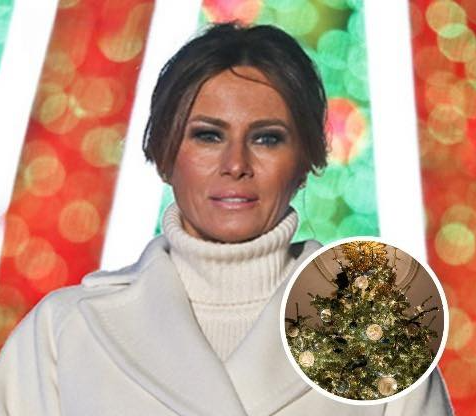
Melania Trump’s $90 Christmas ornament has done far more than decorate a tree—it has detonated a political and emotional flashpoint beneath the White House lights. What might have been a forgettable holiday keepsake instead became a national talking point almost overnight. Critics reacted with outrage, supporters with defiance, and the broader public with fascination as a simple brass star transformed into a loaded symbol of privilege, resentment, and power. As cameras swept past butterflies, Lego portraits, crimson trees, and festive displays, one uncomfortable question kept resurfacing: who is the White House Christmas really for?
The ornament, called the “American Star,” was intended to be a gleaming centerpiece of Melania Trump’s holiday vision. Crafted in brass, colored in red, white, and blue, and engraved with her signature, it was meant to evoke patriotism and elegance. Instead, it became a lightning rod. Priced at $90, the star landed in a country already tense over inequality, celebrity politics, and the blending of public institutions with personal branding. For many Americans, it wasn’t just a decorative object—it felt like a price tag attached to the idea of Christmas in the people’s house, a reminder that even national traditions can feel monetized.
The backlash was swift. Critics argued that the ornament symbolized detachment from everyday Americans, especially at a time when many families struggle to afford basic holiday gifts. They saw the star not as festive, but as emblematic of excess and tone-deafness. Supporters, on the other hand, dismissed the outrage as manufactured, pointing out that presidential families have long influenced holiday aesthetics and merchandise. To them, the ornament was optional, tasteful, and unfairly politicized simply because of who designed it.
Inside the White House, the broader 2025 holiday theme—“Home Is Where the Heart Is”—was clearly meant to soften Melania Trump’s public image. The décor emphasized warmth and nostalgia: toys lining hallways, natural Christmas trees filling rooms with pine scent, and patriotic touches meant to tie national identity to family tradition. There were whimsical elements too, including Lego portraits and a massive 20-pound gingerbread White House, all designed to create an atmosphere of comfort, unity, and childhood wonder.
Yet the ornament controversy cut straight through that carefully staged warmth. Instead of focusing on craftsmanship or creativity, public attention shifted to questions of taste, ethics, and intent. Accusations of grifting resurfaced, along with long-standing criticisms that Melania Trump remained emotionally distant from the role she occupied. The star became shorthand for a larger unease: the feeling that power, branding, and wealth were bleeding into spaces meant to feel shared and symbolic.
What makes the episode linger is how familiar it feels. The same halls once meant to unite the country through tradition now host debates that mirror broader political divisions. A single object—a brass star—sparked arguments about who gets represented, who feels excluded, and how symbolism can harden into ideology. Even something as universally sentimental as Christmas proved unable to escape polarization.
Love her or loathe her, Melania Trump’s approach to the holidays continues to divide the nation. Her Christmas displays draw crowds, cameras, and commentary year after year, rarely leaving room for indifference. In the end, the $90 ornament may not be remembered for its design or craftsmanship, but for what it revealed: that in modern America, even a Christmas tree at the White House can become a battleground where identity, power, and perception collide.