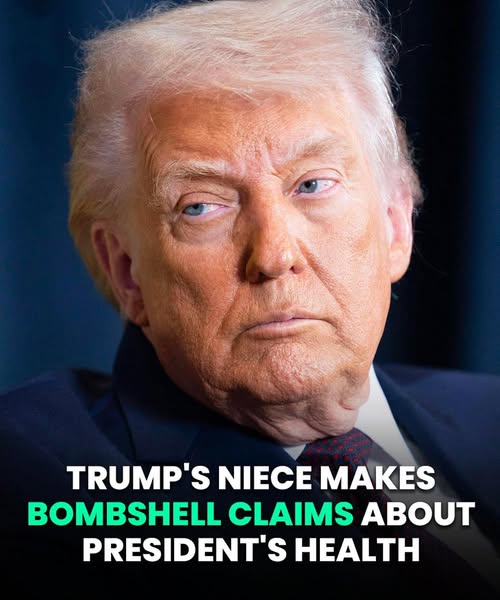
The political atmosphere in Washington has been shaken by a wave of renewed scrutiny surrounding the health of Donald Trump, sparked in large part by public comments from his niece, Mary Trump. As the country moves deeper into a high-stakes election cycle, questions about transparency and fitness for leadership have resurfaced, spreading quickly from political circles into social media and public debate. Mary Trump, who has long been a critic, suggested that the public may only be seeing a carefully managed version of her uncle, hinting at concerns that go beyond what has been officially disclosed.
Speculation intensified over the Easter weekend, when Trump’s absence from several expected public appearances caught attention. With little official explanation, online discussion filled the gap, with unverified claims circulating that he had been taken to Walter Reed National Military Medical Center for treatment. Others pointed to changes in his routine, such as fewer public outings, as possible signs of an underlying issue. While his team dismissed these claims as unfounded, the speed and scale of their spread reflected a broader sense of public uncertainty.
At the same time, there were clear signs that Trump remained actively engaged. He continued posting frequently on Truth Social, sharing political messages and commentary, maintaining a strong digital presence. His security arrangements and movements also appeared consistent with his usual pattern. This created a contrast: visible activity online paired with moments of physical absence that fueled ongoing speculation.
Attention has also turned to small physical details. Photos and videos have been closely analyzed, with some observers noting what appeared to be a lump under his jacket or bruising on his hands. While speculation online suggested possible medical devices, experts have largely dismissed those ideas. Officials have offered simpler explanations, such as frequent handshaking combined with common medications like Aspirin, which can increase bruising—especially in older adults.
Medical commentary has added another layer to the discussion. Jonathan Reiner, among others, has pointed to signs of fatigue and what he described as possible “daytime sleepiness,” raising questions about the physical toll of campaigning at an advanced age. It has also been confirmed that Trump has Chronic venous insufficiency, a condition affecting blood flow in the legs. While generally manageable and not considered life-threatening, the acknowledgment was notable given the usual emphasis on strength and endurance in political leadership.
These concerns extend beyond personal health—they intersect with constitutional and national security considerations. Under the Twenty-fifth Amendment to the United States Constitution, a president’s physical and mental capacity is directly tied to governance and stability. Even the perception of vulnerability can influence global relations, markets, and public confidence.
Despite the growing debate, Trump’s campaign has firmly rejected all claims of serious health issues, labeling them as politically motivated attacks. They point to his rallies, public appearances, and continued engagement as evidence of his capability. Still, the persistence of questions—from physical observations to broader concerns about aging leadership—suggests that many are seeking greater transparency.
In the end, this controversy reflects a larger conversation in the United States about age, leadership, and accountability. Whether the claims raised by Mary Trump signal deeper issues or remain part of an ongoing political and family dispute is still unclear. What is certain is that the topic has moved into the spotlight, where every detail is closely examined. As the election approaches, scrutiny will likely intensify, and the discussion around health and leadership is unlikely to fade anytime soon.