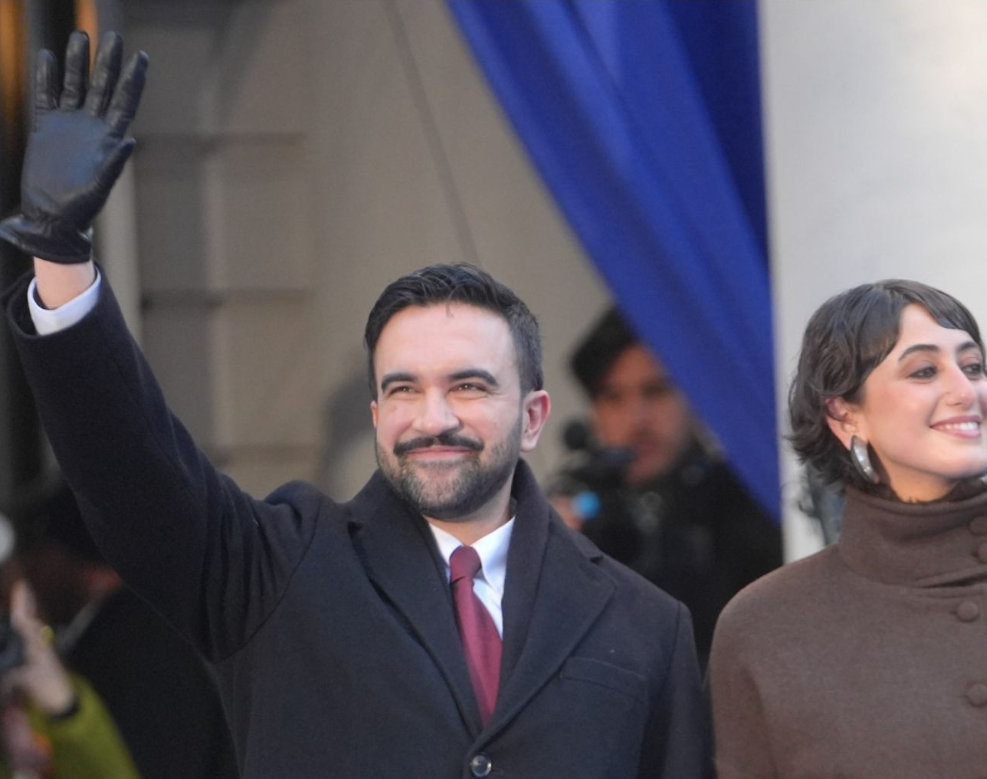
Mamdani didn’t waste a single moment. Within hours of officially taking office as New York City’s new mayor, the young democratic socialist launched a flurry of executive orders that immediately set the city’s political and real estate worlds on edge. The measures were pointed, deliberate, and unmistakably aimed at landlords—those who own the buildings New Yorkers call home—and at the broader political establishment that has long watched and, in many cases, protected them. Supporters hailed his actions as overdue justice, long-needed correction for decades of what they describe as predatory behavior and disregard for tenants’ basic rights. Critics, on the other hand, painted the move as a warning shot fired across the bow of property owners nationwide, a signal that a new era of municipal activism has arrived, one in which even the wealthiest and most entrenched landlords cannot count on the political status quo to shield them. Figures like Bernie Sanders and Alexandria Ocasio-Cortez praised Mamdani’s approach enthusiastically, framing it as a victory for ordinary New Yorkers and a concrete demonstration of democratic socialism in action. Meanwhile, conservative commentators and Republican operatives quickly seized on the narrative, portraying Mamdani as a radical figure, a potential “villain” for the 2026 elections and beyond, a living proof that progressive ideals can reshape urban governance overnight if left unchecked.
From the first day, Zohran Mamdani translated campaign rhetoric into policy that was immediate and tangible. His office did not merely issue statements or symbolic gestures; it took concrete, enforceable steps that demonstrated a clear priority: tenant protection and housing reform. One of his first acts was to revitalize the Mayor’s Office to Protect Tenants, a move that signals enforcement of tenant rights would be more than a talking point. He appointed Cea Weaver, a seasoned architect of New York’s strictest modern tenant protections, to head the office, sending a clear message that aggressive, uncompromising oversight of landlords’ practices would be central to his administration. At the same time, Mamdani sought to address the supply side of the city’s housing crisis. He created multiple task forces with distinct missions: one focused on surveying city-owned land to identify properties suitable for rapid housing development, and another charged with dismantling bureaucratic obstacles—red tape, prolonged permitting processes, and regulatory delays—that have historically slowed construction, inflated costs, and left countless apartments empty. His dual-pronged strategy was clear: protect tenants from exploitation while simultaneously working to increase the availability of housing and reduce the pressures driving skyrocketing rents.
Mamdani framed his initiatives not merely as pragmatic governance but as a moral imperative. He positioned his administration’s actions within the broader narrative of democratic socialism, portraying tenants’ rights as inseparable from basic human dignity. Bernie Sanders and Alexandria Ocasio-Cortez amplified this framing, presenting Mamdani as proof that progressive policies could be implemented successfully in America’s largest city, where the scale of inequality and housing insecurity is unmatched. The stakes, however, are high. Landlords, developers, and political observers from both parties will scrutinize every move, every executive order, and every enforcement action. Will the policies create safer, more affordable housing for residents, as promised, or will they ignite a new wave of conflict over property rights, class, and economic power in one of the country’s most prominent cities?
The implications of Mamdani’s first weeks in office extend far beyond New York. His actions are now a national case study for the potential—and the limits—of democratic socialism in practice. Housing activists and tenant organizations are watching closely, eager to see whether policy can genuinely shift the balance of power in favor of ordinary residents. Meanwhile, conservative media outlets and think tanks frame every move as a harbinger of progressive overreach, warning that similar strategies could spread to other cities and disrupt housing markets nationwide. Mamdani’s administration has, in essence, thrown down a gauntlet: a real-world experiment in balancing tenant protection, construction incentives, and political ideology, with millions of Americans paying attention.
In this context, Mamdani’s strategy is both bold and calculated. He has made clear that his administration will not shy away from confrontation. Executive orders, policy directives, and aggressive enforcement measures are intended to send an unmistakable message: tenants matter, and the city government will actively intervene to ensure their rights are respected. Simultaneously, by accelerating housing construction and streamlining permits, he hopes to avoid the common critique that progressive policies can stifle growth or worsen shortages. By coupling protection with production, Mamdani attempts to chart a course that satisfies social justice advocates without entirely alienating developers or investors, though the balance will be delicate.
As the first months of his tenure unfold, the world will be watching how this experiment in urban governance plays out. National politicians, journalists, activists, and everyday New Yorkers alike are invested in the outcome, eager to see whether Mamdani can deliver on his promises or whether his bold approach will ignite backlash from entrenched interests. The mayor’s early actions demonstrate a clear principle: that government can, and perhaps must, intervene decisively when markets fail to serve the people. Whether this will translate into safer, more affordable housing or merely a flashpoint in the ongoing national debate over property, power, and progressive governance remains to be seen. For now, Zohran Mamdani has made one thing unmistakably clear: in New York City, the era of cautious compromise may be over, and the city’s tenants will finally have a champion willing to test the limits of what municipal authority can achieve.