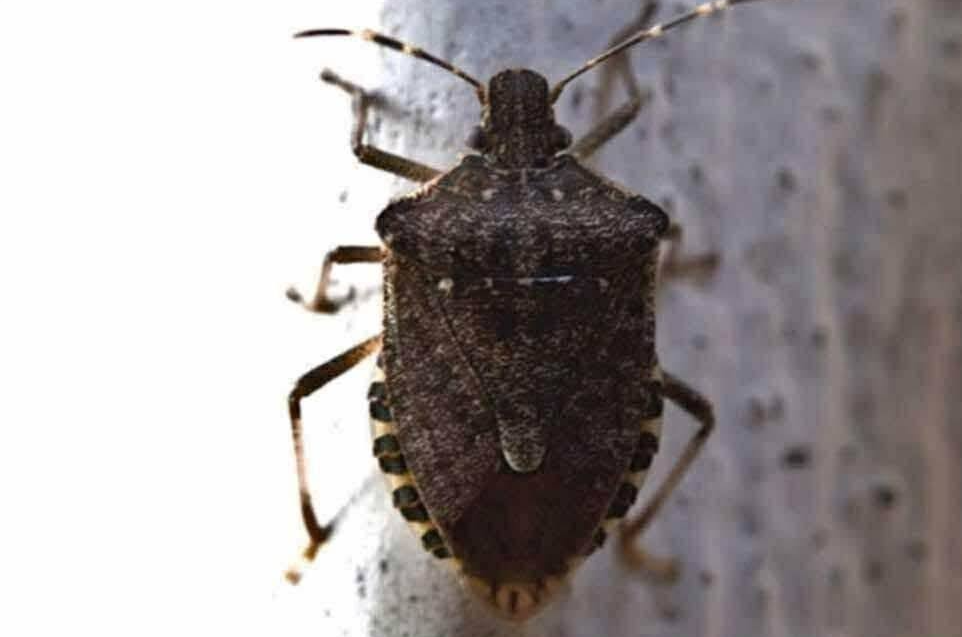
A misleading claim has been spreading online, and it needs to be corrected with clear facts. A recent article referred to an insect issue as a “bedbug” problem, but the description given does not align with bedbugs at all. This kind of mistake is not harmless. When insects are misidentified, people often panic, waste money on the wrong solutions, and misunderstand what is actually happening in their homes.
Real bedbugs are a very specific type of pest with well-known behavior patterns. They are not outdoor insects, they are not associated with plants or gardens, and they do not randomly enter homes through windows. When other insects are mislabeled as bedbugs, it creates unnecessary fear, even though the actual issue may be far less serious and much easier to handle.
The insect described in the article does not match bedbugs biologically or behaviorally. Based on the details provided, it is far more likely a green stink bug from the Palomena group. These insects are entirely different in lifestyle, risk level, and control methods. Confusing the two spreads misinformation and leads people in the wrong direction.
Bedbugs, scientifically known as Cimex lectularius, are parasites that survive by feeding on human blood. They do not eat plants, do not live in soil, and cannot survive in outdoor environments like gardens. Their entire life cycle depends on human living spaces, especially areas where people sleep.
They hide in mattresses, box springs, bed frames, furniture seams, baseboards, and small cracks in walls. They avoid light and are usually active at night. If an insect is seen crawling openly on walls or near windows during the daytime, it is almost certainly not a bedbug.
Color is another clear indicator. Bedbugs are never green. They are small, flat, oval-shaped, and reddish-brown, becoming darker after feeding. Any insect described as green can immediately be ruled out as a bedbug.
The way bedbugs spread is also very specific. They do not come from plants, soil, or outdoor air. They are transported almost exclusively through human activity—luggage, secondhand furniture, bedding, clothing, hotels, public transportation, and shared housing. They stay close to where humans rest because that is their only food source.
They are not attracted to houseplants, humidity, or radiators. Warmth alone does not draw them in from outside. Without human hosts, bedbugs cannot survive long-term.
The insect described in the article behaves in the opposite way. Green stink bugs are outdoor insects that live on plants and feed on vegetation. They are common in gardens, fields, and wooded areas and have nothing to do with beds or blood.
These insects often enter homes seasonally, especially in the fall, when temperatures drop and they seek warmth and shelter. This is why they are commonly found near windows, doors, and wall cracks. Their sudden appearance indoors is weather-related, not the result of an infestation.
Green stink bugs are attracted to warmth and light, which explains why they gather near radiators, lamps, and sunny windows. They do not hide in furniture, do not infest bedding, and do not rely on humans for survival. They are a nuisance, not a parasite.
Another important difference is how they react to scents. Green stink bugs are often repelled by strong smells such as mint, lavender, vinegar, or eucalyptus. These can be effective deterrents. Bedbugs, on the other hand, are not reliably affected by household scents and usually require professional extermination.
Calling stink bugs “bedbugs” dramatically increases fear without reason. Bedbugs carry stigma, are difficult to eliminate, and often require costly and invasive treatment. Stink bugs do not reproduce indoors in the same way and do not require extreme measures.
Correct identification makes all the difference. If you are seeing green insects near windows, especially in cooler seasons, you are not dealing with bedbugs. The appropriate response is sealing entry points, reducing light attraction, and using simple deterrents.
The conclusion is straightforward: Palomena species are green stink bugs, not bedbugs. They live differently, behave differently, and require completely different solutions. Labeling them as bedbugs is both scientifically incorrect and practically harmful.
Facts matter. Knowing what insect you are actually facing determines whether the situation calls for calm prevention or serious intervention. In this case, the difference is between a seasonal inconvenience and a true household parasite.