In the complex and often polarized landscape of American public life, the emergence of a new generation within a prominent political dynasty always attracts significant attention. Kai Trump, the eighteen-year-old daughter of Donald Trump Jr. and Vanessa Trump, has recently moved from being a peripheral figure on the national stage to a young woman defined by her own voice and ambitions. While her surname carries immense historical and political weight, Kai has spent much of her life carefully navigating the shadow of the presidency. But as she enters adulthood, she is beginning to shape her public identity—one rooted in professional sports, digital presence, and a measured perspective on the world she inhabits.
Throughout 2024 and early 2025, Kai became more visible alongside her grandfather, Donald Trump. She was often seen at high-profile events that blurred the line between family time and global spectacle. From the cabin of Trump Force One to the launch of a SpaceX mission in Texas, and even on the prestigious greens of the Ryder Cup, Kai offered her social media followers a rare behind-the-scenes glimpse of a life with extraordinary access. Yet despite these views into the heights of political and industrial power, Kai’s personal path remains firmly rooted in competitive sports.
As an elite golfer, Kai has made it clear that her primary arena is the golf course, not the campaign trail. After making her debut on the women’s professional tour last year, she is now preparing to continue her career at the University of Miami, where she will compete at the collegiate level. For Kai, golf is both a passion and a pragmatic path to independence. The sport is a discipline where performance is measured by strokes and consistency, offering a clear meritocracy that contrasts with the subjective and often volatile world of politics. By prioritizing her athletic career, she has maintained a level of personal autonomy that is rare for someone in her position.
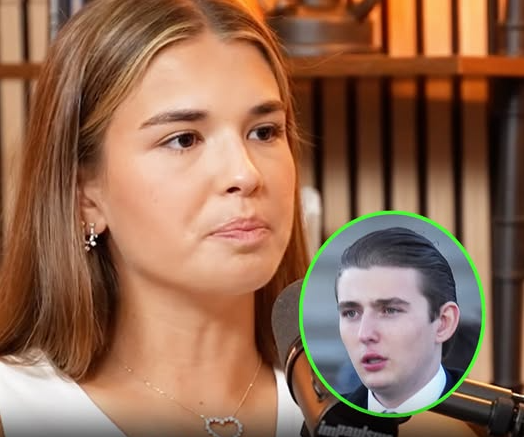
Public interest in the internal dynamics of the Trump family reached a peak when Kai appeared on the popular podcast Impaulsive, hosted by Logan Paul. The interview marked a turning point in her public narrative. Rather than delivering rehearsed political soundbites, Kai offered a reflective and nuanced view on the current state of American discourse. She spoke candidly about the dangers of social media echo chambers, explaining how modern algorithms “make your world one way or the other” by reinforcing extreme views and one-sided narratives. This critique demonstrated a level of self-awareness rare for a teenager who has grown up in the spotlight of intense public debate.
One highly anticipated part of the interview involved her uncle, Barron Trump. Though only a year older than Kai, Barron has become a highly public and often speculated figure. When asked about the “real” Barron, Kai quickly dismissed sensationalist online theories. She described him as “a great guy” who is fundamentally low-key and very private. According to Kai, Barron has little interest in the performative aspects of the spotlight, preferring a quieter life characterized by kindness and sincerity. This portrait presents a family member who, like Kai herself, is trying to find normalcy despite extraordinarily abnormal circumstances.
The conversation also touched on the practical—and often surreal—realities of being part of a First Family. Kai shared the awkwardness of dating and socializing under the constant, watchful eye of Secret Service agents. She described the difficulty of enjoying a meal or conversation while agents sat just a few tables away, always alert. Over time, she explained, the protection becomes background noise, but the adjustment period was a stark reminder of the unique trade-offs her family legacy entails. These anecdotes humanized her, presenting her not as a political figurehead, but as a teenager facing universal growing-up challenges.
From this wave of public engagement emerges the portrait of a young woman deeply aware of the platform she has but in no rush to use it for traditional political purposes. Kai Trump appears to be a study in selective visibility. She understands the power of her brand, yet seems intent on building an identity grounded in something deeper than a last name. Whether documenting a private jet flight or practicing at a world-class resort, there is a sense of purpose in her actions. She is learning to live publicly without letting public expectations dictate her path.
In an era when many young political heirs and influencers rush into controversy or ideological battles to gain relevance, Kai’s approach is remarkably measured. She has remained loyal to her family’s brand while carving out a space uniquely her own. Her move to the University of Miami signals a commitment to personal growth and the desire to succeed in an environment where golf scores matter more than heritage. This “athletic buffer” shields her from the more toxic elements of public life, allowing her to mature away from the immediate heat of the political spotlight.
Ultimately, Kai Trump’s story is an evolving narrative about pursuing authenticity within a dynasty. She stands at a crossroads where she could easily choose political activism, yet she seems more comfortable as an athlete and student. By holding the pen to her own story, she challenges assumptions often placed on children of powerful figures. Her remarks on Barron’s privacy, the awkwardness of the Secret Service, and the dangers of digital extremes all reflect a young woman observing her world with clarity and poise.
As Kai continues her journey at the University of Miami and in professional golf, she remains one of the most intriguing figures of her generation. She reminds us that even in families defined by public roles, individuals often seek a simpler goal: the right to define themselves. For now, Kai Trump is proving she is more than a name—she is a person determined to live a life entirely her own.