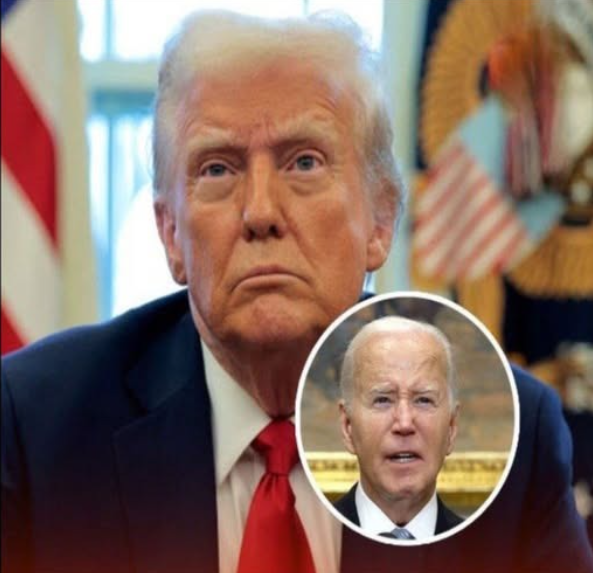
In the shifting landscape of American politics, transitions of power traditionally carry an air of respect, protocol, and unwritten courtesies. Yet the current environment has witnessed an extraordinary break from these conventions, as President Donald J. Trump has taken deliberate steps to dismantle the privileges normally extended to his predecessor. In a move that has sent waves through Congress and the intelligence community alike, Joe Biden has been stripped of the security clearances and access to classified information typically granted to former commanders-in-chief—a dramatic escalation in the tension between the two administrations.
This action represents more than a procedural adjustment; it signals a fundamental rethinking of how former presidents interact with sensitive intelligence. Historically, ex-presidents have been afforded continued access to daily intelligence briefings, enabling them to remain informed and provide counsel if needed. Trump, however, has decisively ended this tradition, framing his decision through rhetoric emphasizing mistrust and national preservation. On his Truth Social platform, he summarized the stance succinctly: “JOE, YOU’RE FIRED.”
The justification for this unprecedented revocation is intertwined with past grievances. Trump has highlighted the 2021 precedent when the Biden administration denied him intelligence updates, citing concerns about “erratic behavior” and potential mishandling of sensitive materials. Now, in the Oval Office once more, Trump frames his actions as a protective measure for national security rather than mere political retaliation.
A key element of the administration’s rationale is the Hur Report, which scrutinized Biden’s alleged memory lapses and handling of sensitive documents during his vice presidency. By referencing these findings, the Trump administration argues that someone with documented cognitive vulnerabilities cannot be reliably trusted with the nation’s most classified information. Critics, however, contend that this move is politically motivated, designed to delegitimize the prior administration’s achievements.
The revocation of Biden’s privileges is part of a wider restructuring of the national security apparatus. Former intelligence officials, CIA directors, and military leaders perceived as aligned with the previous administration have been reviewed, signaling a broader purge framed as the beginning of “America’s Golden Age,” emphasizing loyalty and operational discipline within federal agencies.
Among the most high-profile figures affected is Mark Milley, former Chairman of the Joint Chiefs of Staff. Milley, known for his criticisms of Trump’s leadership style, is now under investigation led by Defense Secretary Pete Hegseth, with some suggesting a reassessment of his rank and pension. Milley’s case underscores the administration’s commitment to holding senior officials accountable for perceived political biases.
Public health officials have not been exempt. Anthony Fauci, former Chief Medical Advisor and prominent figure during the COVID-19 pandemic, has had his security clearances revoked, signaling a clear break from the previous administration’s pandemic policies. The move represents a deliberate effort to pivot toward new approaches in national health security, favoring fresh perspectives over those associated with the recent past.
Trump defends these measures as standard procedure for an administration intent on national security, presenting them as necessary for building a streamlined, loyal, and secure government. Supporters interpret the revocation of Biden’s privileges as a justified response to the treatment Trump received upon leaving office in 2021, framing it as a corrective and overdue realignment.
Conversely, critics and constitutional scholars view these actions as a dangerous departure from norms surrounding the peaceful transfer of power. Using security clearances as a political tool risks politicizing the intelligence community and establishing a precedent where future administrations may continue the cycle of retaliatory exclusion, undermining the continuity and integrity of national security practices.
As Trump’s administration continues to reassess the policies and personnel of its predecessor, the political divide deepens. Stripping Joe Biden of access to sensitive intelligence symbolizes a shift from respect for former leaders to a model in which previous administrations are perceived as potential liabilities, not sources of guidance.
In the coming months, additional personnel reviews are expected, potentially expanding the list of former officials stripped of privileges. For the Trump administration, this represents the safeguarding of “America’s Golden Age” against past shortcomings. For Biden and his allies, it is a stark reminder of the political rivalry that has redefined the rules and tone of American presidential transitions in the 21st century. The silence now surrounding the former president in matters of intelligence may be the clearest indication yet of how drastically the norms of governance have shifted.