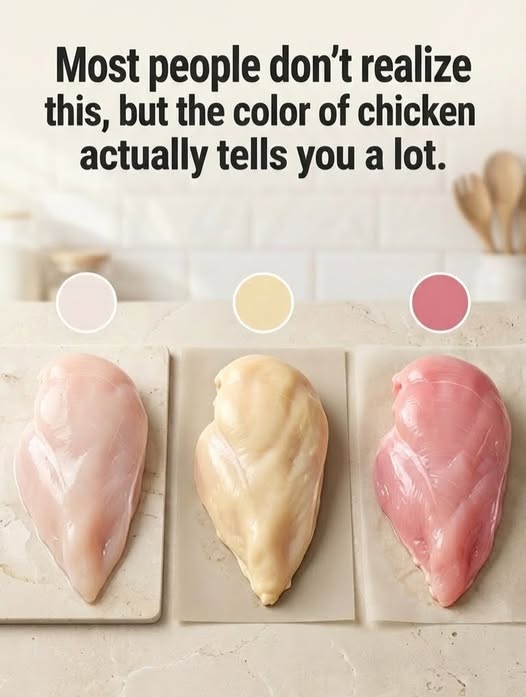
In the modern supermarket, the meat aisle often presents a quiet but complex visual puzzle that most shoppers solve instinctively without much thought. Standing in front of the poultry section, you encounter a range of hues: some packages show chicken that is shiny, pale, and almost pearlescent pink, while others appear with a deep, buttery yellow tone. Even if the price is similar, the stark color difference often raises questions: is the yellow chicken more “natural”? Is the pale one more processed? Or is the variation simply a marketing strategy to manipulate consumer expectations?
To understand the truth behind a chicken’s color, we need to look deeper into the bird’s life. The color of its skin and fat does not simply indicate quality or safety; it reflects the bird’s diet, environment, and growth rate. Pale, pinkish-white chickens are typically products of industrial farms, bred for speed, raised indoors with limited movement, and fed mostly high-protein grains. This process produces a consistent and affordable product but reflects fast, volume-driven growth rather than a natural life.
Yellow-hued chicken is often seen as a premium alternative, evoking images of open farms and sunshine. The color comes from carotenoids in grasses and certain grains, which accumulate in the skin and fat when the bird grows more slowly and eats a varied diet. Such chickens often have firmer meat and a deeper, more complex flavor—the “real” taste of chicken that many feel has been lost in industrial production.
However, color is not always a reliable indicator of quality. Some producers add natural pigments, such as marigold petals or corn gluten, to enhance the yellow tone even if the chicken is raised in the same intensive indoor conditions as the pale ones. This shows that color can give a clue but never guarantees quality.
The most accurate information comes from labels. Terms like “pasture-raised” or “Certified Humane” provide details about outdoor access, flock density, and antibiotic use. Organic certification ensures a diet free from synthetic pesticides and GMOs. These labels affect not only the ethical footprint of your meal but also the nutritional quality, as freer-range birds often produce meat with higher levels of healthy fats and vitamins.
Ultimately, your senses are the most reliable guide. Fresh chicken should have a clean, neutral smell and firm texture. Once in the kitchen, the true test is how it cooks—its fat rendering, juiciness, and depth of flavor.
There is no “correct” color for chicken. Choosing between pale and golden often reflects your priorities: budget, flavor, or animal welfare. Some nights call for the convenience and affordability of standard commercial cuts, while a special Sunday roast may justify investing in slow-grown, pasture-raised chicken.
The meat aisle tells stories. Color is just the beginning; the real details are in the labels and farming practices. Understanding these nuances lets you shop with awareness and make choices that align with your values and palate. When you pick up a package of chicken, remember: the most important details are not just seen—they are understood.