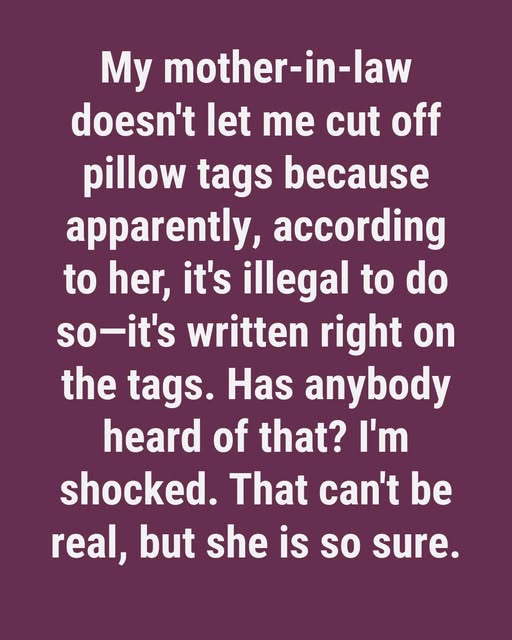
That terrifying tag on your pillow isn’t just some minor annoyance you ignore every night—it actually has a story, one that stretches back decades to a time when pillow and mattress manufacturing was far less regulated and far messier than most of us would like to imagine. For years, some companies literally stuffed pillows and mattresses with whatever materials they could get their hands on: leftover scraps, industrial fibers, even materials that were unfit for human contact. Consumers had no way of knowing what they were sleeping on, and there was little accountability. That’s when the government finally stepped in, crafting regulations that required manufacturers to disclose the contents of their bedding products. The result? That stark, all-caps warning tag you see now, emblazoned with words like “UNDER PENALTY OF LAW” in bold letters. It’s designed to make you pay attention, but over time it has gained a reputation for being terrifyingly bureaucratic and needlessly scary. Most people don’t realize that it’s actually a protective measure, aimed at companies, not the people lying in the bed at night.
The “law label” is a regulatory tool with a very specific purpose. Its primary aim is to ensure that manufacturers and retailers are honest about what they’re putting into their products. The tag is not about frightening consumers; it’s about transparency and accountability in an industry that once had very little. Every time you pick up a pillow or mattress, that tag confirms what the fill is—down, feathers, synthetic fiber, or a combination of various materials. It’s a guarantee that what’s advertised is actually what you are getting. Until the product reaches your hands, the law requires that the tag remains attached, signaling that the product meets legal standards. Once you’ve purchased it, however, you become the end-user. At that point, the legal obligation to leave the tag on your pillow ceases, and the warning no longer applies to you personally. The fearsome wording is aimed at manufacturers, not consumers, though it has often been misinterpreted as a personal threat.
Beyond its legal role, the tag can actually be surprisingly practical. Many people overlook the additional information included alongside the warning, but it often contains crucial details about the fill type, safety guidelines, care instructions, and even warranty information. For example, some tags indicate the exact fiber content, whether the product is hypoallergenic, or how to clean and maintain it to extend its lifespan. This can save you money in the long run, especially if you ever need to wash, repair, donate, or resell the item. Children’s bedding and certain specialty pillows often include even more detailed warnings or instructions, which can prevent accidents or damage. So, while the tag may seem like an eyesore, it is in fact a small but valuable resource for anyone who wants to make the most of their purchase.
The history behind these labels is surprisingly colorful. Back in the mid-20th century, some companies were less than honest about the materials in their bedding. News reports occasionally surfaced about pillows filled with shredded rags, horsehair, or other questionable materials. Consumers had no reliable way to identify these products, leading to disgusted reactions and health concerns. When the law was enacted, the intention was to restore trust in the industry and make sure buyers had the information they needed to make safe and informed decisions. That’s why the warning uses such strong language: it needed to have teeth, a deterrent that would ensure compliance from manufacturers who might otherwise try to cut corners. Today, that tag is a vestige of that era—a reminder that consumer protection laws exist for a reason.
It’s worth noting that the tag also has implications for liability and returns. If something were to go wrong before the product reaches the customer—say, contamination or mislabeling—the manufacturer can be held accountable, because the tag clearly states the contents and legal obligations. For consumers, this means an extra layer of protection: if you notice discrepancies between the advertised fill and the actual product, the tag can serve as proof in any complaint or claim. This is particularly relevant for mattresses, where misrepresentation of fill or quality can impact comfort, durability, and even health. In this sense, the tag is a consumer’s ally, even if it doesn’t look very friendly on first glance.
Many people are surprised to learn that once you bring the pillow or mattress home, you are legally allowed to remove the tag. Contrary to urban legends, the law is not punishing you for cutting it off. In fact, the “penalty of law” language is exclusively aimed at ensuring honesty in the supply chain. Consumers are free to trim, fold, or completely remove the tag if it interferes with comfort or aesthetics. This small detail has become a source of anxiety for generations, yet it’s perfectly legal to disregard it at home. Some people leave it on out of habit or caution, but doing so is entirely optional, and your scissors carry no legal risk whatsoever.
The tag also plays a surprisingly educational role. For anyone curious about product quality, manufacturing standards, or even history, the information included can tell a story. You can learn about synthetic versus natural fill, the country of origin, and even the types of fibers used. For environmentally conscious buyers, the tag can reveal whether the product contains recycled materials or meets eco-friendly standards. It’s a small window into an often opaque industry, and a way to make more informed decisions in future purchases. In this way, the tag is both a relic of regulatory history and a practical guide for modern consumers.
For parents, the tag can be even more important. Children’s pillows, stuffed animals, and other bedding items are subject to stricter safety regulations. The tag can indicate flame resistance, non-toxic fillings, and age-appropriate use. Ignoring it may not lead to legal trouble, but it could result in unintended safety risks. For anyone buying bedding for infants or toddlers, the information provided is genuinely useful and can guide safer choices, reducing potential hazards in the home.
In addition, the label often includes washing and maintenance instructions that can extend the life of your pillow or mattress. Many people throw away or cut off the tags without checking for care guidelines, inadvertently shortening the life of expensive items. Knowing the recommended cleaning methods, drying temperatures, and other specifications can save money, time, and effort. Even warranty information, often tucked in fine print, can be critical if the product develops defects or issues. In short, that ugly tag might look annoying, but it quietly holds information that benefits you in the long run.
So, the next time you feel the urge to tear that tag off in frustration, remember its history and its purpose. It’s not a personal threat, but a protective measure designed to keep manufacturers honest, provide safety information, and offer guidance that can save you money or hassle. The real choice is simple: leave it if you find the information helpful, or remove it if it’s driving you mad—legally, your scissors are completely free. That small, annoying piece of fabric is not just bureaucracy; it’s a relic of consumer protection, a tool for safety, and a surprisingly useful guide tucked into the corner of your bed.