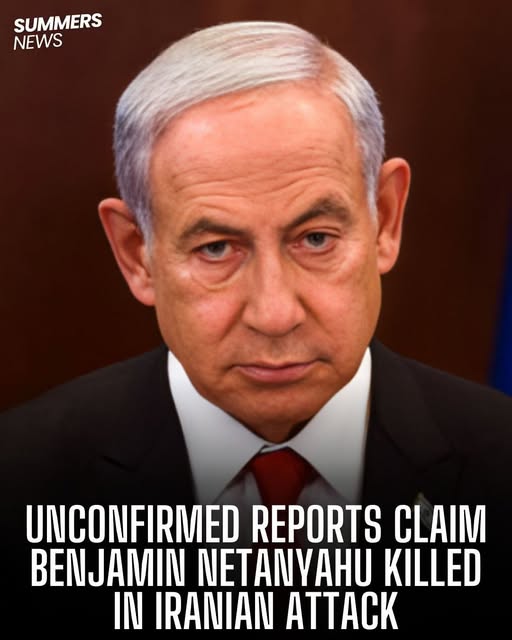
Claims circulating from Iranian sources that Benjamin Netanyahu, the Prime Minister of Israel, has been killed following a missile strike have rapidly gained traction across social media platforms, news outlets, and international discussion forums, igniting a wave of global attention and concern. The reports, which emerged late in the evening, allege that the primary target of the missile strike was the Prime Minister’s office in Jerusalem, a site traditionally considered one of the most secure locations in the country. These claims, if accurate, would mark a dramatic escalation in the already tense and volatile security landscape of the Middle East, intensifying fears of a broader regional confrontation.
Multiple state-linked Iranian media channels, as well as statements attributed to the Islamic Revolutionary Guard Corps (IRGC), assert that ballistic missiles were deliberately launched in a series of retaliatory strikes targeting strategic Israeli infrastructure. According to these reports, the missiles struck not only governmental sites but also high-ranking military residences, including the claimed location of the Israeli Air Force commander. Iranian officials have suggested that the precision of the attacks overcame Israel’s advanced missile defense systems, a claim that, if verified, would represent a significant challenge to the longstanding perception of the Iron Dome and other air defense technologies.
At present, Israeli authorities have not provided any confirmation regarding the alleged death of Netanyahu. The Prime Minister’s office, the Ministry of Defense, and other key governmental institutions have remained silent or issued cautious statements emphasizing that the reports are unverified. No official communiqué has been released to either confirm or deny the missile strike’s purported impact on Israel’s leadership, leaving the public and international observers in a state of heightened uncertainty.
Major international media organizations, including Reuters, AFP, CNN, and the BBC, have echoed the cautionary stance, reporting on the Iranian claims while stressing that independent verification is currently unavailable. Analysts note that in conflict zones where misinformation and propaganda can be widespread, official confirmation is critical to separating fact from politically motivated narratives. Consequently, while the reports have fueled widespread speculation, the actual status of Netanyahu and the extent of any damage to Israeli infrastructure remain unknown.
The current situation reflects an extremely sensitive escalation in Israel-Iran relations. Over the past several months, both countries have engaged in a cycle of strategic posturing, covert strikes, and increasingly sharp rhetoric, heightening fears that localized skirmishes could escalate into a larger confrontation. The alleged targeting of a national leader represents a significant intensification, one that would carry profound implications for regional stability, global markets, and international diplomatic relations.
In addition to the immediate security implications, the reported missile strikes have sparked urgent discussions among allied nations. Western governments, regional powers, and international bodies are closely monitoring developments, preparing contingency plans, and urging calm, even as uncertainty fuels anxiety across the Middle East. Security experts have emphasized the importance of waiting for verified information before drawing conclusions, noting that in times of high tension, even unconfirmed reports can lead to dangerous miscalculations.
As this situation continues to evolve, all eyes remain on official Israeli statements and corroborated reporting from independent sources. Analysts predict that in the coming hours, governments and intelligence agencies will attempt to clarify the situation, assess damage, and determine whether further defensive or retaliatory measures are required. Meanwhile, the global community watches with bated breath, aware that any confirmation of the Prime Minister’s death would constitute a momentous and destabilizing event in modern geopolitics.
The story is ongoing, and further updates are expected. Until more concrete information is made available, the international focus remains on deciphering verified facts from strategic messaging, understanding the broader ramifications for Israel-Iran relations, and anticipating how regional allies and adversaries might respond to this unprecedented claim.