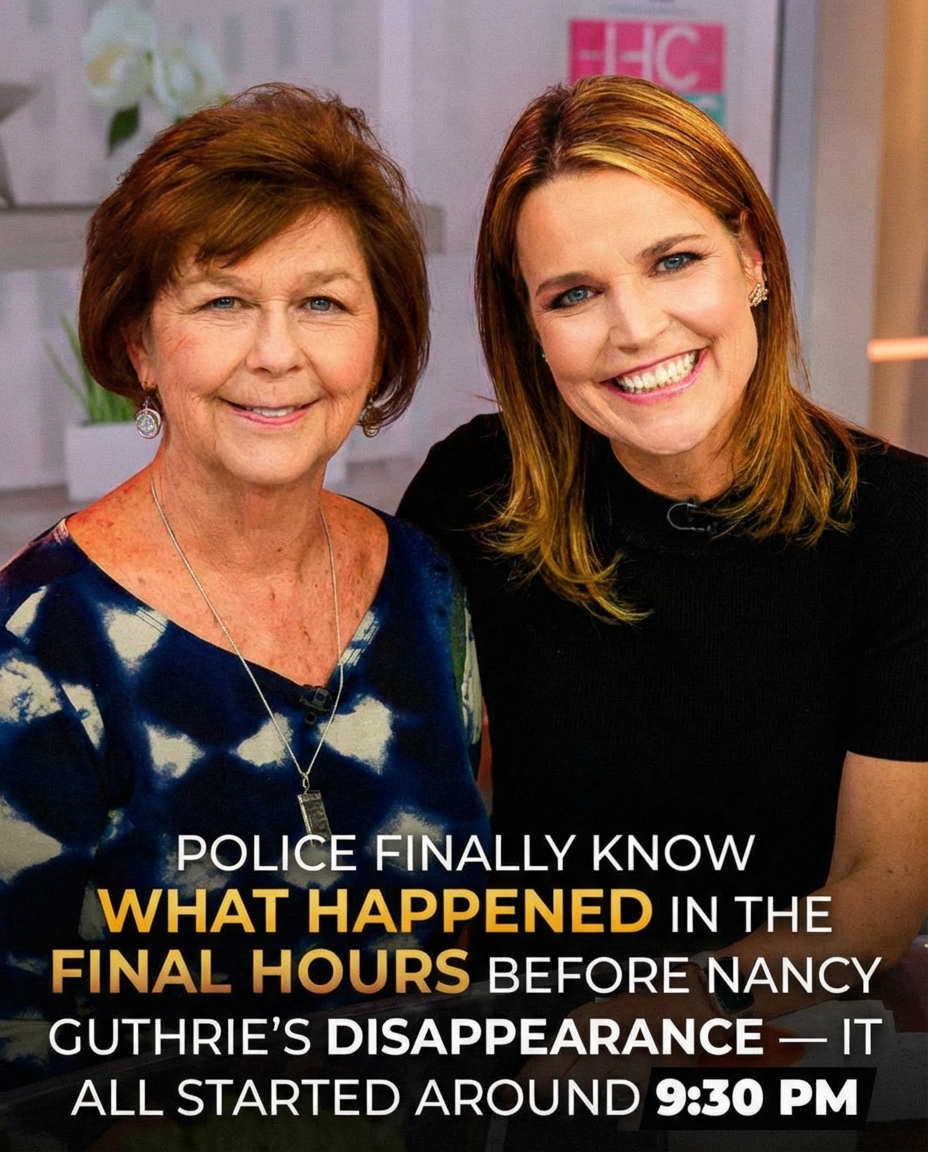
What began as an ordinary Saturday evening has now escalated into a tense and deeply concerning investigation that has gripped both the local community and national attention. Authorities emphasize that the final hours before Nancy Guthrie’s disappearance from her Arizona home are critical, and what once appeared to be an unremarkable night is now the focal point of a painstaking inquiry. The 84-year-old mother of Savannah Guthrie vanished under circumstances that have left both her family and law enforcement grappling with unsettling questions, as they attempt to reconstruct a timeline that may hold the key to understanding how a routine evening transformed into a full-scale criminal investigation.
According to law enforcement sources, Nancy was last seen late on Saturday night, January 31, after being dropped off at her home sometime between 9:30 and 9:45 p.m. Her daughter Annie was reportedly the last family member to see her and described her behavior as calm and normal, with no apparent indication that anything was amiss. It wasn’t until nearly 12 hours later, late Sunday morning, that relatives realized Nancy had not been heard from or seen and contacted authorities. Investigators have highlighted that this delay has become a critical piece of the puzzle, as detectives now painstakingly work backward to trace her movements, phone calls, and any potential interactions she may have had during that night. Every minute, they say, could contain clues that unravel what truly happened in those hours.
By Sunday afternoon, the investigation intensified dramatically. Chris Nanos confirmed that evidence discovered inside the home prompted the involvement of homicide detectives, a clear escalation that indicated Nancy’s disappearance was no longer being treated as a standard missing-person case. While officials have remained tight-lipped about the precise nature of the findings, they underscored that Nancy did not leave voluntarily. They further emphasized that she was mentally sharp and aware, yet physically limited and reliant on daily medications—circumstances that make her vulnerability particularly acute and heighten concern for her immediate safety.
As the search strategy evolved, authorities shifted from wide-area canvassing to a targeted, methodical investigation. Surveillance footage from the neighborhood is being reviewed frame by frame, tips from the public are being carefully vetted, and neighbors have been urged to check their doorbell and security cameras for any unusual activity during that window of time. Officials also report examining vehicle registrations, delivery records, and local traffic patterns to ensure no potential lead is overlooked. The community has rallied, leaving lights on, sharing information online, and watching for anything out of the ordinary, reflecting a growing sense of collective concern and vigilance.
Nancy remains missing, and as of now, no arrests have been made. Investigators stress that every detail—no matter how small—could prove crucial, from a missed phone call to an unobserved visitor. For Savannah Guthrie and her family, the waiting continues, filled with an uncertain tension that is both emotional and procedural. Every news briefing, every press statement, and every public appeal serves as a reminder of the fragility of hope and the weight of unanswered questions. Amid the anxiety, the family’s resolve has remained steadfast, as they navigate the harrowing balance between public attention and private grief.
The case has also sparked wider discussion about the challenges of searching for missing older adults, particularly those who live alone or rely on medication. Advocates stress that Nancy’s situation highlights systemic concerns, including delayed reporting, the importance of community awareness, and the need for rapid response measures. Social media posts and neighborhood networks have amplified these discussions, creating both supportive networks and the potential for misinformation, which authorities are actively working to manage.
As investigators continue to piece together Nancy’s last known movements, the community watches closely, offering both practical assistance and emotional solidarity. Volunteers patrol desert paths, neighbors remain vigilant, and media coverage keeps her story in the public eye—yet the ultimate goal remains singular: locating Nancy Guthrie safely. In the meantime, Savannah continues to balance the dual pressures of her public role and private anguish, embodying patience and grace while awaiting any word that might bring her mother back home. The case remains active, fluid, and deeply complex, a poignant reminder of how quickly an ordinary night can spiral into profound uncertainty and the relentless work required to seek answers in its aftermath.