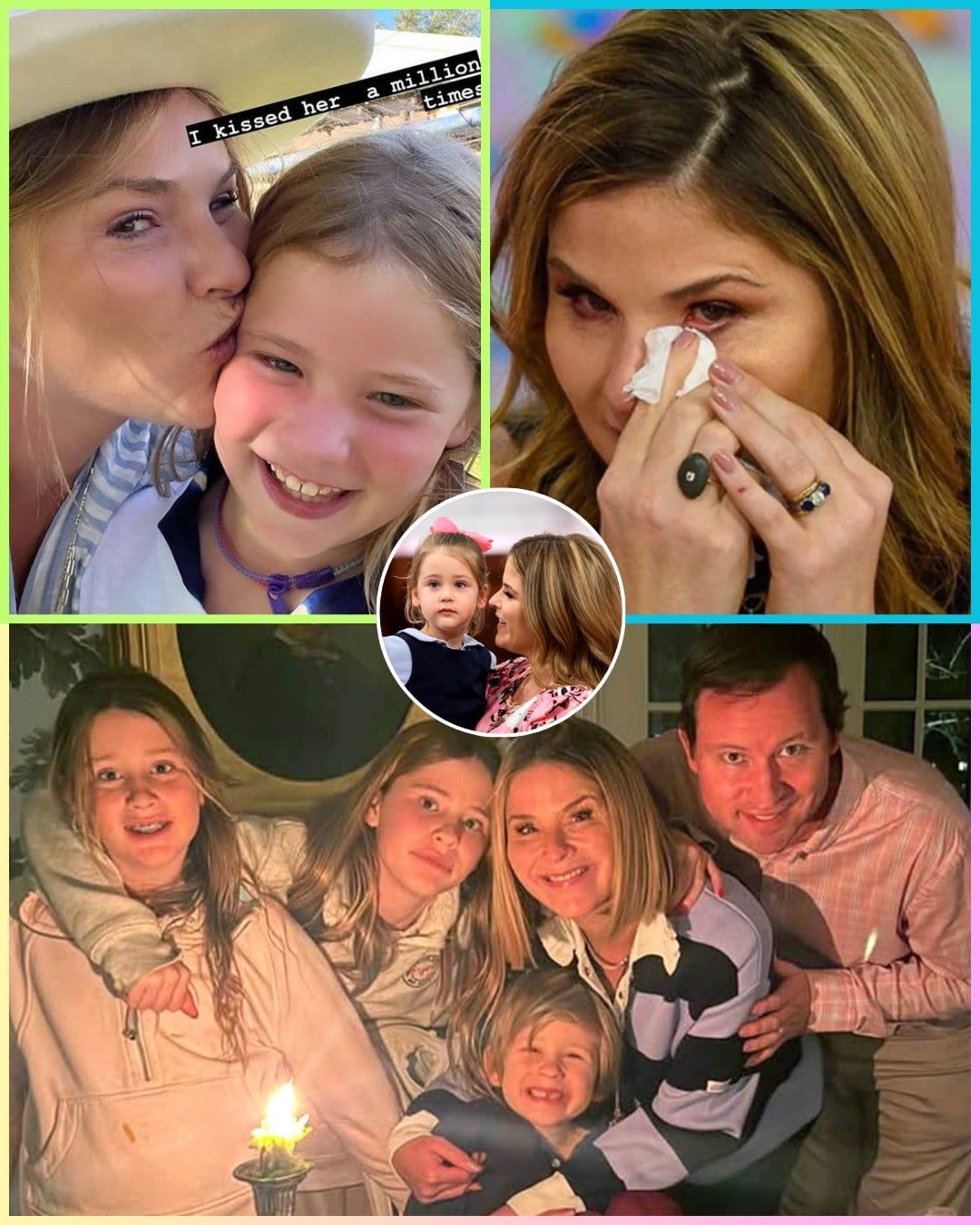
She had worried that the magic of travel might dissolve under the weight of real life—the missed naps, the public meltdowns, the constant calculations that come with moving through the world with small children. Instead, it appeared quietly, slipping through the cracks of imperfection. It arrived between hurried snacks and stroller negotiations, between whispered reassurances and the soft rhythm of a child’s breathing. Somewhere beneath the Vatican’s painted ceilings, with history towering overhead and time pressing in from every side, Jenna Bush Hager realized that wonder doesn’t disappear when life gets messy. It simply changes shape.
Italy was never going to look the way it once did. There would be no long, leisurely museum days or late dinners that stretched into the night. Instead, the trip unfolded in fragments: early mornings dictated by tiny internal clocks, afternoons surrendered to exhaustion, evenings shortened by the need for routine. Yet within those constraints, something unexpected bloomed. Traveling with young children, she learned, is not about controlling each moment or preserving some ideal version of the experience. It’s about releasing expectations and allowing yourself to be surprised.
Under the vast, echoing ceilings of the Vatican, as tourists flowed past in steady currents, her son Hal leaned into her, his body heavy with the pull of sleep. His eyelids drooped, fluttered, then snapped open again as if sheer willpower could hold consciousness in place. He didn’t want to miss anything—not the colors, not the scale, not the feeling that he was standing somewhere important. Jenna watched this quiet battle with a tenderness that caught her off guard. In his stubborn resistance to sleep, she saw a reflection of the traveler’s instinct itself: the desire to absorb, to witness, to hold onto something fleeting even when the body begs for rest.
That moment—imperfect, uncomfortable, entirely unplanned—felt more honest than any carefully staged memory could have been. There was no photograph that could fully capture it, no itinerary that could have predicted it. And yet, it became the heart of the journey. Overwhelmed, overstimulated, and deeply present, her child was experiencing the world in its rawest form. It reminded her that being alive in a new place often feels exactly like that: too much and not enough all at once.
As the days passed, Italy revealed itself not through grand checklists but through small repetitions. The cadence of unfamiliar streets. The taste of simple food eaten quickly. The sound of a new language settling into a young mind. Each experience layered quietly on the next, building something that didn’t announce itself in the moment but grew stronger with time.
When they returned home, the trip did not end. It lingered in unexpected ways. In familiar rooms, her son’s small voice began to echo words he had carried back with him: “Grazie mille.” “Buongiorno.” Simple phrases, spoken with pride and delight, rang out like souvenirs more meaningful than anything packed in a suitcase. Those words were evidence that something lasting had taken root. Italy had entered his world not as a memory he would someday recall, but as a living part of how he spoke, how he greeted the day, how he understood that the world was larger than his immediate surroundings.
In that realization, Jenna understood something essential about travel, parenthood, and memory. The value was never in flawless days or perfectly executed plans. It was in the moments that resisted control—the frayed patience, the compromises, the quiet victories. Even amid chaos, even when nothing went according to plan, something profound had been given and received.
Italy was no longer just a destination marked on a map or a chapter in a travel journal. It had woven itself into her son’s early sense of the world, into the sounds he loved to repeat, into the way curiosity lit his face. For a brief, luminous moment, an entire country had felt accessible, welcoming, and almost personal—like it belonged to him. And in that realization, she found the kind of magic that doesn’t fade, because it was never dependent on perfection to begin with.