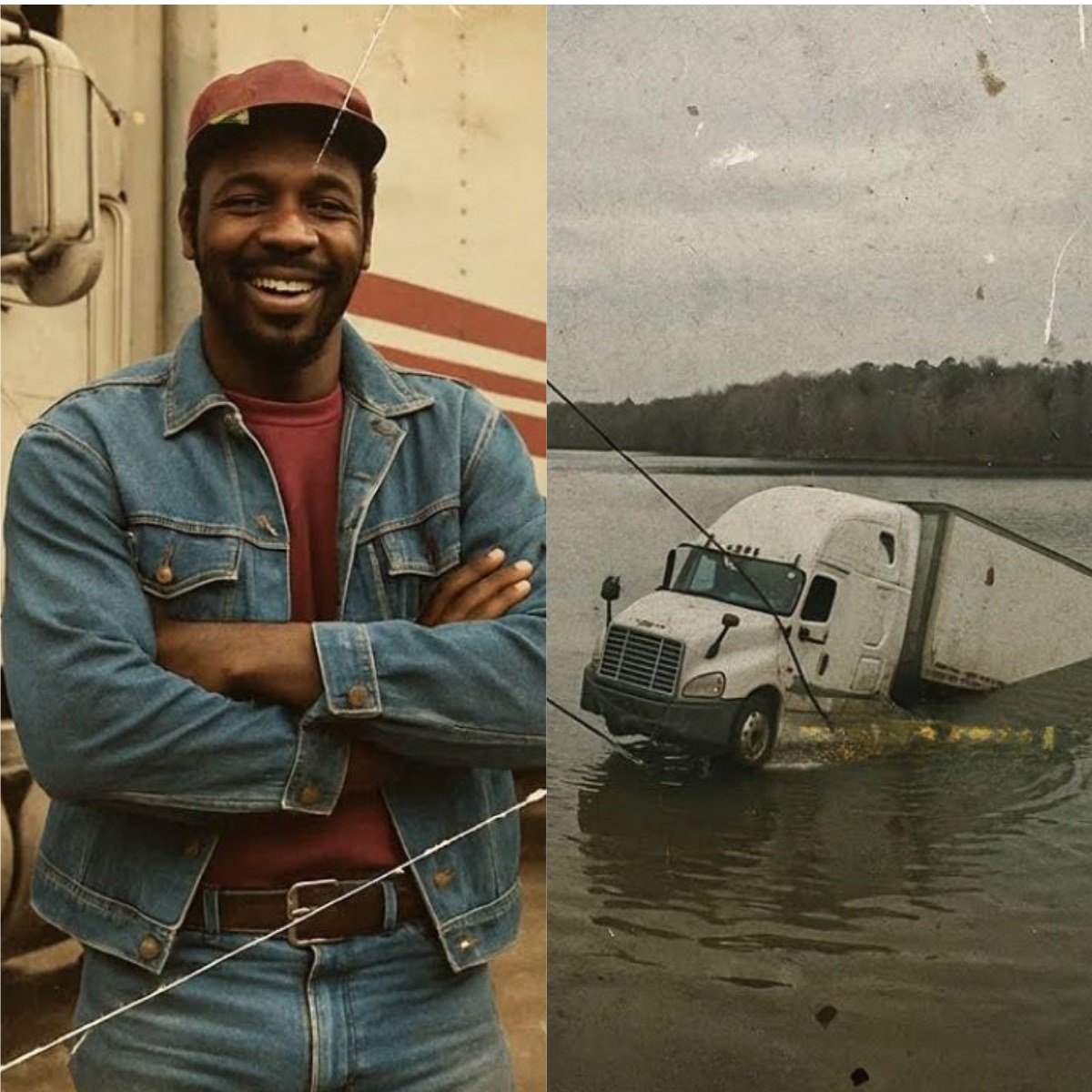
In the quiet of the night, long-haul trucks disappear into the darkness like ghost ships vanishing beyond the horizon. Their headlights shrink, taillights fade, and the highway swallows them whole. Most of these trucks reach their destinations, as planned. Some, however, don’t. And when a vehicle the size of a small house simply vanishes, it leaves behind an unsettling question that never fully goes away: how does something so enormous just cease to exist without a trace?
In the summer of 1987, Raymond Hoffman was a man you didn’t worry about. He was middle-aged, dependable, the kind of driver dispatchers trusted implicitly because he was known for his consistency and care. He wasn’t flashy, reckless, or known to cause problems. He didn’t pick fights at truck stops or chase risky side gigs. He did his job—ran his routes, logged his miles, and delivered his loads on time before returning home. Fellow truckers respected him for his kindness, always willing to help if another driver was stranded or in need of assistance. His reliability and steady nature were his hallmark.
That week, Raymond was hauling a semi-trailer filled with brand-new refrigerators from California to Nevada, driving through a stretch of barren, heat-baked land where the horizon shimmered with the distortion of the intense summer heat. It should have been just another routine trip. No bad weather. No ice. Just the long road ahead, a strict deadline to meet, and a shipment to deliver.
Back in the 80s, tracking technology was far more primitive than what we have today. There were logbooks, some rudimentary GPS tracking, and rough location entries. Dispatch could usually tell if a truck was sticking to its route, but if a driver veered off the path, even just slightly, the trail would quickly grow cold.
Raymond left California early, and a couple of hours into the drive, dispatch received a ping indicating he stopped at a large gas station. The station’s security cameras later showed Raymond stepping out of his truck, walking to a vending machine to grab coffee, having a brief chat over the radio, and then returning to the cab. His body language appeared calm, routine. No signs of panic, no odd behavior, and nothing out of the ordinary. Employees at the gas station remembered him as polite, professional—just another driver taking a break.
After getting back into the truck, Raymond rejoined the highway and continued toward his destination, disappearing into the vast emptiness of the Nevada desert. But two hours later, something changed. Radio contact was lost.
Initially, it wasn’t alarming. Drivers occasionally experience brief communication lapses. But as dispatch tried again and again to reach him, there was nothing—complete silence.
Worried but not yet panicked, dispatch checked Raymond’s last known position and pinpointed a quiet section near an old bridge over a narrow river. It wasn’t a busy area. That’s what made the situation more concerning. In such a remote place, a semi-truck would be hard to miss. Someone would have seen it pass, or at least heard it. But when local highway services were contacted, the answer was the same: No one had seen Raymond’s rig.
The alarm only truly began to sound when the unloading point in Nevada called, asking why the shipment hadn’t arrived. Refrigerators don’t just vanish without raising eyebrows. The company began calling Raymond’s phone. The police were soon involved when the issue escalated from a delayed delivery to a full-fledged missing person case.
At first, the search team focused on the most obvious causes: a crash. They scoured the ditches, ravines, and other spots where a tired driver or a blown tire might have sent a truck off the road. They searched the route, called in helicopters, and combed the area for anything—anything—that could explain Raymond’s disappearance. But there were no signs: no skid marks, no broken guardrails, no debris. Nothing at all.
Then, investigators considered the possibility of theft. A full trailer of refrigerators might seem like an attractive target for thieves, but such a crime would make noise. To unload the shipment, they would need a place to do so, a network of buyers, and a way to move the heavy, bulky appliances. But there were no reports of suspicious activity—no warehouse break-ins, no resold refrigerators, and no tips from informants.
With no evidence of a crash or theft, theories grew darker. Maybe Raymond had been hijacked. Perhaps he’d been forced to carry illegal cargo or gotten caught up in something sinister. But Raymond wasn’t the type to get involved in that world. His family insisted that he would never abandon them, that he would never just vanish without a word. His friends backed that up as well—Raymond was reliable, almost to a fault.
The case, like so many others, went cold. At first, it was urgent. But over time, it quieted down, becoming just another unsolved mystery—a case that only a few people still cared to remember. Years passed, and though some newspapers occasionally resurfaced the story, the answers remained elusive.
But time, as it often does, had a way of pushing mysteries aside. Until, in 2022, nature dragged it back into the light.
The American West was struck by an intense drought, causing rivers to shrink and reservoir levels to drop. In some places, the water receded by tens of meters, revealing stretches of ground that hadn’t seen the light of day in decades. Near a small town in Nevada, locals watched as a once-hidden lake level dropped to unprecedented lows.
A fisherman walking across what had once been the lakebed noticed something metallic sticking out of the mud. At first, it looked like the remains of an old vehicle or boat, but as he drew closer, he realized it was something far more unusual. The shape wasn’t random. It was too angular, too industrial. This wasn’t scrap metal—it was the remains of a semi-truck.
He immediately called the sheriff.
When rescue crews arrived, what they uncovered seemed like something out of a long-forgotten crime film—a semi-truck half-sunken in the mud, looking strangely intact for something that had been underwater for decades. The trailer was still connected, the rear doors closed, and the cab remained upright.
The truck didn’t look like something that had plunged off a cliff. It looked like something that had been gently guided into the water.
Divers checked the cab first, and what they found inside was chilling. Raymond Hoffman’s body was still seated behind the wheel, as though he had been caught mid-drive. Time and water had taken their toll, but the position of his body was unnervingly preserved. The seatbelt was still fastened. The doors were locked. The steering wheel, undisturbed.
When investigators finally brought the truck to the surface, the identification was confirmed. The truck matched Raymond’s rig—engine, plates, trailer fittings—all matched the records from years earlier.
Word spread quickly. People who had forgotten the story were suddenly reminded.
They opened the trailer next, and if there had ever been any doubt about whether the cargo had been stolen, it was answered then. Inside, the refrigerators were exactly as they had been loaded—rusted and ruined, but still stacked neatly. No hidden compartments, no contraband. It was just a full load of appliances that had been sacrificed to the bottom of the lake.
As investigators continued their work, someone opened one of the refrigerators. Inside, wrapped in plastic, was a rolled-up piece of paper.
A note.
The time and water had blurred parts of it, but the message was still clear. It read:
“I knew I wouldn’t arrive in time. He knew the route better than I did.”
No signature. No explanation. Just a chilling fragment of a thought.
The note raised more questions than it answered. Why would a driver hide a message inside a refrigerator unless he believed someone would search the cab? Unless he knew someone would eventually take the trailer and hide the truck? The note implied that Raymond had known his fate before it had even happened.
Investigators reopened the case files, pulling dusty folders and faded reports. They found something significant—a routing note from the day Raymond disappeared. After his stop at the gas station, Raymond had been advised by radio to take an alternate route due to roadwork and traffic. The note was vague, with just the initials “KL” tied to the directive. At the time, it seemed inconsequential. Decades later, it would become crucial.
The theory that emerged was the simplest one that fit the facts: Raymond’s disappearance was no accident. He hadn’t just driven off the road. The truck had likely been steered off-course, down a slope, and into the water—slowly, deliberately, with no sign of a crash. Someone had either brought Raymond there, forced him, or tricked him. And then, they’d made sure he couldn’t escape.
The investigation pointed to two potential motives: revenge or money.
Insurance fraud loomed large. If someone wanted to claim a payout, having a missing truck and lost cargo would be the perfect setup—especially if the paperwork was doctored. But the company that had managed those contracts had collapsed years ago. Records were incomplete, and while some financial documents suggested that the insurance payments exceeded the shipment’s value, there was no solid proof, no trail of evidence, no living suspects.
In the end, Raymond’s case was officially classified as a homicide by unknown persons. But with no one left to prosecute and key figures dead or untraceable, justice was never served.
For Raymond’s family, though, there was some measure of closure. For thirty-five years, they had lived with the question of what had happened to their loved one—a man, a truck, and a story that never made sense. Now they had remains to bury, a place to mourn, and the truth,