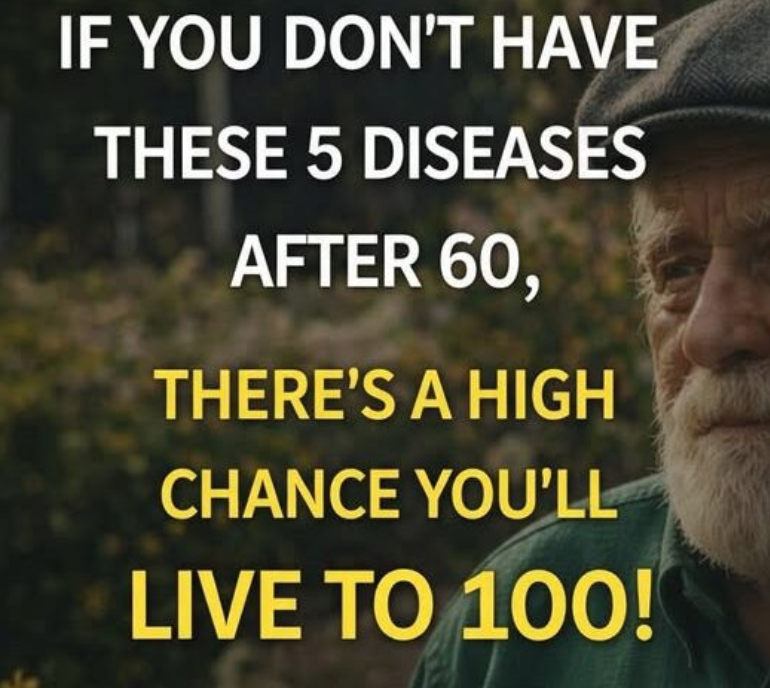
The pursuit of longevity has fascinated humanity for millennia, inspiring myths of elixirs, secret diets, and hidden enclaves where people mysteriously live far longer than their contemporaries. From ancient alchemists in medieval Europe to the blue zones of Sardinia, Okinawa, and Nicoya, the desire to extend life has always been intertwined with a mixture of wonder, curiosity, and hope. Yet, despite centuries of fascination, modern science in 2026 has distilled longevity into principles that are less magical and more measurable: achieving the age of 60 without developing any of five specific chronic conditions is one of the most reliable indicators that a person may live well into their 90s—or even reach the centenarian milestone. This insight shifts the conversation from mythical “secrets of the ancients” to practical strategies rooted in physiology, prevention, and sustained self-care.
Aging is a process every living organism undergoes, marked by changes in cellular function, hormone levels, and organ resilience. But the speed and severity of aging are not predetermined; they are influenced heavily by decades of cumulative lifestyle choices, environmental exposures, and the body’s intrinsic repair mechanisms. Reaching one’s sixth decade with a clean slate—free from heart disease, diabetes, stroke, cancer, or serious lung conditions—is more than a statistical milestone. It reflects a body that has maintained physiological balance across decades, successfully managing inflammation, oxidative stress, and cellular damage that accumulate quietly but relentlessly over time. In essence, arriving at 60 healthy indicates that your body has cultivated the biological momentum necessary to sustain life well beyond the century mark. This is not simply surviving; it is thriving, maintaining resilience against the internal and external pressures that slowly chip away at vitality.
Longevity is rarely the outcome of a single heroic intervention. It is the sum of countless daily choices, each seemingly mundane but cumulatively transformative. The foods we eat, the frequency and quality of physical activity, the ways we manage stress, our sleep patterns, and even the social connections we nurture—all of these subtly shape the architecture of our later years. Scientific studies now confirm that by midlife, patterns established decades earlier begin to manifest in measurable ways. Someone who arrives at 60 without major systemic health issues has likely maintained a rhythm of daily behaviors that promote cellular health, cardiovascular function, and cognitive resilience. It is this careful, long-term cultivation of health that allows the human organism to maintain flexibility, energy, and mental acuity as the years accumulate. By examining the five major barriers that often prevent people from reaching advanced age, we can understand how to navigate the path toward 100 with clarity, strength, and purpose.
The first and perhaps most critical pillar of longevity is cardiovascular health. The heart is the engine of life, pumping oxygenated blood to every corner of the body, and yet it remains one of the most vulnerable organs. Heart disease continues to dominate global mortality statistics, not only because of its prevalence but because its onset is often silent, building gradually over decades without obvious symptoms. Plaque deposits, high blood pressure, and subtle circulatory inefficiencies slowly compromise the heart and arteries, sometimes without any noticeable signal until a heart attack or heart failure occurs. To reach age 60 without coronary artery disease, arrhythmia, or the sequelae of previous cardiovascular events is extraordinary. It indicates that the blood vessels retain elasticity, the myocardium has avoided pathological thickening or scarring, and the body’s metabolic and autonomic systems are functioning in harmony. A heart that strong at 60 provides a robust foundation for decades more of active living, supporting everything from aerobic activity to complex cognitive processes dependent on optimal cerebral perfusion. Maintaining cardiovascular resilience is therefore the cornerstone upon which other health measures build.
Metabolic health forms the second critical pillar, with the avoidance of Type 2 diabetes representing one of the clearest markers of systemic vitality. Diabetes is not merely a condition of elevated blood sugar; it is a systemic disruptor, affecting nerve function, kidney health, ocular microvasculature, and the body’s inflammatory equilibrium. Chronically high insulin levels, common in prediabetes and uncontrolled diabetes, accelerate cellular aging, impair mitochondrial function, and increase susceptibility to cardiovascular and neurological complications. Those who reach 60 with preserved insulin sensitivity demonstrate that their bodies have successfully managed energy balance for decades, avoiding the subtle but cumulative damage caused by dysregulated glucose metabolism. These individuals often exhibit higher energy levels, sharper cognitive performance, and greater resilience to illness. Metabolic control is akin to preventing corrosion in a finely tuned machine; when managed correctly, it allows all other physiological systems to operate at their highest potential without interference from systemic stressors.
Cerebrovascular integrity—the absence of strokes or significant vascular brain injury—forms the third cornerstone of longevity. The brain is extraordinarily sensitive to disruptions in blood flow, and even minor reductions over time can impair memory, motor coordination, and executive function. Stroke is often the catastrophic result of years of uncontrolled hypertension, arterial stiffness, or atherosclerotic buildup. Reaching age 60 without such events indicates that cerebral circulation remains optimized, the blood-brain barrier intact, and the neurovascular network adaptable to stress. Importantly, maintaining a healthy brain is not only about preventing mortality; it preserves the essence of individuality, allowing continued engagement in life, decision-making, and social interactions. Those who protect their cerebral circulation enter later decades with the ability to maintain independence, mental clarity, and emotional balance—key ingredients in a life not only long but fulfilling.
Cancer avoidance constitutes the fourth pillar and underscores the role of the immune system in longevity. Cancer is often misunderstood as random bad luck; in reality, it represents a failure of the body’s cellular surveillance. The immune system is continually identifying and destroying abnormal cells, preventing them from forming malignant tumors. Reaching 60 without a cancer diagnosis suggests a combination of vigilant immunity, minimal exposure to carcinogenic environmental factors, and possibly favorable genetic factors promoting DNA repair and cellular fidelity. Dietary choices, avoidance of tobacco and excessive alcohol, regular exercise, and routine screenings all contribute to reducing risk. Avoiding cancer by midlife provides a clean runway for later decades, demonstrating that the body’s internal “police” remains effective against internal threats. This is an achievement of sustained preventive practice as much as it is of biology.
Finally, robust respiratory health represents the fifth essential component of centenarian potential. The lungs are the gateway to oxygen, the molecule that powers every cellular reaction, supports metabolic efficiency, and maintains brain function. Chronic obstructive pulmonary disease (COPD), emphysema, and other lung ailments compromise stamina, reduce sleep quality, and weaken the body’s ability to recover from even minor illnesses. Reaching 60 with resilient, elastic, and efficiently functioning lungs ensures that oxygen delivery remains uncompromised, supporting cardiovascular function, muscular endurance, and cognitive clarity. Respiratory health is often overlooked in discussions of longevity, yet it fundamentally determines the quality of life, not just its length.
Beyond these five clinical pillars, the true art of reaching 100 encompasses far more than the absence of disease. Emotional and social well-being are equally influential in shaping lifespan. Studies repeatedly show that social connection, purpose, and meaningful engagement can protect against the biological damage associated with chronic stress, loneliness, and depression. Centenarians often share a profound sense of curiosity, joy, and resilience—a “joie de vivre” that fuels both mental and physical systems. They move not out of obligation but out of curiosity and enjoyment, eat not just for nutrition but for shared experience, and participate in communities that sustain their spirits. Psychological resilience, therefore, is inseparable from physical health in the architecture of a long, vibrant life.
Modern gerontology increasingly emphasizes “compression of morbidity”—the strategy of extending the healthy, functional years while minimizing the period of decline in late life. Achieving 60 without heart disease, diabetes, stroke, cancer, or compromised lung function means a person has navigated the most formidable health barriers, effectively “clearing the track” for the decades ahead. It demonstrates biological durability, highlighting systems capable of sustaining resilience well into the ninth or tenth decade. While uncertainty remains an inherent feature of life, this foundation allows individuals to approach advanced age with confidence, agency, and optimism.
In conclusion, longevity is not a product of magic or luck; it is the outcome of decades of intentional choices, preventive practices, and engagement with life. The journey to 100 is built incrementally through daily decisions: nourishing the body, moving consistently, protecting mental health, fostering social bonds, and minimizing exposure to avoidable risks. The milestone of 60, free of heart disease, diabetes, stroke, cancer, or lung impairment, is more than a number; it is a profound indicator of sustained vitality. As we move through 2026 and beyond, understanding and prioritizing these pillars offers a tangible roadmap for living not just longer, but stronger, sharper, and with a rich, purposeful life. Every decision today echoes decades into the future, shaping the possibility of a century well-lived.