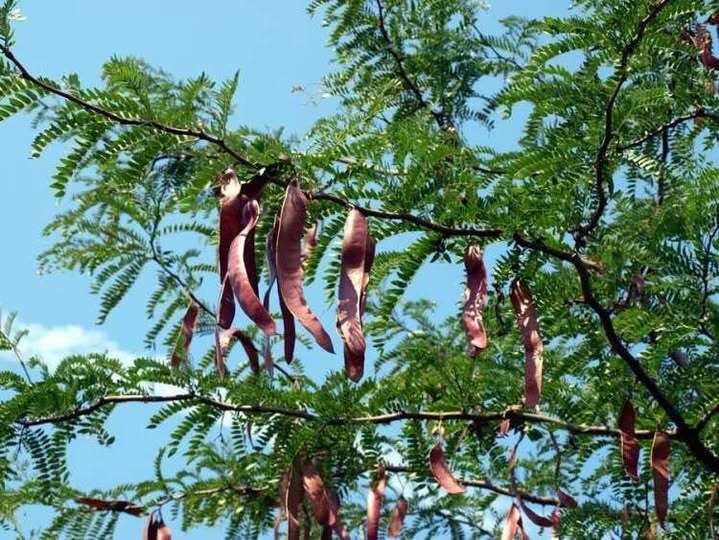
Most people walk past it without a second glance. A scraggly roadside tree, its branches thin and spindly, a bit of shade at the edge of a forgotten lot, a scattering of unassuming pods littering the ground. It does not demand attention. It does not glow or bloom with flamboyance. And yet, the honey locust is far more than background scenery. Hidden in its simplicity is a legacy of survival, a silent testament to human ingenuity, and a quiet ally for crises we are all too eager to ignore. Its story is one of resilience, resourcefulness, and a reminder that nature often provides in whispers rather than shouts.
Long before convenience stores, supermarkets, or industrial agriculture, humans relied on the humble honey locust in ways that are almost unimaginable today. Its sweet pods were a source of energy during lean seasons, a natural candy that offered calories when the cupboards ran bare. Children and elders alike chewed the pulp, savoring the unexpected sugar that grew freely, untainted by preservatives or processing. Its bark, leaves, and lathering sap served as cleaning agents in households before factories perfected soap. Families scraped it together into simple tools and fence posts, the dense, resilient wood holding up under weather, weight, and time. In every aspect, the honey locust was a partner—uncelebrated, unassuming, but essential. It was a quiet companion through lean winters, droughts, and periods when the world seemed to offer little else.
Yet today, the honey locust is largely forgotten. We pass by it while checking notifications, scanning for errands, or hurrying to our appointments. We see a tree, yes, but we rarely recognize it for what it truly is: a living archive of human resilience, a repository of knowledge encoded in its roots and branches. Its survival strategies—long taproots, drought resistance, nitrogen-rich leaves—mirror the ingenuity humans once applied to daily life. To ignore it is to forget a chapter in our own history, a chapter that could be crucial as the modern world grows increasingly fragile.
Modern crises have only made the honey locust more relevant. Our supply chains wobble under the weight of global disruption. Food prices spike, and local ecosystems falter. Pollinators vanish from fields stripped of their native flora. In this fragile landscape, the honey locust quietly stands as a rebuke to human forgetfulness. It restores tired, exhausted soil with its nitrogen-rich leaf litter. Its flowers feed bees and other pollinators when resources are scarce, providing critical sustenance at the moments they need it most. Its pods fall in abundance, feeding deer, rabbits, squirrels, and birds through the harsh months of winter. It does not demand attention or maintenance. It thrives in poor soil, withstands harsh weather, and endures neglect, giving back more than most of us realize.
Beyond ecology, the honey locust also represents a philosophy of wealth and preparation. It grows quietly at the edge of a field, often unnoticed, yet it holds within it the capacity to sustain, clean, and shelter. It does not promise instant gratification or flashy returns. Its value is accrued slowly, silently, like a savings account compounded over decades. In the tree’s continued presence, one can read lessons about patience, utility, and the quiet power of self-sufficiency. It asks almost nothing and yet offers more than most of us can imagine—sustenance, soil enrichment, and a reminder that resilience does not need to be conspicuous to be effective.
Imagine a world where we remembered the honey locust. Where children knew its sweet pulp as nourishment, where families turned its wood into durable tools, where gardeners respected its ability to enrich the soil for future crops. In such a world, we would be better equipped to face scarcity, climate uncertainty, and the erosion of local ecosystems. Its legacy teaches that survival does not require complexity, only attention, understanding, and a willingness to engage with what grows silently at our feet.
The honey locust is not a miracle cure, nor a trendy superfood to be packaged and sold to Instagram audiences. It is a witness to time, a quiet teacher, and a proof that real wealth often grows in forgotten corners. It waits for someone to notice, to learn, to use its gifts responsibly. It reminds us that the simplest resources, if understood and respected, can sustain a community, restore a land, and provide for generations. And perhaps most importantly, it reminds us that in a world increasingly dominated by noise and spectacle, the quietest solutions—like the honey locust—may be the most enduring and the most vital of all.
Next time you walk past a scraggly tree on a roadside or in a neglected yard, take a moment. Look at its pods, its thorns, its resilient leaves. Consider what it has survived, what it can provide, and how easily it has been overlooked. The honey locust is more than a tree. It is a lifeline disguised as ordinary scenery, a silent testament to human history, and a reminder that true resilience often waits quietly, patient, and generous, at the edge of our awareness.