I held the winning ticket between my fingers and felt nothing at first—no rush, no tears, no cinematic gasp. Just a quiet click in my chest, like a door closing. On the kitchen table, my phone lit up with a message from my daughter Ashley, the same table where I had once cut sandwiches into triangles and taped spelling lists to the fridge. The words on the screen were polite, efficient, dismissive—a corporate reply to a human need: please handle it yourself; I’m strapped; you’ll be fine. Eighteen words that told me exactly who she had become.
Three weeks earlier, I was still Sandra Williams, seventy-two, widowed, living on Social Security and a modest pension from two decades at Miller’s Diner. I bought the same lottery numbers every week, not because I believed in luck, but because the dates meant something: my late husband’s birthday, our anniversary, the day my grandson Jake was born. Those numbers were my life compressed into six small circles of ink. Habit, memory, hope—call it what you like. It was my ritual.
When the numbers were announced that Tuesday morning, I wasn’t listening until I heard fourteen. Then twenty-three. Then thirty-one. I stood up so fast my chair scraped the floor. The rest fell into place with terrifying clarity. Two hundred and thirty-three million dollars before taxes. Enough money to fix anything. Enough money to break illusions.
My first instinct was to call my children. Then I didn’t. I remembered last Christmas, the way Ashley joked about inheritance with a smile that didn’t reach her eyes. I remembered Derek, my son, hinting I should downsize the house that held every echo of my marriage. I remembered how often the phone rang only when someone needed something. The realization arrived fully formed: if I told them now, I would never know who they truly were. So I waited.
I did the sensible things quietly. I met attorneys and financial planners who spoke the language of asset protection, estate planning, tax efficiency, and privacy. I created structures with neutral names and clean lines. I learned how money moves when it wants to stay unseen. Then I designed a test so simple it felt cruel: I would ask for help when I appeared to have nothing to give back.
I called Ashley first. I told her about my heart medication, a broken water heater, and being short three hundred dollars until my next check. Her sigh landed harder than the refusal. Budget better, she said. Figure it out. The follow-up text arrived an hour later, sanitized and final. I stared at the ticket magneted to the fridge beneath a photo of Jake at graduation and felt the cold settle.
Derek’s response was worse because it wore the mask of reason. Enabling behavior, he called it. Live within your means. Consider a senior community. He blocked my number before I could finish explaining. The man whose student loans I had quietly paid off lectured me about dependence. I didn’t cry. I took notes.
Then I called Jake.
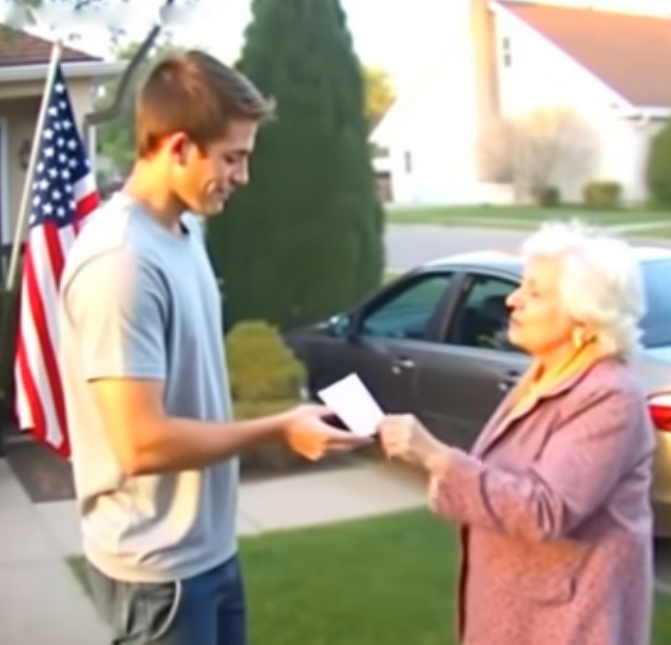
He answered on the second ring, road noise in the background, joy in his voice. When I told him the story, he didn’t calculate or deflect. He said he was turning the car around. Two hours later, he was in my driveway with groceries and an envelope. Five hundred dollars. A sticky note with a star by his number and a promise I could call anytime. He was twenty, working two jobs, saving for school, and he gave me everything he had without asking a single question.
That night, I told him the truth. I showed him the numbers, the verification, the paperwork. He didn’t cheer. He didn’t ask for anything. He understood immediately what the test had been and who had passed it. I asked him to keep the secret a little longer. He nodded, trusting me the way children trust the adults who show up.
What followed was not vengeance. It was accountability, designed with the same care I had used to raise my children. Through a newly formed LLC, I purchased Derek’s mortgage from his bank at a discount. I bought Ashley’s credit card debt from three issuers who were happy to sell it. I changed nothing about the terms. I wasn’t trying to crush them; I wanted them to feel the weight of their own words every month.
I paid Jake’s tuition for the university he dreamed of, covered housing, bought him a reliable car, and set up a modest stipend so he could study instead of survive. I framed it as an investment in character—the most reliable asset class I knew.
When the letters arrived at Derek’s and Ashley’s houses, panic did the talking. Derek called despite having blocked me, confusion bleeding into fear. Ashley accused me of abuse, then begged, then denied. I repeated their own phrases back to them, calmly, precisely. Handle it yourself. Tough love. Live within your means. The truth does not need embellishment.
I offered one path forward. For every verified hour of volunteer work at the library, food pantry, or veterans’ home, I would forgive twenty dollars of their debt. Not because I needed the labor, but because service reveals priorities faster than speeches. Months passed. Not a single hour was submitted. The answer, once again, was clear.
Life rearranged itself around the people who showed up. Jake thrived. He called with stories about classes and friends, about the relief of focusing on learning. Neighbors noticed repairs being made quietly, roofs fixed, instruments donated, equipment replaced—philanthropy done without names attached. Money, I learned, works best when it moves without applause.
Derek appeared at my door one Sunday asking for forgiveness that sounded like access. I told him the door was unlocked for visits, not withdrawals. Blood is a fact; family is behavior. He left without the absolution he expected.
At Christmas, my kitchen filled with people who needed a place to be. Burned pie, laughter, extra plates. Jake and I talked about his grandfather, about tools and houses and building something that lasts. I kept two items in a drawer: the ticket, sleeved in plastic, and Jake’s envelope with the star. One represented improbable wealth; the other represented certainty.
In the end, the lesson wasn’t about lottery odds or financial strategy or even justice. It was about distance traveled when someone needs you most. Love is measured in miles and minutes and the willingness to arrive without guarantees. Money can amplify who we already are. It can’t replace showing up.
I didn’t lose my children that year. I found my family.