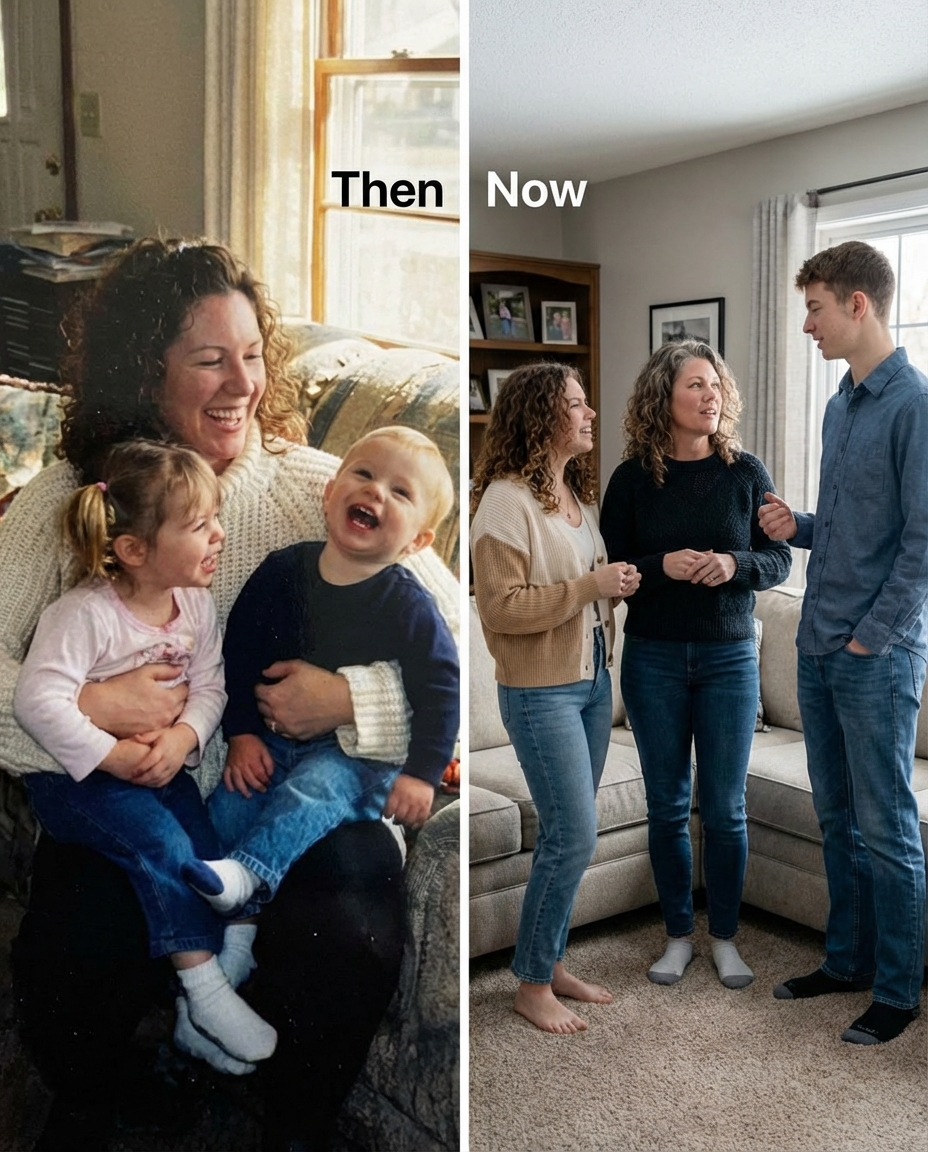
For 18 years, I believed love could cover anything—grief, loss, even the sharp edges of a broken past. I believed that if my heart was big enough, and my arms open wide enough, it could hold every hurt and stitch together every fracture in life. That belief was tested in ways I could never have imagined when my sister Rachel died, leaving behind her six-month-old son, Noah. The weight of her loss was immediate, sharp, and unrelenting, but when I first held Noah in my arms, I felt something shift. My husband, Ethan, and I had struggled for years to have children, and just as life finally gave us our daughter, Emily, it seemed to take Rachel away. Noah came into our home “temporarily,” a word that felt like a placeholder for what I hoped would become something permanent—but even in those first moments, I knew there would be nothing temporary about the bond forming in my heart. I promised myself, silently and fiercely, that he would never feel unwanted, never abandoned, never like a burden someone might return when it became convenient.
Rachel’s husband, Mark, vanished just days after the funeral. There was a single phone call, a request to keep Noah for a short time, and then nothing—no visits, no explanation, no effort to connect. The absence was painful, but my resolve hardened. I made the decision to adopt Noah, not just legally, but emotionally, so that he could grow up with the stability, routine, and sense of belonging every child deserves. Emily and Noah became siblings in every meaningful way. I watched him grow: quiet, thoughtful, responsible without prompting, kind at school, respectful at home, carrying an innate steadiness that belied his youth. And for years, I believed the hardest part was behind us.
Then, on an ordinary Tuesday evening in March, everything shifted. Noah walked into the kitchen, eyes rimmed with tears but voice sharp with conviction, and asked me to sit. Emily froze in the doorway, sensing the gravity in the air. Noah’s words tore through the calm I thought we had built: “I know the truth… and I want you out of my life.” He accused me of lying about his father, insisting that I had told him Mark had died along with Rachel when in reality, Mark was alive—and had simply chosen to leave. My heart broke in real time. I tried to explain, to share that I had been protecting him from a truth I feared would crush him, but Noah didn’t hear protection—he heard control. The love I thought was a shield had become, in his eyes, a cage built from deceit.
The truth, once exposed, refused to be hidden again. Emily admitted she had let it slip years earlier during an argument, after overhearing relatives. Noah left to stay with a friend, needing space, air, and distance from me. It was a sharp, painful lesson in humility: even the best intentions can wound when filtered through secrecy. Eventually, he agreed to meet, and I told him everything—how panic had guided my choices, how I thought a clean story would hurt less than a complicated one, and how deeply I regretted the fear-driven decisions I had made. I admitted my mistakes fully, without excuse. Noah chose to search for Mark anyway, driven by the need to confront the father who had been absent in both presence and truth. When he finally located Mark two states away, living with a new family, the silence that followed each letter and message cut deeper than any conversation could. This time, however, I stayed beside Noah through the pain, telling him the truth with openness, without trying to soften it, shape it, or shield him from reality.
Over time, the anger didn’t disappear, but it transformed. Noah began returning home for dinners, then holidays, then ordinary days again. We went to therapy, unpacked grief, disappointment, and trust, and learned the delicate balance between loving someone fully and managing the stories we tell to protect them. Months later, Noah said something I will carry forever: “You didn’t give birth to me… but you never walked away.” Those words were more than gratitude—they were recognition of the kind of love that chooses presence over perfection.
We’re not perfect now, nor are we immune to pain, but we are real. And real is stronger than a fragile peace built on secrets. Love didn’t erase the consequences of my choices, nor did it remove the heartbreak, but it gave us a way back. Sometimes, the hardest part of being a parent isn’t just raising a child—it’s having the courage to face the truth alongside them, to accept the consequences of your decisions, and to stay present even when it costs you everything. Love, I’ve learned, is not a cover for mistakes—it is the willingness to stand in them with the people who depend on you, to let truth and care coexist, and to let the bonds you forge through hardship become the very measure of family.