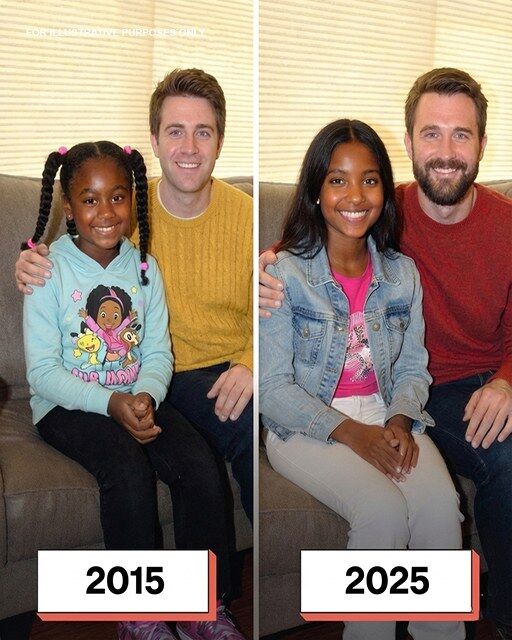
I Raised My Late Girlfriend’s Daughter as My Own — 10 Years Later, She Told Me She Had to Return to Her Biological Father for a Heartbreaking Reason
Ten years ago, I made a promise to a woman who knew she was dying. At the time, I couldn’t have imagined how heavy that promise would become, or how deeply it would shape the rest of my life. All I knew was that I loved her—and I loved her child—and sometimes, love asks for everything without explaining why.
Her name was Marianne.
We met by chance, one of those ordinary accidents that later feel like fate. She walked into my shoe repair shop one rainy afternoon, carrying a pair of cracked heels and apologizing as if it were her fault. She laughed easily, but there was a weariness behind it, noticeable only if you paid attention. She had a daughter with her, a small, quiet girl named Lily, who hid behind her mother’s coat and peeked out at me as though I were a stranger from a fairy tale.
We didn’t fall in love slowly. There wasn’t time for that. Life pushed us forward, as if it already knew what was coming.
Lily’s biological father had vanished the moment Marianne told him she was pregnant. No explanation, no goodbye, no support—nothing. He erased himself completely, leaving Marianne to carry everything alone. By the time I entered their lives, Lily was three and cautious around men, but she gradually warmed to me in quiet, careful steps.
I learned how to earn her trust. I let her paint my workbench with washable paints. I built a crooked treehouse behind our small rental home while she supervised with a plastic crown on her head. I stayed up late watching tutorials so I could braid her hair, practicing on a mannequin head borrowed from a nearby salon.
Eventually, she began calling me her “always dad.”
I ran a modest shoe repair shop—nothing glamorous, just leather, glue, patience, and hands that knew how to fix what was worn but not broken. Having Marianne and Lily in my life felt like a quiet miracle. I saved for months to buy a ring, planning to propose on a weekend trip to the lake.
But cancer didn’t care about plans.
By the time her diagnosis came, it was already too late. The disease progressed quickly, mercilessly. Hospitals became our second home. Lily slept curled up in waiting room chairs while I held Marianne’s hand, trying to believe we still had time.
We didn’t.
On her last night, surrounded by the soft hum of machines and the scent of antiseptic and grief, Marianne pulled me close. Her voice was faint, but her eyes were fierce.
“Promise me,” she whispered. “Take care of my baby. Be the father she deserves.”
I promised.
She passed away the next morning.
A few months later, I legally adopted Lily. There was paperwork, court dates, and signatures, and a kind judge who smiled at us—but in my heart, the adoption had happened years earlier. Lily was my daughter in every way that mattered.
For ten years, it was just the two of us.
I packed her lunches, helped with science projects, attended school plays, and sat by her bed during nightmares. I learned when to speak and when to listen. I learned how to let her grow while still being close enough to catch her if she fell.
I never imagined that the man who abandoned her before she took her first breath would return to upend everything.
It happened on Thanksgiving morning.
The house smelled of roasting turkey, butter, and cinnamon. Music played softly. Lily was sixteen then, tall and thoughtful, her laughter less frequent but still unmistakably hers.
“Can you mash the potatoes?” I called from the stove.
No answer.
I turned to see her standing frozen in the doorway, pale, hands trembling like she was bracing against a storm. Her eyes were red and swollen.
“Dad,” she said quietly. “I need to tell you something.”
Something in her voice made my chest tighten.
“I’m not going to be here for dinner.”
My stomach sank.
“What do you mean?” I asked, already afraid of the answer.
She swallowed hard. “I’m… going to my real father.”
The words hit me like a punch.
“My… what?”
She looked down. “He reached out to me. Two weeks ago, on social media.”
I felt the air leave my lungs. “What did he want?”
She hesitated, then whispered, “His name is Darren Cole.”
I knew the name immediately. Everyone did. A famous professional athlete, celebrated on television, criticized in tabloids, charming on the field, ruthless off it. I had read enough to know he wasn’t a man you trusted with anything fragile.
“He promised me something,” she said.