I never imagined a $12 grocery bill would become the pivot point of my entire life. I wasn’t trying to be a hero. I wasn’t aiming to be generous, or memorable, or even noticed. All I wanted was to prevent a stranger from enduring the sharp, familiar sting of humiliation I’d tasted myself too many times to count. But life, as it often does, circles back with consequences. Sometimes harsh, sometimes astonishingly kind, sometimes in ways that you couldn’t predict even if you spent a lifetime trying.
It was two days before payday, and I was exhausted. Owen, my three-year-old whirlwind of energy and curiosity, was perched on my hip like a warm, wiggling bowling ball. He had discovered the world anew this morning, and every second he had a new fascination, a new question, a new thing he simply had to touch. My bank account, much like my patience, had never felt thinner. $27 sat in my account, a small buffer between survival and disaster, and my nerves were stretched even thinner.
“Mommy, look! Sour worms!” he squealed, lunging toward the candy display with a level of enthusiasm only a toddler could maintain.
“No, buddy,” I said, adjusting him on my hip, trying to steer him away from sugar for the hundredth time that week. “Not today.”
“But they’re sour,” he insisted, stretching the word in a tone that made it feel like a revelation of cosmic importance.
Nearby shoppers smiled indulgently, amused by his wide-eyed wonder. My voice, worn thin from work and worry, didn’t have the luxury of indulgence.
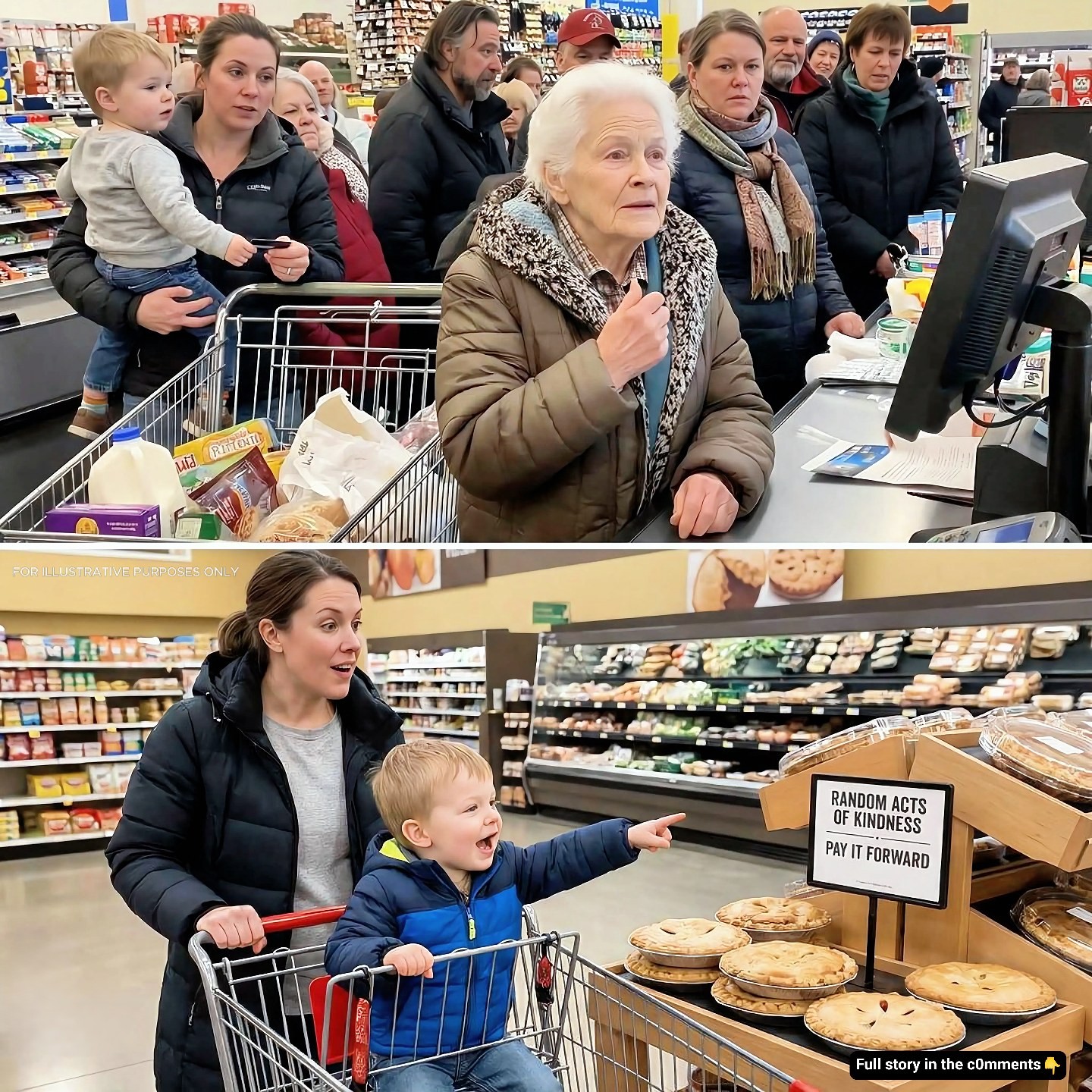
Ahead of us, waiting patiently in line, stood an elderly woman. Her silver hair was neatly pinned into a bun, the kind of careful, timeworn style that whispered of decades spent navigating hardship with dignity. Her cart was modest: milk, a few potatoes, a can of soup, a loaf of bread. But sitting atop it all, wrapped in crinkled plastic like a crown of golden hope, was a small apple pie. Nothing extravagant, nothing showy—just a simple, ordinary piece of comfort.
The cashier scanned her items, one by one. The total printed. The woman hesitated, fingering her card. She swiped it once. Beep. Declined. She tried again. Declined.
The air shifted instantly. A man behind me groaned, his irritation loud. Another muttered, “People need to stop shopping if they can’t afford it.” The judgment was tangible.
The woman’s hands trembled slightly. “I’ll put the pie back,” she whispered. Her voice barely rose above the hum of the fluorescent lights.
Something inside me cracked. That pie wasn’t indulgence; it was dignity. A small piece of normalcy, a simple permission to feel human in a world that seemed eager to strip it away.
“I’ll pay for it,” I said before I could second-guess myself.
Her eyes widened. “Oh, dear, you don’t need to—”
“Please,” I interrupted, tapping my card. “I insist.”
Relief softened her entire face, and for the first time, she smiled without reservation. “Thank you,” she murmured. “You have no idea what this means.”
Owen, blissfully unaware of financial tension or societal judgment, waved at her. “Bye-bye, Grandma! Have a good day!”
She laughed. A quiet, broken little laugh that seemed to release something heavy from both of us. “You too, sweetheart,” she called, waving back.
Two days later, I walked into the same grocery store, trying to keep Owen entertained while keeping my own budget under control. A printed screenshot of the security camera was taped to a display near the entrance. Me, Owen, the register, captured mid-kindness. Above it, a hand-written note:
Please contact us. You helped my mother, and we’d like to thank you.
My heart thumped. A public recognition was the last thing I wanted, but the message lingered in my mind all day. That night, with Owen asleep and the house quiet, I dialed the number.
A man answered immediately.
“Are you the woman with the little boy? The one who helped my mom?”
“I… guess that’s me,” I stammered.
He exhaled, a long, relieved breath. “She hasn’t stopped talking about you. Would you meet us? She wants to thank you properly.”
The next morning, I met them at a small café redolent with the scent of cinnamon and warm pastries. Margaret—the woman from the store—walked in with a blue cardigan and a smile that seemed to anchor the room in warmth. Her son, John, followed close behind.
Margaret embraced me before I even had a chance to sit. “You came,” she said, and her gratitude felt so deep it almost hurt.
Owen dove into a muffin the size of his head, crumbs spilling everywhere. John explained gently, “It wasn’t what it seemed. Mom’s card had expired. She usually gives so much away that she never struggles—but you stepped in before she had to.”
Margaret held my hand, her fingers firm yet trembling slightly. “You didn’t just help with groceries. You reminded me that I’m seen. That matters more than you know.”
And then she said something that I’ll never forget:
“I want to open a savings account for your son. Ten thousand dollars. For his future.”
I stared. Shock pinned me to my chair. “I… can’t accept that.”
“Yes, you can,” she said firmly. “This isn’t charity. This is gratitude. Kindness deserves to be returned.”
I cried—not for the money, though it mattered—but because kindness like that had been missing from my life for so long.
From that day forward, our connection deepened. Coffee dates became dinners. Dinners became park walks. Owen adored Margaret instantly and warmed to John just as quickly. We shared the messy pieces of our pasts—failed marriages, abandoned dreams, wounds that time hadn’t fully healed. And in those quiet, honest conversations, tenderness slipped in like sunlight through a window you didn’t realize had been opened.
A year later, under the wide branches of the oak tree in Margaret’s backyard, John and I were married. Owen, in his bow tie, carried the rings with the utmost seriousness. Three months later, the adoption papers were signed.
“Does this mean I get to call him Dad now?” Owen asked, with hope glimmering in his eyes.
“You already do,” I whispered, tears pricking.
Every Christmas, Owen retells the story: “Remember when we met Grandma Margaret at the store?” he says with pride. And every time, I smile, remembering that $12 act of kindness—the small hinge that swung our entire lives into a direction I could never have anticipated.
Miracles rarely arrive with fanfare. They come quietly, tucked inside grocery bags, trembling hands, and a single slice of apple pie. And sometimes, when you least expect it, they change everything.
That’s how love found us again—quietly, unexpectedly, and with a generosity I will carry in my heart forever.