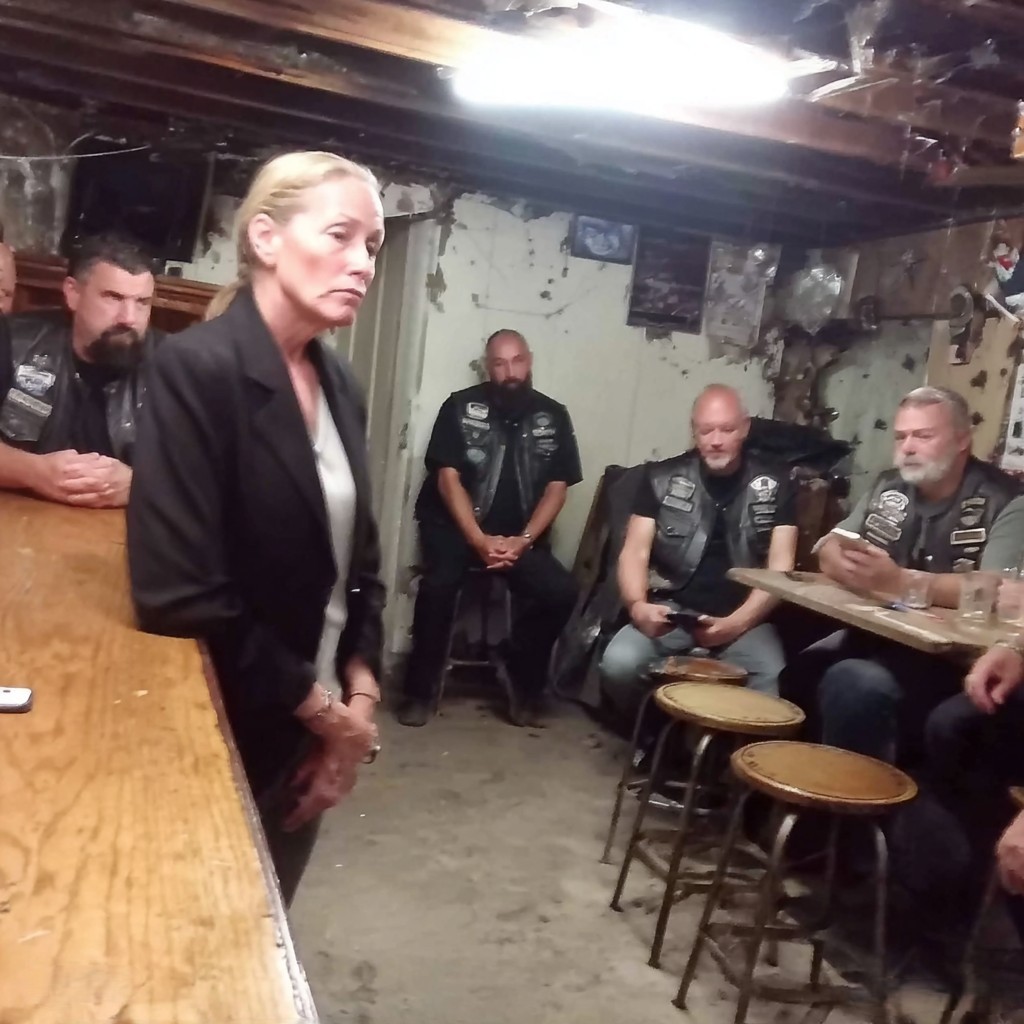
The motorcycle clubhouse was thick with the smell of old beer, worn leather, and raw defiance—a stronghold built on unspoken rules and hardened loyalty. Desperation had driven me there. I was a forty-five-year-old suburban real estate agent, completely out of place, clutching five hundred dollars in cash like a lifeline. My request was blunt, born of fear rather than courage. “I need someone hurt,” I said, my voice shaking as I faced the massive, bearded man behind the bar. “A man is stalking my daughter. The police won’t stop him. I need him gone.”
The room fell silent. Rough men in leather and denim turned their attention to me, studying the well-dressed woman who had just crossed an invisible line. I expected bargaining, threats, maybe even violence. I was prepared to accept whatever version of vigilante justice they offered.
Instead, the man whose vest read Thomas – President slid the money back untouched. “Why don’t you sit down and tell us what’s really happening,” he said. The calm refusal stunned me.
My story poured out uncontrollably. My nineteen-year-old daughter, Emma, had been living in fear because of Richard Kelley, a thirty-seven-year-old man who followed her everywhere—her college campus, her job, our home. The terror reached its peak when he left a photo of Emma sleeping on her car windshield. The police were powerless. He had made no direct threats, broken no doors, committed no chargeable crime—only trespassed. A warning was all they could issue, despite the violation of her most personal space.
Watching Emma unravel while the system failed us pushed me to the edge. When I finished speaking, several bikers stood, the mood in the room shifting from doubt to sharp focus. Thomas pushed the cash back toward me again. “We’re not going to hurt him,” he said firmly. “That won’t help your daughter. What she needs isn’t her mother in prison for hiring an assault. She needs something smarter.”
My heart dropped—until I saw his expression. Calm. Certain. Almost satisfied. “We’re going to make him feel what he’s been doing.”
Their plan was simple, psychological, and completely legal. They would stalk the stalker. “We’ll follow Mr. Kelley,” Thomas explained. “In public. Within the law. All the time.” The rules were clear: no threats, no touching, no confrontation unless spoken to. If engaged, they would be polite. They would simply exist near him—using the same legal freedoms he had exploited against Emma.
A grizzled Vietnam veteran in the group summed it up perfectly: “They told you they couldn’t act until he did something. That rule cuts both ways.” Dark laughter filled the room. They understood the law’s blind spots—and how to use them precisely.
Thomas shared his personal reason for helping. Years earlier, his own daughter had been stalked. He had assaulted the man and spent eight months in jail, accomplishing nothing except trapping himself. It was persistent, non-violent counter-stalking by his club that finally forced the stalker to flee. “Nine days,” Thomas said. “That’s all he lasted.” They didn’t want money—only photos of Kelley and Emma’s schedule. Planning and communication were their real tools.
The operation began the next morning. At exactly 7:00 a.m., when Kelley left his Riverside apartment, two bikers were already there, calmly drinking coffee. They followed him—legally—to his job at a downtown hardware store. Emma texted me from class: Two bikers are outside the lecture hall. They said they’re here to make sure I’m safe.
By midday, Kelley had already called the police twice. One biker recorded the interaction: Kelley shouting accusations, Thomas responding calmly, citing laws and public access. The officers could do nothing. No crime had occurred.
For nine days, Kelley lived under constant observation. Sidewalks. Parking lots. Gyms. Grocery stores. Always present. Never threatening. His attempt to file a restraining order against the entire club collapsed when a judge asked a single question: if their behavior was illegal, how did it differ from his actions toward Emma? His employer soon suggested a leave of absence due to repeated police visits disrupting business.
On the ninth day, Thomas called me. Kelley was packing his car. Fifteen motorcycles followed his white Honda Civic all the way to the state line—a silent, unmistakable message. He was done.
That evening, the entire club came to my home. Thomas handed back the $500. “We don’t charge for protecting kids,” he said. Emma hugged him—six months of fear finally gone. One younger biker added the final safeguard: Kelley’s photo had been shared with motorcycle clubs in six neighboring states. A non-violent blacklist. If he tried again, he wouldn’t find peace.
They were fathers and brothers who knew the system sometimes failed. Their loyalty was unshakable, their methods unconventional. They asked for no payment—only that we support their annual Christmas toy run. Emma immediately agreed.
Today, Emma is healing. She’s in therapy. She has her life back. Kelley attempted to resettle in Oregon, Nevada, and Arizona, only to encounter familiar figures quietly appearing nearby. Eventually, he fled to Florida—far away.
This experience changed how I understand justice. It isn’t always delivered by courts or punishment. Sometimes it’s achieved through intelligence, persistence, and lawful pressure. It was justice delivered by twenty men who looked terrifying but chose to protect the innocent. Inspired by them, Emma now plans to get her motorcycle license—not as a victim, but as someone who stands her ground.
I learned that the most powerful revenge isn’t illegal.
It’s poetic.