I’m Marjorie Whitfield, seventy-three now, and I’ve learned over the years that life can break you in an instant—but sometimes, it unexpectedly hands you something to hold onto.
Eighteen years ago, grief had hollowed me out completely. I felt more like a ghost than a person. Then, on what should have been an ordinary flight home, fate put two abandoned infants in my path—and suddenly, I had a reason to keep living.
I was returning to my hometown after a phone call no mother should ever get: my daughter, Helena, had died in a car accident. Her little boy, my only grandchild, was gone too. I hadn’t been in the city at the time, and the guilt of not being there clawed at me as sharply as the grief itself.
The flight felt endless, a slow descent into the darkest chapter of my life. I barely noticed anything unusual until the crying began—a loud, desperate sound that scraped against every broken piece of me.
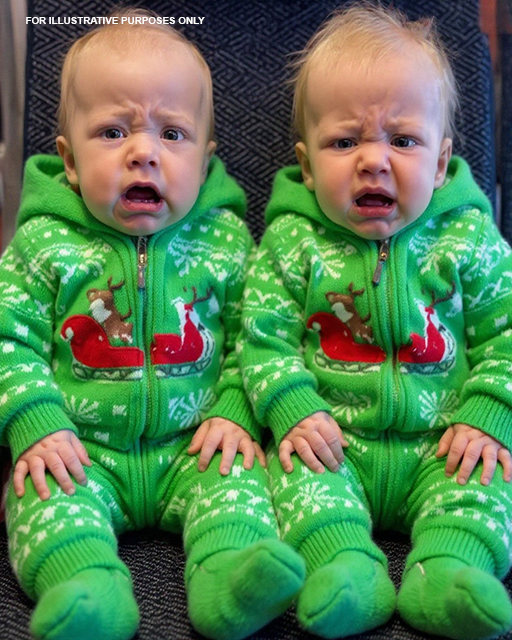
Two infants, a boy and a girl, maybe six months old, were sitting alone in aisle seats three rows ahead. Their faces were red from crying, their tiny arms shaking as they reached out for anyone who passed. What hurt even more than seeing them was noticing the reactions around me.
“Can someone make those kids stop?” hissed a woman in a sharp gray business suit.
A man muttered as he brushed past, “Who lets children scream like that?”
Flight attendants smiled politely but did nothing. Each time someone approached, the babies recoiled, as though expecting more rejection.
A young woman seated next to me touched my arm gently. “Someone needs to help them. They’re terrified,” she whispered.
Something inside me cracked. Perhaps it was maternal instinct. Perhaps it was the void left by losing Helena and my grandson. Or maybe it was simply impossible to sit there and watch two helpless babies suffer.
I stood.
The boy immediately buried his face into my shoulder, trembling from leftover sobs. The girl pressed her cheek to mine and clutched my collar as if I were her lifeline. Their crying stopped instantly.
I called out, “Is there a mother here? Please, if these are your children, come forward!”
The cabin fell silent. No one moved. No one claimed them.
The young woman who had spoken to me earlier gave me a sad smile. “You saved them,” she said. “Maybe… you’re meant to keep them.”
Her words planted themselves in my heart. I sat back down, holding the twins—though I didn’t know they were twins yet—and told the woman beside me about my daughter and grandson, about the funeral waiting for me. She listened quietly, asking where I lived. I told her: the bright yellow house on Maple Ridge Road with the old oak tree on the porch.
When the plane landed, I carried the infants straight to airport security. I explained everything, my voice trembling. Social services was called, and I spent over an hour giving statements, showing identification, and recounting every detail I could. No one came forward to claim them. The babies had been abandoned.
The next day, at my daughter’s and grandson’s funeral, pain settled into my bones. But in the midst of that misery, the memory of the twins—the way they clung to me, their trust in my arms—pushed into my thoughts relentlessly.
The morning after the funeral, I went to social services and said I wanted to adopt them.
It wasn’t a decision made lightly. Background checks, home inspections, multiple interviews—they questioned whether grief was clouding my judgment. But three months later, the adoption was official. I named the boy Milo and the girl Lena. From that day on, my house was no longer empty.
Over the years, Milo and Lena grew into extraordinary young adults. Milo became an advocate for those whose voices weren’t heard; Lena developed a brilliant mind and a compassionate heart. They were my family, the family I had chosen—and that had chosen me.
Then, last week, a knock on the door shattered the peace we’d built.
A woman in designer clothes, perfume sharp in the air, walked in. “Hello, Marjorie. I’m Valeria. We met on a plane eighteen years ago.”
The memories hit me: the young woman beside me on that flight, the one who urged me to help the babies.
“You were seated next to me,” I said softly.
“Yes,” she replied, stepping in without waiting for an invitation. “I see you’ve been busy.” Her gaze swept over family photos and graduation pictures.
Then she dropped the bomb. “I’m the mother of those twins you took from the plane.”
Milo and Lena froze. I positioned myself protectively in front of them.
“You abandoned them. You left them alone,” I said, voice tight.
Valeria shrugged. “I was twenty-three, overwhelmed. I panicked. I thought you needed them more.”
“No,” I said, tears brimming. “You manipulated me.”
She handed an envelope. “My father passed last month. He left his estate to the children, not me. Sign these papers acknowledging me as their mother, and the estate transfers correctly.”
Milo stepped forward instinctively. “And if we don’t?”
“Then the money goes to charity. You get nothing, I get nothing,” she said.
I had enough. “Get out,” I snapped.
Valeria smirked. “They’re adults. They can choose money over you.”
Milo and Lena looked at her, unmoved. “She gave us everything,” Milo said. “You threw us away.”
I called my lawyer, Camille Harding, who had handled the adoption. She examined the documents and said sharply, “This is coercion. You have no right to demand conditions for the estate.”
Weeks later, Valeria faced consequences: Milo and Lena received their full inheritance, she was ordered to pay unpaid support, and her selfishness was exposed.
On our porch, as the sun set, Milo and Lena held the estate documents.
“You were always going to be okay,” I said. “With or without money, you had each other—and me.”
Milo smiled. “We know, Mom. And now we can help you too.”
That night, I cried tears of relief. For eighteen years, we’d built a family not by blood, but by love and choice.
Family isn’t about DNA. Family is about showing up, staying, and loving.
And that is what we did.