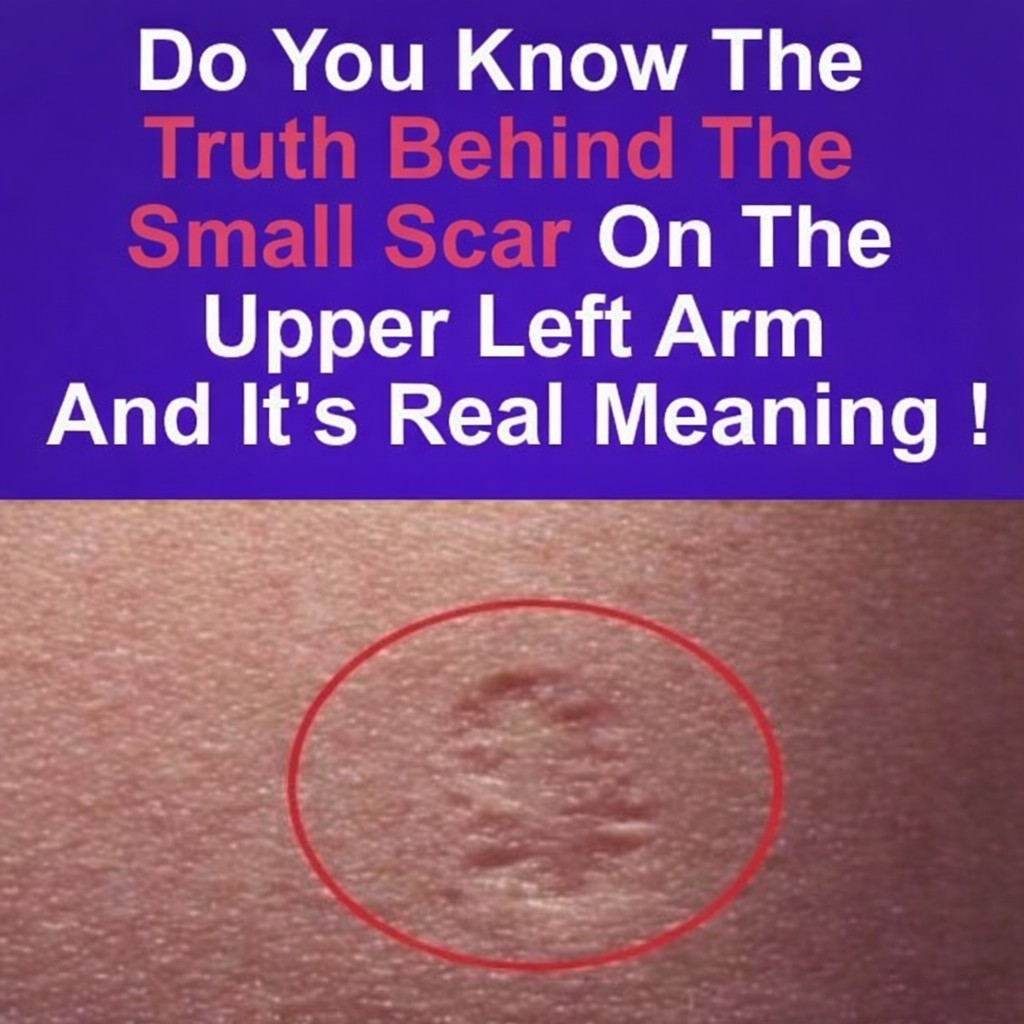
Some scars don’t just mark the skin—they mark history, memory, and survival. They carry with them stories that are too big to fit into words, stories of fear and resilience, despair and triumph. For generations, families have noticed a peculiar round dent on the upper arms of parents, grandparents, and great-grandparents. It was often a silent curiosity, half-remembered, casually mentioned at times, or noticed only in passing during a hug or a family photo. Children might have poked at it with innocent fingers, wondering how it got there. Adults might have shrugged, claiming it was “just a vaccine.” But that small, circular impression on the skin was never “just” anything. It was the tangible evidence of a battle that once reshaped entire communities, emptied villages, and terrified the world into submission. It was proof of survival, proof of humanity’s ability to confront death and win, and it served as a quiet warning from one generation to the next: we carry the scars of the past to remind us of the stakes of the present.
Long before the dent faded into obscurity, long before it became a mere curiosity or a half-forgotten mystery, it began as a deliberate wound, carefully and painfully administered by people desperate to prevent suffering and death. The smallpox vaccine—one of the earliest triumphs of modern medicine—was not gentle. It was a series of repeated punctures, small but intentional, designed to force the body to recognize and battle a weakened version of an enemy it had no way of otherwise defending against. The pain of the process was brief, the blister that formed uncomfortable, the scab a nuisance, but all of it served a singular, life-saving purpose: to teach the immune system how to fight before the real, deadly virus arrived. The mark left behind, the permanent indentation, was proof that the lesson had been learned. It was a signature of survival, an unspoken medal worn quietly on an arm, a badge of honor that could not be erased even by time.
Those who bear the scar carry with them more than a memory of a single injection—they carry the memory of a world once held hostage by fear. In that era, smallpox was not merely an illness; it was a plague that could decimate entire villages, erase families, and leave survivors permanently scarred or blinded. Its presence was a daily terror, lurking in the cough of a neighbor, the pox-marked face of a stranger, or the news that another town had been emptied overnight. To carry the scar was to carry a reminder of humanity’s vulnerability, and humanity’s resilience. It was proof that centuries of science, courage, and human ingenuity had once tipped the balance from near-certain death to survival.
The circular scar is also a testament to cooperation—local doctors walking long distances with limited supplies, scientists working tirelessly in crowded labs, communities choosing the temporary pain of a needle over the permanent grief of a funeral. It reminds us that public health is not an abstract concept; it is the combined effort of countless individuals, often anonymous, acting in concert to protect life. Each scar tells a story of hands that worked, hands that held, hands that pricked, and hearts that hoped against fear.
Today, most of us no longer bear such marks, thanks to generations of medical progress and the ultimate eradication of smallpox. The absence of the scar on modern arms is itself a victory, a symbol of what humanity can achieve when knowledge, courage, and collective will are applied. Yet for those faint circles that remain on an aging arm, for those small dents worn like quiet medals, the message remains clear: we are capable of ending even our oldest nightmares, if we dare to face them together. Every faded scar is a whisper from history, reminding us that survival is not merely the absence of death but the presence of care, courage, and community. They are lessons etched in flesh, memories worn like jewelry, and warnings that our choices today will echo on the bodies and lives of generations yet to come.
Even now, as smallpox exists only in history books and museums, those tiny circular scars remain a bridge to the past—a reminder of pain endured, fear overcome, and human ingenuity at its most determined. They are more than physical marks; they are living history, passed from arm to arm, generation to generation, carrying the message that while disease may threaten, hope, science, and collective action endure far longer. The scars are quiet. They don’t demand attention. But when you notice them, you see something far bigger than skin: you see courage, perseverance, and humanity’s capacity to confront what terrifies us most—and win.