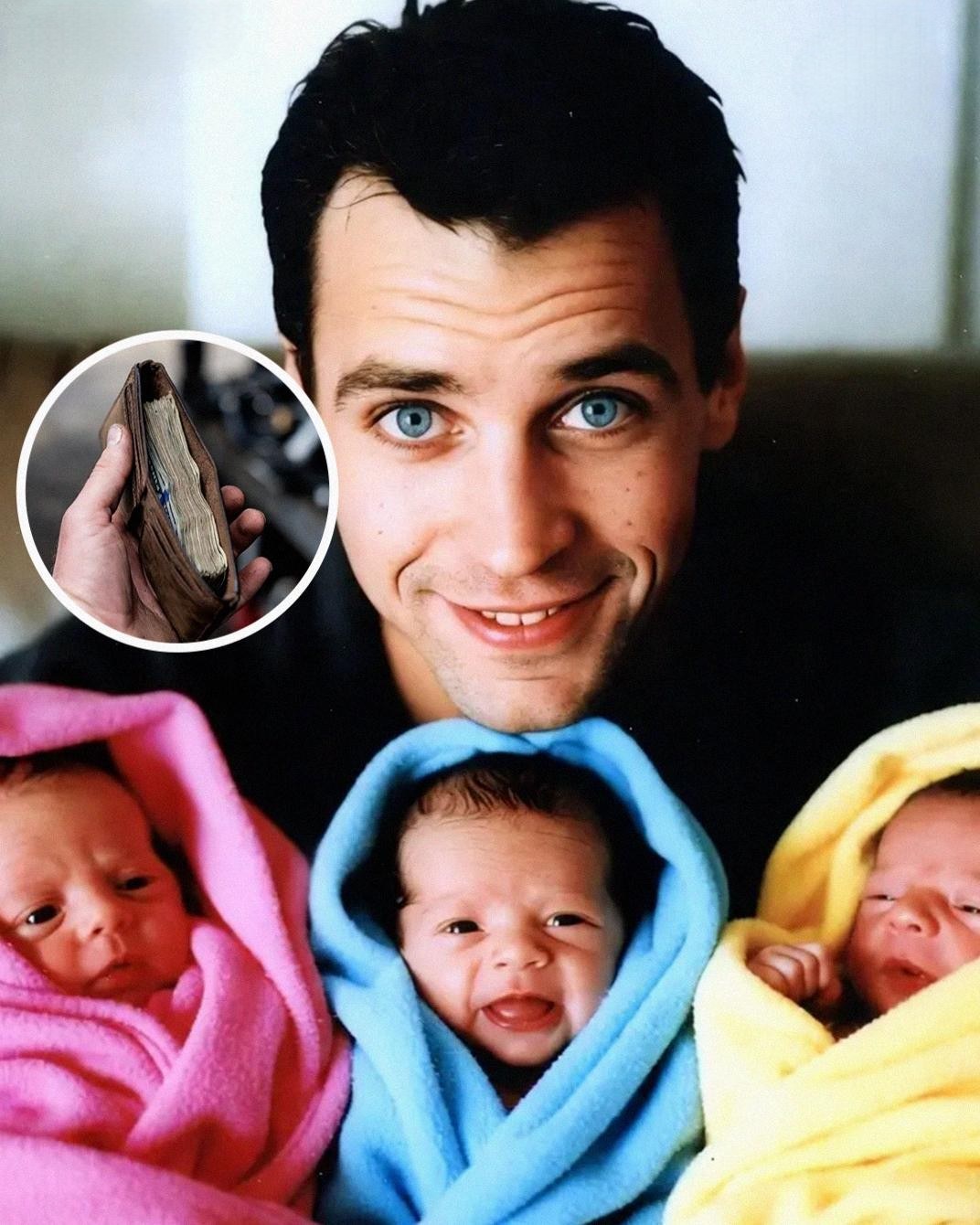
My name is Evan, and my life has largely been defined by the smell of motor oil and the relentless weight of responsibility. I’m a thirty-six-year-old mechanic and a single father to six-year-old triplets. My hands are permanently stained with grease, a testament to twelve-hour days spent under the chassis of cars in a shop that’s slowly losing its battle with time. My life changed forever when the children were only eight months old; their mother packed a suitcase one morning and decided she couldn’t do it anymore. Since then, it’s been me and my seventy-two-year-old mother—a woman sharper than a new set of shears—raising my two sons and daughter. Without her, I wouldn’t have survived the exhausting marathon of single parenthood.
People often look at my dirty overalls and assume that’s all there is to me. They see a guy who replaces brake pads and argues about check engine lights, rarely realizing that these calloused hands are the only thing standing between my family and the abyss of poverty. Every day is a balancing act: rent is a looming shadow, the electric bill a constant source of anxiety, and my daughter’s shoes are worn straight through the soles. I work until my back aches, haunted by the fear that despite my best efforts, it might never be enough.
Last Tuesday was especially brutal. The shop was overflowing, and I found myself facing an irate customer blaming me for the inevitable failures of his aging vehicle. After a tense confrontation that left me drained, I returned to work, trying to shake off the sting. As the sun dipped and I started the ritual of closing up, my broom struck something solid near one of the lifts.
I bent down and discovered a worn black leather wallet, its edges softened by years of use. When I opened it, I didn’t find receipts or a few stray twenties. Instead, there were thick, neatly folded stacks of hundred-dollar bills. My heart hammered against my ribs. I froze, staring at more cash than I’d seen in a decade. The money could pay rent, clear utility arrears, or buy my daughter a dozen pairs of shoes.
Then I saw the ID. It belonged to an elderly man named Gary, his eyes tired but kind. Tucked behind it was an emergency contact note with an address. My hands shook as I realized the weight of the choice before me. I locked the wallet in my toolbox and drove home in silence.
That evening, watching my children eat dinner and listening to my mother’s gentle humming in the kitchen, I felt the burden of the secret pressing down like a crime. I knew I couldn’t teach my kids to be good people if I wasn’t willing to be one myself. After tucking the triplets into bed, I told my mother I had an errand. I retrieved the wallet and drove to the outskirts of town, finding a modest house with a flickering TV visible through the front window.
Gary opened the door, leaning heavily on a wooden cane. He looked exactly like his photo—fragile but dignified. When I handed him the wallet, his eyes widened, and his shoulders sagged with relief. “I thought it was gone,” he whispered. He tried to offer me a reward, but I refused. I returned it because it was the right thing to do. We spoke briefly, and I shared a bit about my life—my kids, my mom, our struggles. He thanked me with a sincere smile, and I drove home feeling an unexpected peace. The money was gone, but my integrity remained.
I slept better that night than I had in months. But at 7:30 the next morning, a thunderous knocking at the door jolted me awake. I opened it to find Sheriff Matt, badge gleaming in the morning sun. Behind him, my mother gasped.
“Evan?” he asked. “I need to ask you about a wallet.”
I explained I’d found it and returned it to Gary. His expression softened, and he called for confirmation. Within minutes, three other officers arrived with massive crates, which they began unpacking.
“Gary is my father,” Matt explained. “He told me what you did—how you wouldn’t take a dime and how you’re a single dad working to make ends meet. He insisted I track you down to thank you properly.”
The boxes were filled with high-quality winter coats, new shoes, school supplies, and enough groceries to fill my pantry. Matt handed me an envelope with gift cards, saying his father would be heartbroken if I refused. Surrounded by my mother’s tears and the officers’ smiles, I broke down. I’d returned the wallet expecting nothing, and in return, the universe had provided everything my children needed for the winter.
Later that afternoon, I drove to Gary’s house once more—not to return anything, but to say thank you. He greeted me like an old friend and told me my honesty had given him something more valuable than his pension: hope.
That week taught me a lesson I hope my triplets carry forever. Greasy hands don’t mean a dirty soul, and doing the right thing isn’t about the reward—it’s about who you become in the process. Kindness travels in circles, and sometimes, when you’re at your lowest, it comes back to you exactly when you need it most. I’m still a mechanic, I’m still a single dad, but I no longer feel alone in the world. I’m raising my kids to be honest—just like Gary, and just like the man I proved myself to be on that rainy Tuesday night.