When I moved into the quiet neighborhood seven years ago, I wasn’t looking for anything extraordinary—just a place where I could breathe again. Life had bruised me in ways I never spoke of. Losing my parents too young left a hollow ache I tried to fill with routines and distractions. Breakups had come and gone, leaving silence heavier than words, and holidays had become exercises in convincing myself that being alone didn’t mean being lonely. I didn’t want adventure, or excitement, or even neighbors; I just wanted a pocket of stillness where I could exist without scrutiny.
The house I found wasn’t grand. It was small, with peeling paint on the shutters, a crooked mailbox, and a garden that had long been surrendered to weeds. But there was a strange comfort in the stillness. When I stepped across the threshold for the first time, the air felt different—lighter somehow, as if it knew the weight I carried and wanted to help me set it down. I thought that’s all I needed: quiet, solitude, and the promise that nothing dramatic would ever enter this part of my life.
I was wrong.
It began, oddly enough, with a wave.
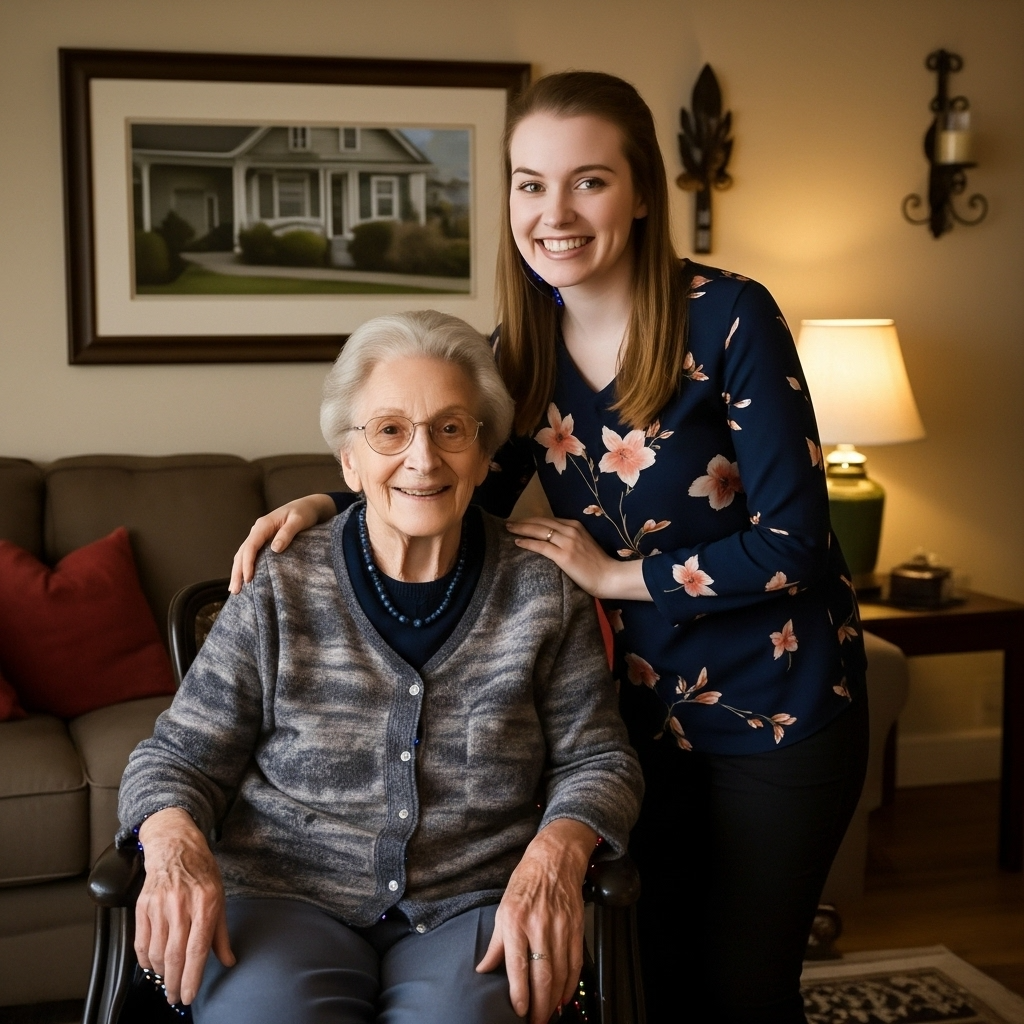
Mrs. Patterson lived two doors down. A diminutive woman with hair as white as snow and the softest sweaters I’d ever seen. Every afternoon, she would perch by her front window, hands folded neatly in her lap, eyes drifting toward the street as if waiting for someone—or something—that she wasn’t certain would come.
The first time I waved at her, she flinched. It wasn’t fear, exactly, but the sort of startled reaction you see when someone is pulled from a dream, an echo of a memory you weren’t ready to face. I gave her a small, hesitant wave and turned away, unsure if she even saw me.
The second time, she smiled. A small, tentative smile, as if she was testing the waters. And the third time—well, that was the day she opened her front door and called out, “Well, come in, dear. Don’t leave an old woman talking to herself.”
It was the beginning of something I hadn’t realized I’d been missing.
At first, my help was small and practical: carrying groceries, sorting the mail, fixing the wobbly legs on her kitchen table. But kindness has a way of expanding, unbidden. Soon, we were sharing tea in her sunlit kitchen, folding laundry together while she recounted tales from decades past, watching old black-and-white movies as rain tapped insistently against the windowpanes. She spoke of her youth: summer dances with music spilling into the streets, the nervousness of her first job, the quiet stubbornness of her late husband, who, she insisted, had “two left feet and a heart too big for his body.”
And she made me laugh. Real, deep laughter—the kind that loosens something tight in your chest, the kind I hadn’t felt in years.
But there was always a shadow beneath her warmth. She lit up whenever the doorbell rang, hope dancing in her eyes, only for the sparkle to dim when she realized it wasn’t the people she longed to see: her family. Children. Grandchildren. They existed in her life, but only on their terms. To them, she was responsibility, obligation, perhaps even a mild inconvenience.
They visited every few months, perfectly dressed, carrying smiles that never quite reached their eyes. Boxes, envelopes, perfunctory questions about her health or well-being. And every visit left her quieter than before, a little more invisible, a little more forgotten. She never complained. She never lashed out. She simply watched, with eyes that always returned to the window, waiting for the next arrival that never came soon enough.
Over the months, then years, our bond deepened. I checked on her every morning before work and every evening after dinner. I helped with medications, scheduled doctor’s appointments, drove her to the clinic, sat beside her through nights when sleep refused to come. People asked why I did so much.
But how do you explain that someone can become family without sharing a single drop of blood?
She once cupped my face in her frail hands, looking directly into my eyes, and said, “You were heaven-sent, my dear. I prayed for love, and you arrived with kindness in your eyes.” I didn’t know how to respond. Because, in truth, she had saved me too.
Time passed, marked in tiny rituals and quiet routines. Her naps grew longer; our conversations softened into whispers that floated and disappeared before I could fully grasp them. One night, as I tucked a blanket around her shoulders, she grasped my wrist gently and whispered, “When I go, promise me something.”
My throat tightened. “Anything.”
“Remember the laughter… not the silence.”
I kissed her forehead, my voice trembling. “Only the laughter, I promise.”
A few days later, she slipped away, quietly, in her sleep.
The funeral was small, icy, and tinged with a strange theatricality. Her children arrived, wearing designer coats and expensive perfume, eyes glistening with crocodile tears. I sat in the last pew, clutching the embroidered handkerchief she had given me, my initials stitched in her hands that had once trembled over mine. I cried—not for the loss of her house, not for her belongings—but for the life she had lived quietly, the loneliness she endured, the love she had given me so freely.
For a moment, I thought my part in her story had ended. I couldn’t have been more wrong.
That evening, I settled onto my couch with tea and a photo album, recalling her face, her laugh, the subtle fragrance of cinnamon and lavender that clung to her. A knock at the door startled me. Two uniformed officers stood on the porch, solemn and precise.
“Are you the caretaker of Mrs. Patterson?” one asked.
“Yes… why?” I stammered.
“We need you to come with us.”
Fear lanced through me. Had her family accused me of wrongdoing? Was there some medical detail I’d overlooked? Did they suspect me of taking advantage of her?
By the time we entered her house, my knees trembled beneath me. Her family was gathered in the living room, murmuring, whispering, glaring. Her daughter stepped forward, pointing at me as if I were a criminal.
“It was her!” she spat. “She manipulated our mother! She took advantage of her vulnerability!”
I froze.
The officer beside me cleared his throat. “We’re here as witnesses for the reading of Mrs. Patterson’s will.”
Silence fell. Heavy. Uneasy.
The lawyer, whom I had never met, stood in the corner with a thick envelope. The family gasped as he announced a new, updated will—quietly, intentionally executed.
As he read it aloud, my stomach twisted, my hands trembled, my breath caught. Mrs. Patterson had left almost everything to me: her house, her savings, her cherished belongings. Not to her children. Not to her grandchildren. To me.
Outrage erupted immediately. Fists pounded tables. Voices cracked. Her daughter declared, “She wasn’t in her right mind!”
But the lawyer shook his head. “She completed this will in full mental clarity, with witnesses and her physician present.”
Then he read the part that shattered me:
“To my family,
Love is not a transaction. You had your chance to be present.
But it was someone else who stayed through my best and worst days. She asked for nothing, yet gave me everything.
I leave this to her because love like that deserves a home.”
I covered my face as tears fell freely, deep, aching, unstoppable. Her daughter stormed out. The rest followed, leaving the house eerily quiet.
The officers confirmed no further dispute was required and left. The lawyer gave me a gentle nod before slipping away.
Her house—now mine—felt strange and yet right. I sank into her armchair, the one she had dozed in mid-conversation, and breathed in the faint scent of cinnamon and lavender that lingered like a memory. I felt honored, humbled, and seen in a way I hadn’t thought possible.
A few days later, I placed her photograph on the windowsill where she had once waited, hoping for the love that rarely came from those who shared her blood. The sun streamed in, warming the room. For the first time in years, I didn’t feel abandoned or invisible. I felt chosen.
I never cared about the house or the money. What mattered was that someone had truly seen me—my heart, my intentions, my presence—and decided I was worthy of inheriting the legacy of a life.
Mrs. Patterson taught me that love isn’t loud. It isn’t transactional. It doesn’t demand repayment. Love is showing up when no one notices, remembering to wave, sharing a cup of tea with a soul who didn’t know they were missing something.
In this home, once filled with laughter and quiet companionship, I plan to honor her every day—by showing up for others, by giving freely, and by remembering that giving love never diminishes what you have.
For the girl I once was—the one who believed she had nothing left to give—I discovered that giving love means you never run out of it.