I thought buying cupcakes for a grieving little girl was a simple act of kindness. But days later, two police officers knocked on my door asking about her, and suddenly, everything I’d done to help was being questioned in the worst way possible. What had started as a quiet, heartwarming moment had spun into a whirlwind of fear, confusion, and disbelief.
It all began one cold winter afternoon. I stepped into a small, cozy local café for a cup of hot coffee, hoping to escape the icy wind for just a moment. The smell of freshly baked bread and roasted beans was comforting, the kind that makes the world feel a little softer despite the chill outside.
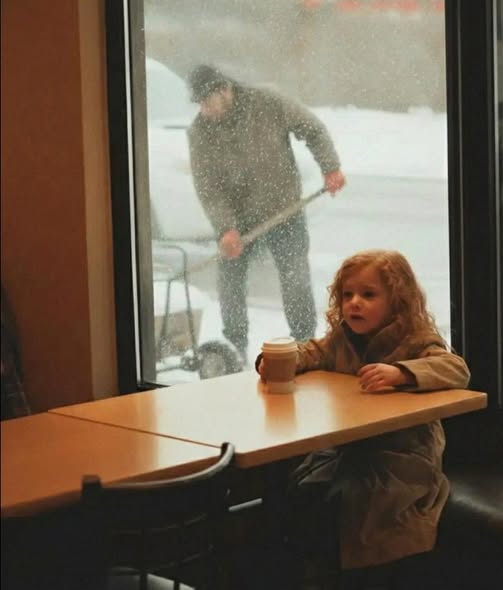
Then I noticed her. A little girl, maybe ten years old, sitting alone at a tiny table by the window. Her small hands were wrapped around a cup of tea she hadn’t touched. And there were tears rolling down her cheeks, dripping straight into the drink. My chest tightened.
This wasn’t the dramatic, attention-seeking crying some kids do. No, this was quiet. Private. The kind of grief that feels too heavy to be seen and too deep to speak. A sadness so raw it seemed almost sacred, as if anyone noticing it were intruding on a moment meant for no one else.
Our eyes met, and I froze. I couldn’t just walk away. Could you? Could anyone?
“Hi… are you okay, sweetheart?” I asked softly.
She shook her head, her lips trembling.
“Today is my mom’s birthday,” she whispered. “But she died four years ago.”
My heart broke a little more. “I’m so sorry, sweetheart,” I said, unsure what else to offer.
She took a shaky breath and continued. “She loved cupcakes. Since I was little, I always made her one on her birthday. Even when she got sick. But today… today, Dad and I don’t even have money to buy one.”
She pointed toward the window. Outside, a man in a thin jacket was shoveling snow from the sidewalk. His hands were red and raw, the kind of cold that sinks into your bones. My mind immediately recognized him: a city worker, doing everything he could just to make ends meet.
“I’m sorry you’re having such a sad day, but maybe… maybe there’s something I can do to make it a little better. Wait right here, okay?”
She nodded.
I walked to the counter, ordered my coffee, and bought two vanilla cupcakes with pink frosting—the kind that looks almost too pretty to eat. When I placed them on the table in front of her, her eyes widened like she had just seen magic.
“One is for you,” I said, “and one is for your dad. So you can both keep your mom’s birthday tradition alive.”
Her smile, shining through tears, could have warmed the whole city. “Thank you,” she whispered.
Then she pointed outside again. “He works extra on her birthday,” she said softly. “He says Mom wouldn’t want us to give up.”
This man could have crumbled under the weight of grief, poverty, and single parenthood. Instead, he pushed forward, silently sacrificing for the girl he loved. I felt my chest ache with admiration.
Before I left, I quietly slipped $500 under the teapot. “Give this to your dad,” I whispered, hoping it might make the day a little easier.
The girl jumped up and hugged me so tightly it took my breath away. “Thank you, kind lady! I’ll never forget you.”
I smiled, waved goodbye, and stepped back into the cold, believing that was the end of it. Kindness was simple, or so I thought. You helped, moved on, and hoped you’d made a difference.
But a few days later, there was a knock on my door. Two police officers stood on my porch. Calm, professional faces, but I could feel the tension in the air.
“Was it you who bought cupcakes for a little girl?” one asked.
“Yes,” I said, my heart pounding. “Why?”
He exchanged a glance with his partner—a look that said, “We have a situation here.”
“You need to come with us, ma’am.”
I blinked. “I… I didn’t do anything wrong. I just bought her cupcakes.”
“We understand,” the other officer said, holding the door open. “We just need to clarify a few things.”
A few things? My mind raced. Had I accidentally broken some law I didn’t know existed? Was kindness now considered suspicious?
At the station, they led me into a small interview room, the kind you see in movies. A metal table, two chairs, a blinking red camera recording every moment.
“Can you tell us exactly what happened the day you met the girl?”
“I saw a little girl crying,” I explained. “She told me about her mom. I bought her cupcakes. That’s it.”
“Did you know her before that day?”
“No.”
“Had you spoken to her father?”
“No. He was outside working. I didn’t want to interrupt him.”
“Did you give her anything else besides the cupcakes?”
“Yes. I left some money. For her dad.”
Five hundred dollars. The room went still. Both officers exchanged a tense glance.
“You understand that when an adult interacts with a child they don’t know, especially involving gifts or money, it can raise concerns,” one said.
My stomach dropped. All my intentions, every act of generosity, was suddenly being reframed as suspicious, maybe even criminal.
The door opened, and a woman walked in—mid-forties, tired eyes, wearing a flour-dusted café apron. Behind her, the girl’s father appeared, thin jacket, red hands, eyes wide with panic.
“That’s her,” he said, pointing at me. “That’s the woman.”
The café owner pulled out her phone. “We have security footage. This woman did nothing wrong. It’s all a misunderstanding.”
The tension dissolved in an instant. The officers’ expressions shifted from suspicion to embarrassment.
“I’m so sorry,” the father said, voice breaking. “My daughter talks about you every day. She thinks you’re an angel. I never meant to cause you any trouble.”
The officer nodded. “You’re free to go. You didn’t do anything wrong.”
Relief washed over me, leaving behind exhaustion—and a strange, simmering anger. Kindness had been misconstrued. Generosity had nearly made me a suspect.
As I stepped outside, the café owner touched my arm. “You reminded him that good people still exist. That matters.”
Does it? I thought. Does it matter when kindness puts you under scrutiny?
Outside, the cold winter air filled my lungs. The father stood a few feet away, hand over his heart. Eyes full of gratitude and shame. Words weren’t necessary. We understood each other without them.
I nodded back. Forgiving. Understanding. Ready to keep moving forward.
And in that moment, I knew I would do it all again—the cupcakes, the money, every small act of kindness—because that little girl smiled. Because her father kept going. Because even in a world full of suspicion, there are moments when strangers can still make a difference.
That’s worth every risk. Every single time. Even when it lands you at a police station.
People need to see that goodness still exists. And sometimes, it’s up to strangers to remind them.