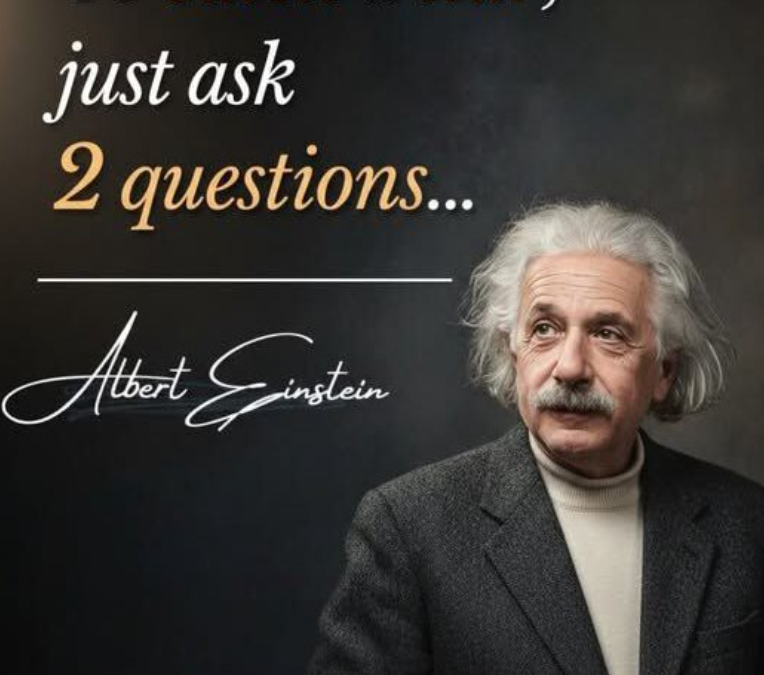
The modern age is increasingly shaped by an obsession with instant solutions. Whether it’s viral fitness shortcuts, investment promises of overnight success, or self-help formulas claiming effortless transformation, society is flooded with messages that equate speed with success. Wanting efficiency is natural; human beings have always searched for better, faster ways to improve their lives. But in 2026, that impulse has evolved into a vulnerability. Scammers, digital manipulators, and bad-faith actors understand how deeply people crave relief from struggle, and they exploit that craving with calculated precision. Real wisdom, by contrast, rarely arrives in dramatic flashes or easy answers. It develops slowly—through lived experience, honest self-examination, and the courage to question what we think we know. In a world built on persuasion and urgency, the most powerful defense is not a shortcut but steady, independent thought.
The intellectual spirit often linked to Albert Einstein endures not because of complex formulas, but because of a deeper principle: respect for the power of the individual mind. Today’s environment is saturated with noise—targeted ads, algorithm-driven content, persuasive influencers, and emotionally charged headlines competing for attention. In such a climate, the ability to think clearly is no longer optional; it is protective. Reflection builds an internal compass. When we pause to evaluate information rather than react impulsively, we strengthen that compass. Self-awareness acts like a firewall, shielding us from emotional manipulation. Most scams do not succeed through logic—they succeed by triggering urgency, fear, greed, or hope. Understanding our own psychological triggers makes it far more difficult for others to weaponize them.
True progress resembles balance in motion. Standing still may feel comfortable, but stagnation often disguises dissatisfaction and intellectual rigidity. Growth requires continuous learning and a willingness to revise our beliefs when confronted with credible new evidence. Flexibility is strength. Those who cling rigidly to outdated views become predictable, and predictability is a tool manipulators rely on. In contrast, individuals who regularly examine their assumptions and can admit, “I was mistaken,” remain resilient and difficult to control. Advancement does not have to be dramatic; it simply must be intentional. Measured movement, guided by reflection rather than impulse, creates stability that cannot easily be shaken.
Imagination also plays a crucial role in building a secure and meaningful life. Facts provide structure, but imagination allows us to connect ideas and create solutions. Intelligence is not merely the storage of information; it is the ability to apply knowledge creatively and ethically. When we treat obstacles as puzzles rather than threats, we reduce panic and expand possibility. Mistakes, when studied instead of ignored, become valuable lessons. Experience is often nothing more than the wisdom gained from errors we were brave enough to examine. With discipline, imagination becomes a tool for resilience instead of fantasy, helping us adapt rather than drift.
An open mind functions as a safeguard against both deception and prejudice. Quick judgments may feel efficient, but they often sacrifice depth and context. Intellectual humility—the understanding that our knowledge is limited—encourages careful evaluation. Many manipulative tactics rely on artificial urgency: “Act now,” “Limited time,” “Don’t miss out.” A simple pause to verify details and question motives weakens that pressure. Clear thinking is not cynicism; it is balanced skepticism combined with fairness. It allows us to question information without retreating into distrust of everything and everyone.
Ultimately, the worth of a life is measured less by status and more by contribution. In the digital era, appearances can overshadow substance. Titles, popularity, and trends shift quickly, but meaningful impact endures. When we ask whether our actions genuinely add value instead of merely polishing our image, we strengthen our integrity. Simplicity clarifies what truly matters. Curiosity keeps us growing. Exposure to different perspectives broadens discernment and protects us from narrow narratives designed to divide and manipulate.
Translating these principles into everyday practice requires consistent habits. It begins with asking thoughtful questions—of media, of others, and of ourselves. It means treating mistakes as information rather than failure, seeking context behind headlines, and aligning daily behavior with core values. Independent thinking and purposeful action build a life anchored in clarity. As scams grow more sophisticated and information becomes more complex, that clarity becomes invaluable. It fosters resilience, steadies judgment, and enables forward movement rooted in intention rather than reaction.
Sometimes the warning signs of a compromised life are subtle. Feeling overwhelmed by routine or dismissing quiet work as “nothing” can blind us to what truly sustains us. Just as unseen labor often keeps a household functioning, the invisible discipline of reflection and analysis sustains intellectual security. Critical thinking may not look dramatic from the outside, but it forms the foundation of sound decisions.
Protecting personal and financial security begins with safeguarding mental space. Awareness of emotional triggers—fear, urgency, excitement—is essential because those are the levers most commonly pulled by sophisticated fraud. By committing to thoughtful progress and intellectual humility, we create a defense far stronger than any quick-fix solution. Independent thought and self-awareness become both shield and compass. In a noisy world full of promises and pressure, the person who pauses, thinks clearly, and acts deliberately is the one most likely to remain steady and secure.