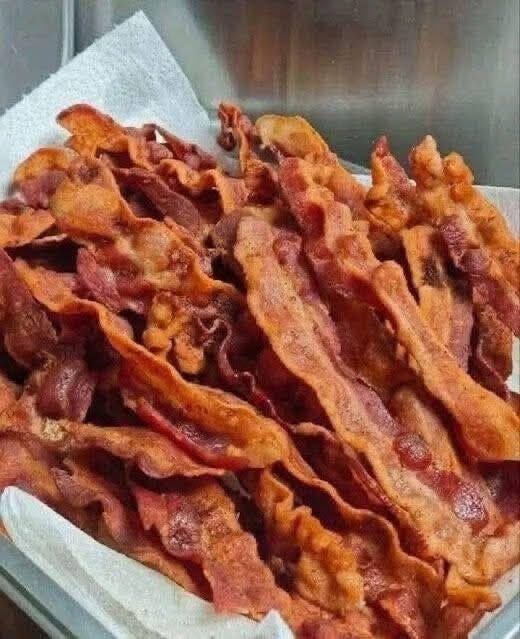
Achieving the elusive “perfect” slice of bacon—one that strikes the ideal balance between a glass-like crunch, a deep savory flavor, and minimal grease—is a culinary pursuit that often frustrates even the most experienced home cooks when limited to the stovetop. While the iconic image of bacon sizzling in a frying pan evokes nostalgia and comfort, the reality often includes uneven cooking, curling edges, and the painful splatter of hot fat on counters, stoves, and occasionally unsuspecting hands. Beyond the mess, the stovetop method frequently yields inconsistent results: some slices burn while others remain chewy, leaving you chasing perfection and rarely finding it. For anyone serious about bacon, the professional secret isn’t more butter, a higher flame, or constant flipping—it’s the controlled environment of the oven. This technique transforms bacon from a high-maintenance morning chore into a nearly effortless process, guaranteeing uniform, restaurant-quality slices every time, with far less cleanup and stress.
The journey to bacon excellence begins long before the meat hits a tray. Temperature control and thoughtful preparation are the foundations. Preheat your oven to 200°C (400°F)—a sweet spot high enough to render fat effectively, yet moderate enough to prevent the delicate proteins in the bacon from scorching. While some recipes advocate higher temperatures for speed, rushing the process risks unevenness and bitterness, defeating the goal entirely. Select a large, rimmed baking sheet, and line it with aluminum foil or parchment paper. This lining doesn’t just prevent sticking—it captures the rendered fat, making post-bake cleanup as simple as lifting the foil and discarding it. For cooks who value texture above all, elevate the bacon on a wire cooling rack placed atop the baking sheet. This simple step allows hot air to circulate around each slice, ensuring crispness on both sides without the need for flipping, while preventing the strips from sitting in their own grease and becoming greasy or limp.
Arranging the bacon properly on the tray is one of the most frequently overlooked steps. Overcrowding leads to uneven cooking, chewy patches, and the dreaded “steam pockets” that turn promising slices into rubbery disappointments. Each strip should lie flat, with edges slightly spaced apart to allow for natural expansion as the fat renders. Once arranged, slide the tray onto the middle rack of your oven. Timing varies depending on thickness: regular-cut bacon generally reaches perfection in 15–18 minutes, while thick-cut strips may take 20–25 minutes. Because each oven has hot spots and temperature quirks, it is crucial to monitor the last five minutes closely. Look for a deep, rich mahogany hue, edges curling gently, and a faint shimmer of bubbling fat that signals it has reached its peak. Avoid stepping away completely, as the difference between perfectly crisp and overdone can be just a minute or two.
One of the remarkable advantages of oven-baked bacon is its versatility. Unlike stovetop cooking, which often demands constant attention and immediate consumption, baking allows the strips to serve as a canvas for flavor experimentation. Consider finishing your slices with a simple sprinkling of cracked black pepper, smoked paprika, or chili flakes for a subtle heat that complements the meat’s natural richness. For a sweet-savory twist, lightly brush maple syrup across the surface and sprinkle with brown sugar; the result is “millionaire’s bacon,” a caramelized delight with a glossy finish. Culinary adventurers can explore even more inventive combinations, such as a touch of soy sauce for umami depth, or a light dusting of coffee grounds for a smoky bitterness that surprises the palate. The baking method ensures that these flavors adhere evenly, developing a sophisticated profile without the risk of scorching.
When the bacon achieves the desired golden-brown perfection, remove the tray from the oven promptly. While the strips may appear slightly soft immediately after baking, they continue to firm as they cool. Use tongs to transfer each slice to a plate lined with paper towels to absorb any residual grease. Allow them to rest for two to three minutes; this is the critical period in which the texture sets, transforming the strips into crisp, shatter-on-the-teeth perfection. Unlike pan-fried bacon, which requires near-constant attention and immediate consumption, oven-baked bacon maintains its structure for longer, making it suitable for batch cooking or meal prep. It can adorn a classic breakfast, enhance a BLT, or act as a crunchy, flavorful garnish on salads, pastas, and gourmet dishes.
For home cooks striving for consistency, the oven method is transformative. It eliminates guesswork, prevents burns, and frees up attention to focus on other components of a meal. Additionally, the collected bacon fat from the foil-lined tray is easily repurposed for cooking eggs, roasting vegetables, or infusing flavor into sauces, demonstrating that even indulgent foods can be leveraged in multiple ways when prepared thoughtfully. Baking also reduces the mess: no splattering grease across countertops, no smoke alarms triggered by high stovetop flames, and no repeated flipping required.
Experimentation is encouraged once the basics are mastered. Adjusting oven temperature slightly—between 190°C and 210°C (375–410°F)—can subtly alter texture, from slightly chewy to almost cracker-like. Timing adjustments can accommodate personal preferences, thickness, or desired glaze caramelization. For thick-cut bacon, a few extra minutes may create a deeper, richer crunch, while paper-thin slices may only need 12–14 minutes. Observation and experience are the keys to mastering this method and consistently producing bacon that rivals professional kitchens.
The oven-baked approach also opens creative avenues for themed or festive variations. Think holiday bacon infused with cloves, cinnamon, or nutmeg for breakfast spreads, or maple-glazed strips paired with fresh rosemary for brunch. Bacon can even cross over into dessert territory: candied bacon atop chocolate brownies or crumbled over caramel popcorn is a crowd-pleasing, sweet-and-salty delight. These applications are far more manageable with oven baking, as the even heat and hands-off process allow multiple strips to cook simultaneously without risk.
In essence, oven-baked bacon is a culinary revelation for home cooks. It removes the unpredictable elements of stovetop cooking, offers superior consistency, and provides a platform for creativity and experimentation. More importantly, it preserves one of life’s simplest pleasures—the satisfaction of biting into perfectly crisp, flavorful bacon without stress or mess. By understanding temperature, spacing, and timing, anyone can achieve a result that is both visually stunning and gastronomically perfect.