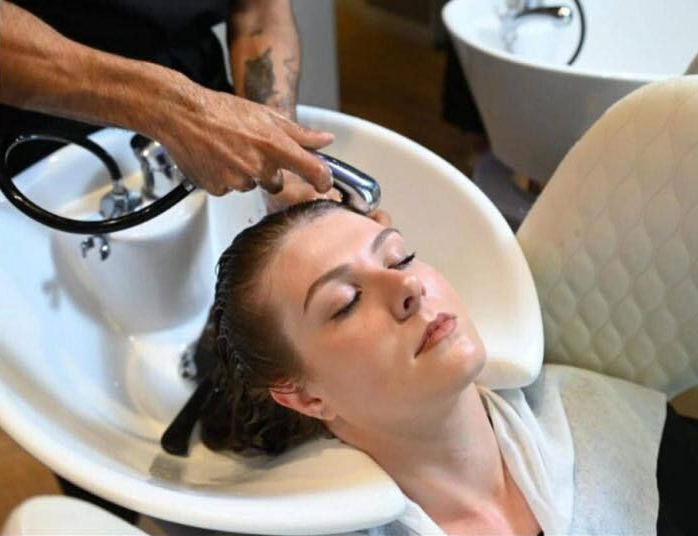
If you’ve ever stood in front of the mirror, shampoo in hand, questioning whether you’re washing your hair too much, too little, or just wrong, you’re not alone. Most of us grew up with conflicting advice—wash daily, wash weekly, never use shampoo, always use shampoo—none consistent, most outdated. Dermatologists now provide clear guidance: most people do best washing their hair three to five times a week. Not because the number is magical, but because it keeps the scalp clean without stripping it and allows hair to rest between washes.
After your 50s and 60s, the question gets trickier. Hair texture changes, the scalp becomes more sensitive, and oils you once fought in your twenties vanish, leaving dryness in place of shine. The good news? You can create a routine that works simply by prioritizing scalp health.
Washing isn’t about chasing glossy-commercial fantasies; it’s about caring for the skin beneath your hair. Sweat, oils, styling products, and environmental grime accumulate faster than most realize. Let it sit, and it irritates the scalp, loosens hair, and triggers inflammation. Contrary to myth, washing more often does not increase oil production—oil is a natural skin function, not a response to shampoo.
The three-to-five-times-per-week guideline hits a balance between overwashing, which causes dryness, and underwashing, which causes discomfort. But it’s a starting point, not a strict rule. Lifestyle, scalp type, weather, stress, exercise, and product use all influence the ideal frequency. Sweating daily? You may need more washes. Humid climate? Same. Dry or curly hair? Longer intervals might suit you better. The rule is simple: your scalp should feel fresh, calm, and clean. Tightness, itchiness, greasiness, or irritation signal that your routine needs adjustment.
Waiting too long between washes has consequences. Oil thickens, sweat combines with dirt, and styling products glue everything together. Over a few days, this mix becomes a breeding ground for yeast, bacteria, and irritation—leading to flakes, itching, and even temporary hair shedding. Heat, stress, and pollution accelerate the imbalance.
Shampoo choice also matters, especially as you age. Sensitive or dry scalps need gentle, sulfate-free formulas, while oily scalps may require stronger cleansing agents. Conditioners are essential but should be applied mid-length to ends only. Conditioner on the scalp invites greasiness. A weekly hydrating mask restores softness without weighing hair down.
Technique is key: use warm, not hot, water; massage with fingertips, never nails; rinse thoroughly to avoid residue; avoid heavy oils or waxes on roots; and never go to bed with wet hair. A damp scalp against a pillow invites irritation.
Once the basics are right, your scalp will guide you. Calm, clean, and balanced means your routine is working. Anything off—itchiness, dryness, buildup—means you need to tweak your frequency or switch products.
Consistency matters more than fancy products. Many chase miracle oils and masks without addressing the foundation: a clean, healthy scalp. Healthy scalp = stronger, shinier, more voluminous hair with fewer problems.
As we age, scalp care becomes even more important. Hormonal changes affect oil production, hair strands become fragile, and some follicles shrink. Gentle, consistent cleansing supports longer-term hair health.
So if you’re unsure whether you’re washing too much or too little, start simple: three to five times per week, and let your scalp judge. Clean regularly, treat gently, rinse thoroughly, and listen to your scalp. Healthy hair isn’t luck—it’s habit. And the simplest, most effective habit? Wash often enough and properly, and let your scalp breathe. That’s where real hair health begins.