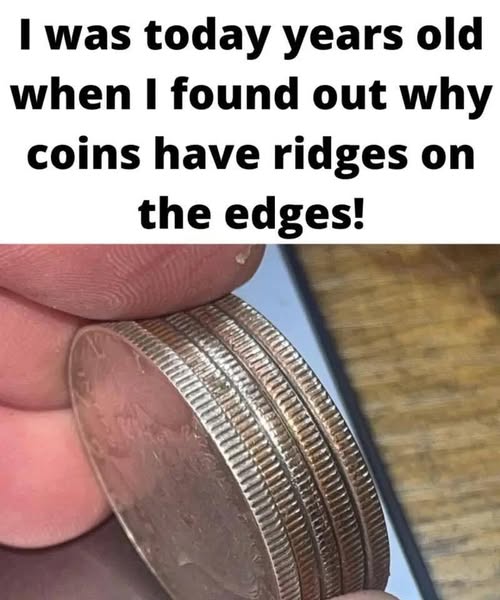
Coins are tiny battlegrounds of trust and betrayal, even though we rarely think of them that way. For centuries, long before digital wallets or paper bills, money was something you could weigh in your hand and feel between your fingers. That physical reality made coins valuable—but it also made them vulnerable. Quietly and persistently, people learned to steal from the very edges of money itself, shaving off thin slivers of precious metal one coin at a time. No robberies, no violence, just patience. Governments panicked as the damage spread, economies trembled as confidence eroded, and harsh punishments proved powerless against a crime that was almost impossible to spot in daily life. Eventually, desperation forced innovation. A radical design trick emerged—one that turned every single coin into its own security guard. Even a famous scientist played a key role in locking the system in place.
Those sharp little ridges on the edges of modern coins are not decorative flourishes. They are the visible scars of an old and serious war over trust. When coins were made of gold or silver, their value didn’t come from a promise printed on paper—it lived entirely in their weight. A heavier coin meant more precious metal, and therefore more worth. That simple fact invited abuse. People discovered that they could carefully shave off tiny amounts of metal from the edges of coins, collect the valuable dust and slivers, and then pass the now-lighter coin along at full value. Each individual act seemed harmless. The loss was almost invisible. But multiplied across thousands of coins and countless transactions, the effect was devastating.
Clipped coins quietly drained national treasuries and destabilized entire economies. Merchants began weighing money instead of trusting it. Transactions slowed. Suspicion grew. Every exchange carried doubt: was this coin honest, or had it already been robbed? Faith in money—something that only works if people collectively believe in it—began to corrode. Governments responded with brutal penalties, including fines and executions, but fear alone couldn’t solve the problem. As long as clipping was hard to detect and easy to profit from, it continued. The system itself was flawed, and punishment was treating the symptom, not the disease.
The real breakthrough didn’t come from stricter laws or harsher enforcement. It came from design. Mint officials realized that if the edge of a coin were altered in a consistent, visible way, any tampering would immediately stand out. By carving uniform ridges—known as reeding—into the edges of coins, even the smallest missing amount of metal became obvious at a glance. A smooth edge could be shaved without anyone noticing. A ridged edge could not. The texture itself became a signal of integrity.
Under the leadership of Isaac Newton, who served as Warden and later Master of the Royal Mint, this idea was transformed into a disciplined and standardized system. Coins were precisely weighed, carefully minted, and edged with consistent ridges that made cheating both risky and obvious. Newton brought scientific rigor to what had long been an inconsistent process, helping restore confidence in currency. Over time, the ridges did exactly what laws could not: they made honesty practical and dishonesty visible.
Long after gold and silver stopped being the backbone of everyday money, the ridges remained. Today, they serve new purposes—helping machines recognize coins, assisting the visually impaired in distinguishing denominations, and preserving a design language rooted in hard-earned lessons. Those tiny grooves quietly whisper a simple truth that still applies far beyond money: smart design can protect trust. Sometimes the most powerful defense against betrayal isn’t force or punishment, but a thoughtful change that makes doing the right thing the easiest option.