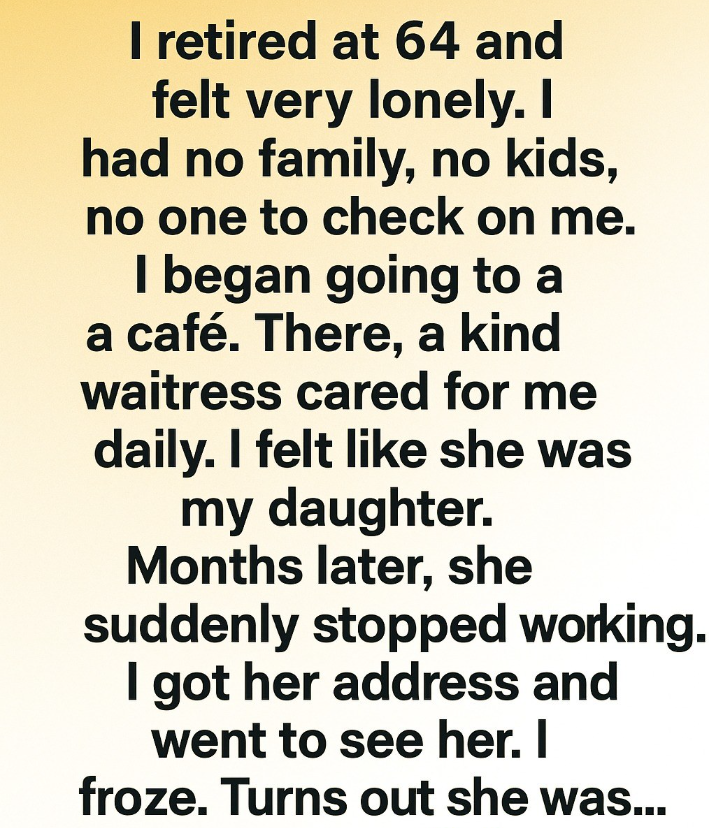
Retirement is frequently painted as a golden era of leisure, a time to finally unwind after decades of labor, to embrace hobbies long postponed, and to luxuriate in the freedom of unstructured days. But for many, the reality is starkly different. It is a transition not just from work to non-work, but from a life of embedded social networks to one of quiet, often unsettling solitude. At sixty-four, I stood on the threshold of this new chapter, expecting a sense of liberation and contentment. What I encountered instead was a silence so profound it was almost physically oppressive, echoing through the empty halls of my home and into every corner of my thoughts. With no meetings to attend, no deadlines to meet, no children to manage, and no spouse sharing the quiet, unremarkable moments of each day, I became acutely aware of my vulnerability to what researchers increasingly call “senior loneliness,” a condition linked to declining mental health, cognitive function, and even physical well-being. My universe, once bustling with routines and obligations, had contracted to the confines of four walls.
It was during this period of profound isolation that I stumbled, almost by accident, upon a modest café tucked in a quiet neighborhood. The establishment, unassuming at first glance, became for me an unexpected portal back into the world I had begun to lose touch with. The human interactions that once punctuated my workdays now seemed extraordinary, and it was Elena—the café’s young, empathetic waitress—who became the unlikely catalyst for my emotional awakening. Her presence was a steady constant in my days. She remembered not just my regular order of black coffee and a toasted bagel with cream cheese, but also the subtle shifts in my mood. When my shoulders slumped with the invisible weight of isolation, she would offer a gentle smile; when I chuckled at the slightest anecdote, she would respond with a warmth that suggested she recognized my need to be seen.
In my own loneliness, I began to unconsciously construct a narrative around our interactions. Elena became, in my mind, a surrogate daughter—a figure who could provide the emotional sustenance I had suddenly found myself lacking. Psychologists often refer to this as a coping mechanism among seniors who face “post-retirement social displacement,” projecting familial roles onto friendly figures as a substitute for the immediate family dynamics that are no longer daily constants. I understood, at some level, that my attachment was imagined, yet it was comforting, and I welcomed it. The café, once simply a place to drink coffee, became my anchor point in a world that had begun to feel unmoored.
The delicate balance of this routine, however, was abruptly disrupted. One morning, Elena simply wasn’t there. A week passed, then another, and the station she had manned with effortless charm remained empty. Anxiety, sharp and unfamiliar, began to gnaw at me. I found myself scouring the internet for any information, reaching out—subtly at first—to former colleagues of hers. Eventually, I located her address, and, propelled by a mixture of concern and a compulsion I barely recognized, I drove to the outskirts of town.
The building I arrived at was a far cry from the cheerful, bustling café environment. It was a weathered apartment complex, paint peeling, doors scuffed, an exterior that spoke of struggle rather than vibrancy. When the door opened, the woman standing before me seemed almost unrecognizable. Gone was the radiant energy that had become my lifeline; in its place were dark circles beneath her eyes and a polite, measured surprise at seeing me on her doorstep. The disparity between the bright, confident persona I had associated with Elena and the exhausted figure in front of me struck me with unexpected force.
Our ensuing conversation was one of profound human revelation. She invited me in, and we shared a cup of tea in the modest living room, a gesture that instantly bridged the gap between my perception of her and her actual reality. Elena revealed the immense “caregiver burden” she had been managing silently: her father had suffered a severe, debilitating health crisis that demanded round-the-clock attention. Unable to afford private home health services while working long shifts, she had stepped away from her job at the café to care for him. This was not a voluntary departure out of disinterest or ambition; it was an unavoidable, pressing family obligation. The enormity of this responsibility, carried in silence, reshaped the narrative I had constructed in my mind.
In that dimly lit apartment, the illusion I had carefully nurtured began to collapse. I had unconsciously cast Elena’s kindness as a therapeutic intervention for my own isolation, failing to recognize that she, too, was navigating a landscape of immense personal challenges. I realized that in my loneliness, I had inadvertently appropriated her generosity for my own emotional benefit. The realization brought a profound sense of humility, an acknowledgment of my own selfish assumptions. I apologized sincerely for my intrusion, recognizing the audacity of projecting my unmet emotional needs onto another human being.
What followed was a profound shift in our dynamic. No longer were we “server and patron,” confined to the roles society had implicitly assigned. Instead, we spoke openly as two individuals grappling with life’s complexities. I shared my fears—the creeping sense of irrelevance and invisibility that haunts many retirees. She shared her burdens—the crushing financial strain, the exhaustion of caring for a loved one, and the omnipresent anxiety that comes with medical debt. The conversation was raw, honest, and unmediated, offering insights that no professional counseling session could replicate. By the time I left her apartment, the existential weight that had shadowed me for months had lightened, replaced by the quiet grounding of genuine human connection.
From that day forward, my understanding of retirement and social engagement underwent a profound transformation. I recognized that sustainable happiness in later life isn’t about replacing the structures lost with retirement, nor about finding surrogate family members to fill emotional voids. Rather, it emerges from cultivating authentic relationships based on mutual respect, shared humanity, and voluntary engagement. Elena’s presence no longer represented a lifeline or a surrogate familial role; it became a genuine friendship, a voluntary bond rooted in mutual understanding rather than imagined necessity. We began to navigate a new rhythm: casual café visits, occasional phone calls, and supportive messages via email or text. In each interaction, the underlying principle was clear: connection exists best when it is freely chosen, not imposed.
I returned to the café regularly, but the experience had altered my perception entirely. The frantic search for human contact gave way to mindful engagement with everyone around me—the staff, the patrons, and even the fleeting strangers whose brief interactions were windows into their own stories. I became increasingly aware of the “hidden narratives” surrounding each individual, understanding that everyone carries struggles unseen by the casual observer. In time, I became an advocate for community-based senior support, encouraging peers to engage with others beyond the boundaries of their own isolation, fostering reciprocal care that strengthens social bonds.
The broader lessons were equally significant. Retirement often brings with it the stark realities of “aging in place,” including economic vulnerability, physical decline, and social contraction. While financial planning, estate management, and healthcare remain critical, they cannot replace the human need to be acknowledged and understood. Elena’s father eventually moved into a subsidized senior living facility, aided in part by my own professional advocacy, providing relief for her and allowing her to regain some semblance of stability. In return, she offered me something far more valuable than financial security or routine comfort: proof that meaningful human connection is a cornerstone of emotional longevity, an “anti-aging treatment” more effective than any investment or medical intervention.
Looking back, that December morning—the day I chose to step beyond the walls of my self-imposed isolation—remains a turning point in my life. I confronted the inherent self-centeredness that loneliness can provoke and embraced the vulnerability required for genuine friendship. I did not recover a family I thought I had lost; I discovered resilience, empathy, and a capacity for connection that had lain dormant.
Our story serves as a testament to the transformative power of meaningful relationships found in unexpected places. Retirement is not an end but a pivotal plot shift, introducing new characters, experiences, and insights. Loneliness, while challenging, is not permanent; it is a condition that can be mitigated by curiosity, courage, and the willingness to engage authentically with the world. My life now embodies quiet, consistent, and healthy connectivity, a richness that no career accolades or material accumulation could replicate. The simple proof of human kindness—the willingness to be seen, heard, and understood—has become the defining currency of my later years. Stepping beyond my comfort zone allowed me to discover that the story of life in retirement is far from finished; it is a chapter of reinvention, deep human bonds, and enduring emotional fulfillment.