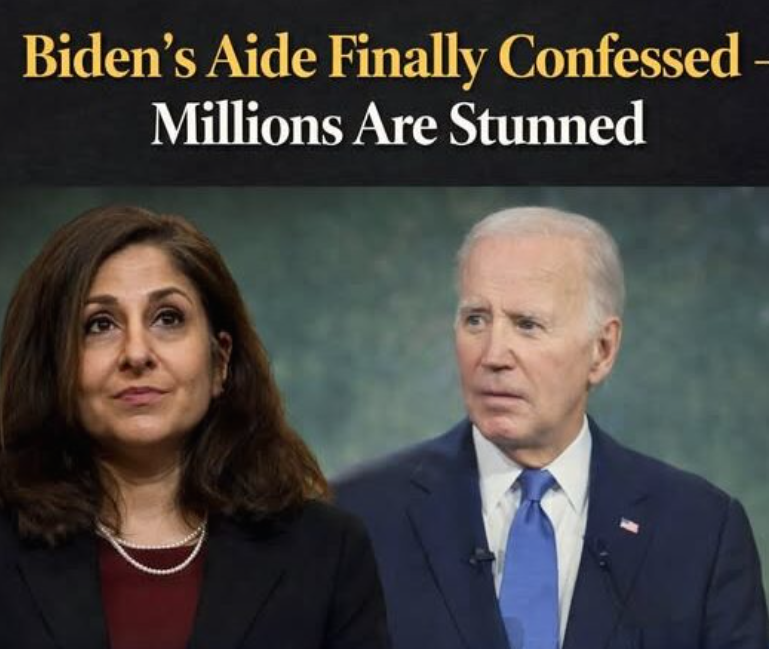
The halls of Congress often host political theater, but the recent House Oversight Committee hearing on presidential signature practices has struck at a core constitutional question. At issue is a tension between modern technology and 18th-century law: when a President “signs” a document, how much personal involvement is required to make it legally binding? The debate over the use of automated signature devices—autopens—during a previous administration has ignited discussion about executive power and the fragility of traditional norms in the digital age.
Autopens are not new to government. Designed to replicate a person’s signature with precision, they have been used in the White House since the mid-20th century for routine correspondence, holiday cards, and memorabilia. The current controversy stems from allegations that they were used for substantive policy documents—executive orders, pardons, and legislative approvals—traditionally requiring the President’s direct, hand-applied signature.
During testimony before the Committee on March 2, 2026, a former senior White House official described the “internal workflows” behind document management. The witness detailed a high-pressure environment where the pace of decision-making often outstripped the President’s physical presence, leading to coordination of signature processes that sometimes relied on autopens for major actions. This has prompted lawmakers to scrutinize the timing of these signatures, questioning whether the President was even nearby when certain laws were technically “signed.”
The constitutional stakes are significant. Article II, Section 7 of the U.S. Constitution states that a bill becomes law only when the President “shall sign it.” Legal experts argue that signing is a non-delegable act, and using an autopen for a substantive document without the President’s direct supervision could theoretically invalidate it. Yet a 2005 Department of Justice memo contended that a President could authorize a subordinate to use an autopen if explicit approval had been given. The current hearing is testing whether that approval was specific or had become an unvetted delegation.
The former President has responded with characteristic defiance, asserting that he personally authorized every pardon and executive order. He dismisses the focus on mechanical methods as pedantic, labeling it a “witch hunt” aimed at undermining his achievements through procedural technicalities.
For the Oversight Committee, however, procedure is central. Transparency in authorizing major policy is vital to maintaining the balance of power. If a President can delegate the physical act of signing, how far does that delegation extend? The current administration has requested further legal review, citing concerns that unclear paper trails could mask misconduct or “shadow governance” by unelected advisors.
The investigation has moved into a forensic phase. Lawmakers are collecting digital logs from autopen devices, which record the exact millisecond a signature is triggered. By comparing these logs with the President’s schedule and GPS data, the Committee hopes to create a precise timeline. If a document was signed in the White House while the President was miles away, its legality could face a historic Supreme Court challenge.
This debate reflects a broader 2026 societal question about authenticity in an age of automation. Like AI reshaping authorship in art, autopens challenge our understanding of authority. Is a signature proof of physical presence, or merely a symbol of consent? For the founders, the two were inseparable; today, technology has decoupled them.
As more witnesses testify, Washington remains tense. Both parties stress due process, yet remain divided: supporters see pragmatic efficiency; critics see a dangerous erosion of constitutional accountability. The hearing serves as a “silent warning” that democracy is only as strong as the procedures that protect it.
Ultimately, this hearing is about more than a mechanical pen. It is a reflection on whether the person elected by the people is truly the one making decisions. The outcome will determine if traditional norms of executive authority are upheld—or if the autopen becomes the new standard for a high-speed presidency. The legacy of an entire administration may hinge not on its policies, but on the precise, robotic motion of a pen in a quiet room while the world looked elsewhere.