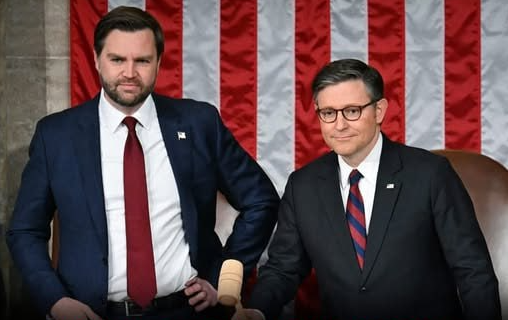
The vote wasn’t just decisive—it was a political thunderclap, one of those moments when Congress appeared united in rare, almost symbolic harmony. On that day, the House of Representatives moved decisively to address one of the most insidious abuses enabled by artificial intelligence: deepfake sexual exploitation. The final tally—409 in favor, 2 opposed—was more than a number; it was a statement that, at least on this issue, lawmakers could recognize the very real human cost of technological abuse. Yet behind the overwhelming majority lie stories that are almost impossible to fully comprehend: stolen faces, ruined reputations, shattered careers, relationships broken under the weight of false images, and lives nearly destroyed before anyone could intervene. These are the stories that AI often ignores, stories that aren’t in algorithms or data points but in the quiet despair of those whose identities were hijacked and weaponized.
Now, in the aftermath of this decisive vote, tech platforms face an uncompromising deadline, survivors gain new legal power, and the broader societal fight over privacy, consent, and the morality of emergent technology enters a critical new phase. For years, victims of deepfake pornography had little recourse. They were forced to endure the violation silently, trapped between humiliation and the helplessness of a digital world that treated their images as mere pixels. The Take It Down Act changes that calculus, drawing a firm, legal line in the sand. By criminalizing nonconsensual AI-generated sexual imagery and mandating that platforms remove flagged content within a strict 72-hour window, Congress is acknowledging the human wreckage left behind by this form of abuse—wreckage that often goes unnoticed until it is too late.
For survivors, the implications are profound. This is no longer a battle fought in isolation, shrouded in secrecy and shame. Now, they can bring legal action against those who produce, distribute, or host deepfake sexual content. Power, long hoarded by perpetrators and online platforms, is being redistributed back to the violated. The law affirms their humanity, recognizes their suffering, and grants them a tool to reclaim control over their identities. It is an acknowledgment that what happens online is not detached from real life; digital abuse has tangible, devastating consequences for the people whose likenesses are stolen.
The bipartisan support for the Take It Down Act adds another layer of significance. Lawmakers from both sides of the aisle, and even President Trump himself, recognized that AI-enabled sexual exploitation is not merely a partisan issue—it is a human issue. Fear of AI-driven abuse has transcended the usual political gridlock, uniting policymakers who might otherwise disagree on almost every other front. Yet while this law is a landmark step, it is not a panacea. Enforcement will be challenging, demanding both technical precision from platforms and legal diligence from the justice system. The ease with which AI can generate, modify, and disseminate images means that the battle against digital exploitation will be ongoing, and vigilance will be critical.
Even with enforcement challenges, the law provides something deeply essential to victims: validation. For too long, those whose faces were stolen and twisted into someone else’s fantasy were treated as invisible. They were assumed to be complicit, or at worst, mocked for being unable to stop what had happened to them. The Take It Down Act flips that narrative. It says, unequivocally, that their experience matters. That their suffering is real. That the platforms that hosted this content have a responsibility to act. It gives survivors a chance to be seen, to be heard, and to be restored. In a digital age where identity can be stolen with the click of a mouse, that restoration is priceless.
The legislation also signals a larger societal reckoning. Deepfake technology, like all AI tools, is neutral in itself; its danger lies in the hands of those who would use it for harm. The law acknowledges this, not by banning AI entirely, but by creating accountability for human actions. It forces both creators and distributors of harmful content to face consequences, reshaping the ethics of online behavior and challenging tech companies to reconsider their role in safeguarding the digital lives of users. This is not merely a legal intervention; it is a cultural statement about consent, dignity, and respect in an era of unprecedented technological power.
Moreover, the act highlights the intricate interplay between technology, law, and human psychology. AI can replicate appearances with horrifying accuracy, but it cannot replicate the humanity, the emotions, or the agency of those it exploits. By giving victims legal tools and enforcing platform accountability, the Take It Down Act restores some balance in an environment that had been overwhelmingly skewed toward the abuser. It sets a precedent that technology cannot be a shield for cruelty and that the digital world, for all its complexity, remains bound by human ethical standards.
In practical terms, the law’s requirements are stark: flagged content must be removed from platforms within 72 hours. This is not a suggestion, it is a legal obligation. For tech companies that operate on algorithms, ads, and user engagement, this will be a difficult adjustment, but it is necessary. The law is clear: human dignity outweighs platform convenience. For victims, the difference is profound. For once, the system is designed not to ignore them, not to shrug off their suffering, but to act decisively in their favor.
In conclusion, the Take It Down Act is more than a legislative victory; it is a societal milestone. It demonstrates that in the age of AI, where faces can be weaponized, and privacy violated with terrifying ease, there is still recourse, there is still justice, and there is still hope. The vote wasn’t close for a reason. It reflects an urgent recognition that technology, while powerful, must be wielded responsibly. And for the countless individuals whose identities have been stolen, distorted, and disseminated without consent, it is a long-overdue step toward restoration, accountability, and the reclamation of their dignity.