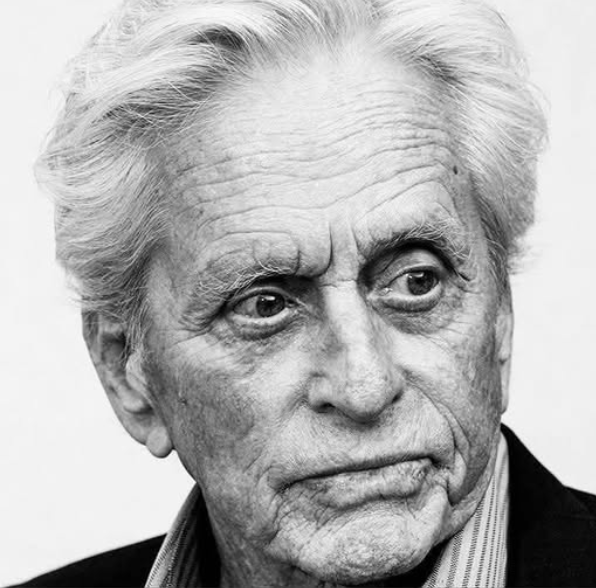
The golden age of Hollywood was built on towering figures—actors who felt less like performers and more like permanent fixtures of cultural imagination. Michael Douglas is unquestionably one of the last representatives of that rare elite. Yet as the industry continues to change and the pace of modern fame grows increasingly unforgiving, the actor who once embodied the ambition and intensity of the 1980s and 1990s is signaling a profound shift in his life. Today, the central question for Michael Douglas is no longer how high he can climb, but how gracefully he can step away from the peak he has occupied for more than fifty years.
As the son of the legendary Kirk Douglas, Michael began his career under the weight of an immense legacy. But he did not disappear in his father’s shadow; instead, he reshaped it, building a distinct, layered, and remarkably versatile artistic identity. Whether navigating the gritty streets of San Francisco or the predatory offices of Wall Street, Douglas became the embodiment of an American masculinity that was imperfect, ambitious, and deeply human. After decades of success, Oscar wins, box-office triumphs, and deeply personal battles with health and family under constant public scrutiny, he is now seriously considering a future in which the focus is no longer the camera, but his loved ones.
Those close to him describe Douglas as having entered a phase of quiet and meaningful reflection. At eighty-one years old, he is reassessing a life lived at relentless speed—roles that defined generations, years sacrificed to demanding production schedules, and private moments lost along the way. Retirement, once an unthinkable idea for someone with his work ethic, has become a real and almost tender possibility. He understands that while fame may endure, time does not.
For an actor of his stature, stepping away from the craft is never easy. Work has long been inseparable from his sense of self. Still, his recent reflections reveal a man who has found peace without the need for applause. He has often spoken about wanting to be more present for his wife, Catherine Zeta-Jones, and their children, realizing that the most important “final act” of his life is not a film role, but the everyday reality of home. The pursuit of another hit or trophy has given way to protecting the years he has left.
Douglas’s journey has been marked by rare resilience. He has faced advanced-stage cancer, complex family challenges, and the loss of his father, all while sustaining a career that bridged classic cinema and the era of streaming platforms. These experiences have given him the clarity to know when it is time to lower the curtain. He is no longer the young producer fighting to bring One Flew Over the Cuckoo’s Nest to life, but a statesman of the arts with nothing left to prove.
The painful decision to step back from acting stems from the tension between love for the craft and love for life itself. Douglas understands that every hour spent on a soundstage is an hour taken from family, friends, and the freedom to simply be himself. He seems determined to choose his own ending—whether through a quiet exit or a carefully selected final project. What stands out most is the intention and self-awareness behind the choice.
In many ways, Michael Douglas’s potential retirement reflects a broader trend among Hollywood’s aging legends. As the industry leans increasingly toward franchises and digital spectacle, actors known for character-driven drama are discovering that the most meaningful stories are the ones they are living. Douglas is embracing the beauty of simplicity—the calm of unstructured mornings, unhurried conversations, and the freedom to be Michael rather than “Michael Douglas.”
There is deep dignity in this approach. He is not being forced out by a lack of opportunity; he is choosing to step away while still sharp and with his legacy intact. He is giving his most valuable remaining years to the people who stood by him through illness, scandal, and triumph alike. It is an act of clarity and maturity.
As news of this transition spreads, the industry is already reflecting on the void his absence will create. From Fatal Attraction and Basic Instinct to The Kominsky Method and his work in the Marvel universe, Douglas has demonstrated a range few can rival. Yet for him, the focus is forward. He is preparing for a life guided by his own heart, with an audience made up of those who love him for who he is, not what he has achieved.
This transition is, in itself, a final and masterful performance in the art of living. Michael Douglas is showing that true success is not staying at the top forever, but knowing when to step down, appreciate the view, and return to the people waiting below. For the first time, the lights are dimmed, the cameras are off—and he is finally home.