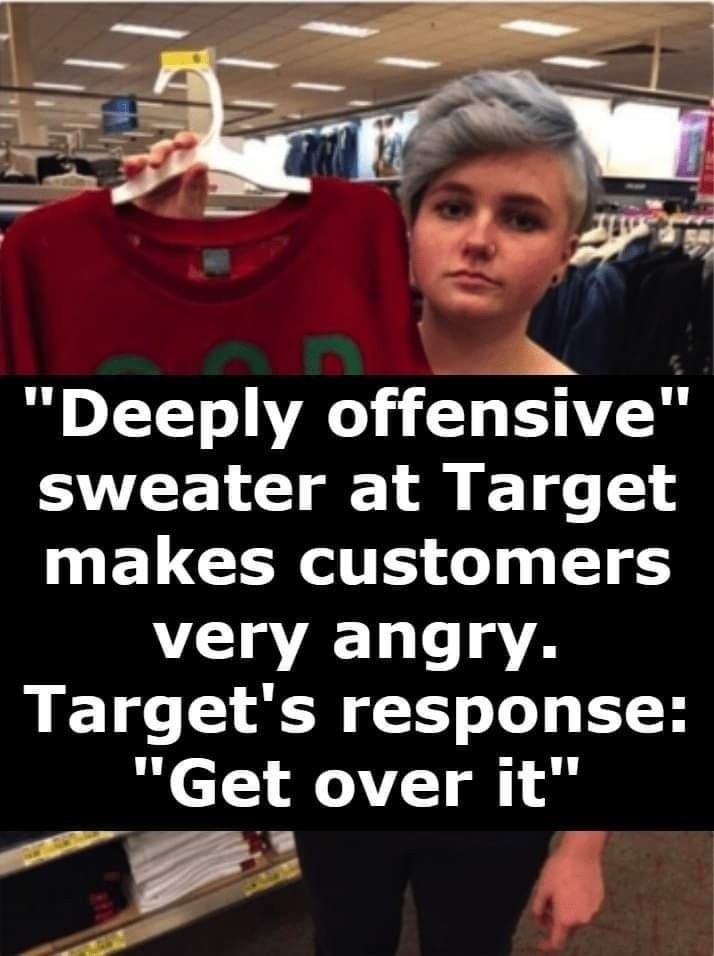
In the contemporary retail landscape, the products lining the shelves of major corporations are under more scrutiny than ever before. As consumers grow more socially aware and conversations around inclusivity, representation, and mental health move into the mainstream, even the smallest design choices can ignite widespread debate. What once might have passed unnoticed as a clever seasonal joke can now become a focal point for national discussion, amplified by social media and shared values. This reality recently unfolded at Target, one of the United States’ largest and most influential retailers, after a holiday-themed t-shirt sparked a viral conversation about where the line lies between commercial humor and respect for lived mental health experiences.
The controversy began when a shopper named Reign Murphy came across a shirt in Target’s seasonal section emblazoned with the phrase “OCD: Obsessive Christmas Disorder.” At first glance, the slogan was clearly meant to be playful, combining holiday enthusiasm with a familiar acronym. However, Murphy immediately recognized that “OCD” is not merely shorthand for being neat or festive—it is a clinical diagnosis: Obsessive-Compulsive Disorder. Feeling that the shirt reduced a serious and often misunderstood condition to a seasonal punchline, Murphy photographed the garment and shared it online. In her post, she explained why the design felt hurtful, emphasizing that OCD is not a quirky preference for order or decoration, but a chronic mental health disorder that can involve distressing intrusive thoughts, compulsive behaviors, and significant disruption to everyday life, relationships, and employment.
Once shared, Murphy’s post quickly gained traction, acting as a digital spark that ignited a broader conversation about language, disability, and cultural responsibility. Thousands of users weighed in, and the responses revealed just how complex and emotionally charged the topic had become. Many people—particularly those living with OCD or advocating for mental health awareness—voiced strong agreement with Murphy. They argued that casual misuse of diagnostic terms reinforces long-standing misconceptions, making it harder for those affected to be taken seriously. To them, slogans like this contribute to a culture that downplays suffering and frames mental illness as a joke, undermining years of advocacy aimed at promoting understanding and compassion.
At the same time, the discussion was far from one-sided. A number of individuals who themselves live with OCD offered a different perspective. Some said they found the shirt amusing or relatable, interpreting it as a lighthearted way to acknowledge their own tendencies during the hectic holiday season. For these voices, humor was not dismissive but empowering—a means of reclaiming a diagnosis that otherwise carries stigma. This divergence of opinion highlighted one of the most difficult challenges in modern culture: recognizing that lived experiences are not universal, even among people who share the same diagnosis, and that a single message can resonate in vastly different ways.
As the debate continued to grow, Target responded through spokesperson Jessica Carlson. The company acknowledged that the product had caused discomfort for some customers and expressed regret for that reaction. However, Target also stated that the shirt was designed with lighthearted intent and not meant to mock or diminish mental health conditions. Ultimately, the retailer chose to keep the item in its seasonal assortment, a decision that underscored the delicate balancing act large corporations face. With millions of customers spanning diverse backgrounds, beliefs, and sensitivities, retailers must constantly navigate where to draw the line between broad appeal and social responsibility.
In the end, the “OCD Christmas” shirt controversy became more than a dispute over a single piece of clothing. It evolved into a case study on the power of consumer voices in the digital age and the shifting expectations placed on corporations. It illustrated how everyday products can carry cultural weight and how public dialogue—whether contentious or constructive—can drive awareness and reflection. Whether viewed as a harmless holiday joke or a problematic oversimplification, the debate itself reflects a society increasingly willing to question language, challenge assumptions, and advocate for dignity. In that sense, the conversation may be just as important as the product that sparked it, reminding us that progress often begins with discomfort and dialogue rather than silence.