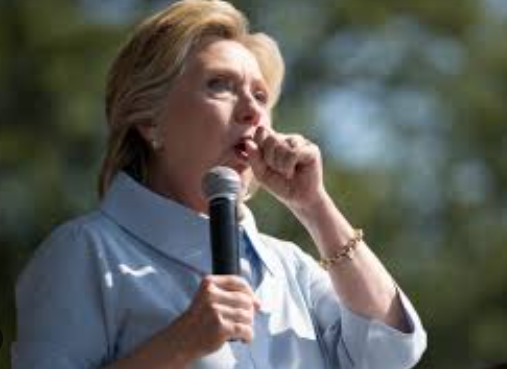
The panic spread in minutes. One single post, one fleeting rumor, and suddenly millions of people were convinced that Hillary Clinton had been rushed to a hospital in New York. Social media feeds erupted with speculation; threads spun out of control; comment sections became battlegrounds of fear, doubt, and partisan triumphalism. Political opponents quietly celebrated in private, their glee masked behind careful diplomacy, while some news outlets teetered on the edge of amplifying the story for clicks, hesitant to confirm details yet unwilling to ignore the viral momentum. Amid the chaos, a subtle truth remained almost invisible: the original reporter, Tara Rosenblum, quietly walked back the statement, issuing a correction that, in the digital maelstrom, most users never even saw.
What actually occurred was a textbook demonstration of how fragile—and how combustible—the modern information environment has become. Rosenblum’s initial wording, imprecise and hastily typed, was interpreted by thousands, then millions, as a confirmation of a severe medical emergency. Algorithms, designed to prioritize engagement over accuracy, amplified it instantly. Fear spread faster than fact-checks, and partisan narratives seized on the opportunity, reviving old conspiracies about Clinton’s health, her stamina, and her supposed vulnerabilities. Within hours, the initial story had metastasized, crossing platforms and borders, moving from Twitter to Instagram, to chat groups, to blogs, to international news feeds, creating a global ripple of anxiety and speculation. Yet when Rosenblum clarified: Clinton had not been admitted, she was feeling well, and she would continue with her public schedule as planned, the correction barely made a dent. Few saw it. Fewer believed it. The narrative of crisis had already solidified in the collective imagination.
Seen in context, the absurdity of the panic becomes even clearer. Clinton’s recent appearance at the Doha Forum in 2025 provides a stark contrast: there, she participated in extensive panel discussions, gave multiple interviews, and engaged with journalists and international leaders in a sustained and highly public schedule. She was alert, coherent, and energetic—far removed from the image of sudden collapse painted in the viral posts. The episode serves less as a story about Hillary Clinton’s health and more as an indictment of the current media ecosystem: one in which corrections and clarifications rarely travel as far, as fast, or as widely as the original, misleading assertion. In this environment, a routine medical check-up, a minor consultation, or even an innocent social misstep can be twisted, amplified, and transformed into a supposed crisis in a single news cycle.
Moreover, the incident reveals something deeper about human psychology and the architecture of social media itself. Fear and suspicion are inherently more shareable than reassurance. The first interpretation of Rosenblum’s words triggered emotional engagement—panic, outrage, anxiety—which propelled it beyond the factual correction that followed. Users, consciously or unconsciously, cherry-picked the narrative that fit their expectations or biases, reinforcing echo chambers and increasing polarization. Even casual observers, scrolling through the feeds of friends or political pages, were drawn into a frenzy of imagined consequences, generating a feedback loop in which rumor became reality in the minds of millions.
In hindsight, this viral misfire is emblematic of a modern challenge: no matter the subject—political figures, celebrities, or public events—the velocity and virality of digital misinformation can outpace the deliberate and careful mechanisms designed to maintain truth. It exposes the fragility of trust, the ease with which perception can diverge from reality, and the increasingly tenuous control any individual, journalist, or institution has over the narrative once it leaves their hands.
Ultimately, the “Hillary Clinton hospitalization panic” is a cautionary tale. It is a mirror reflecting our collective vulnerability to instant, sensationalized stories, and our relative incapacity to absorb corrective information with the same urgency. In the end, it reminds us that in the digital age, facts are fragile, corrections are weak, and a single imprecise statement can spark a firestorm that no one—not reporters, not public figures, and not even the truth itself—can immediately extinguish.