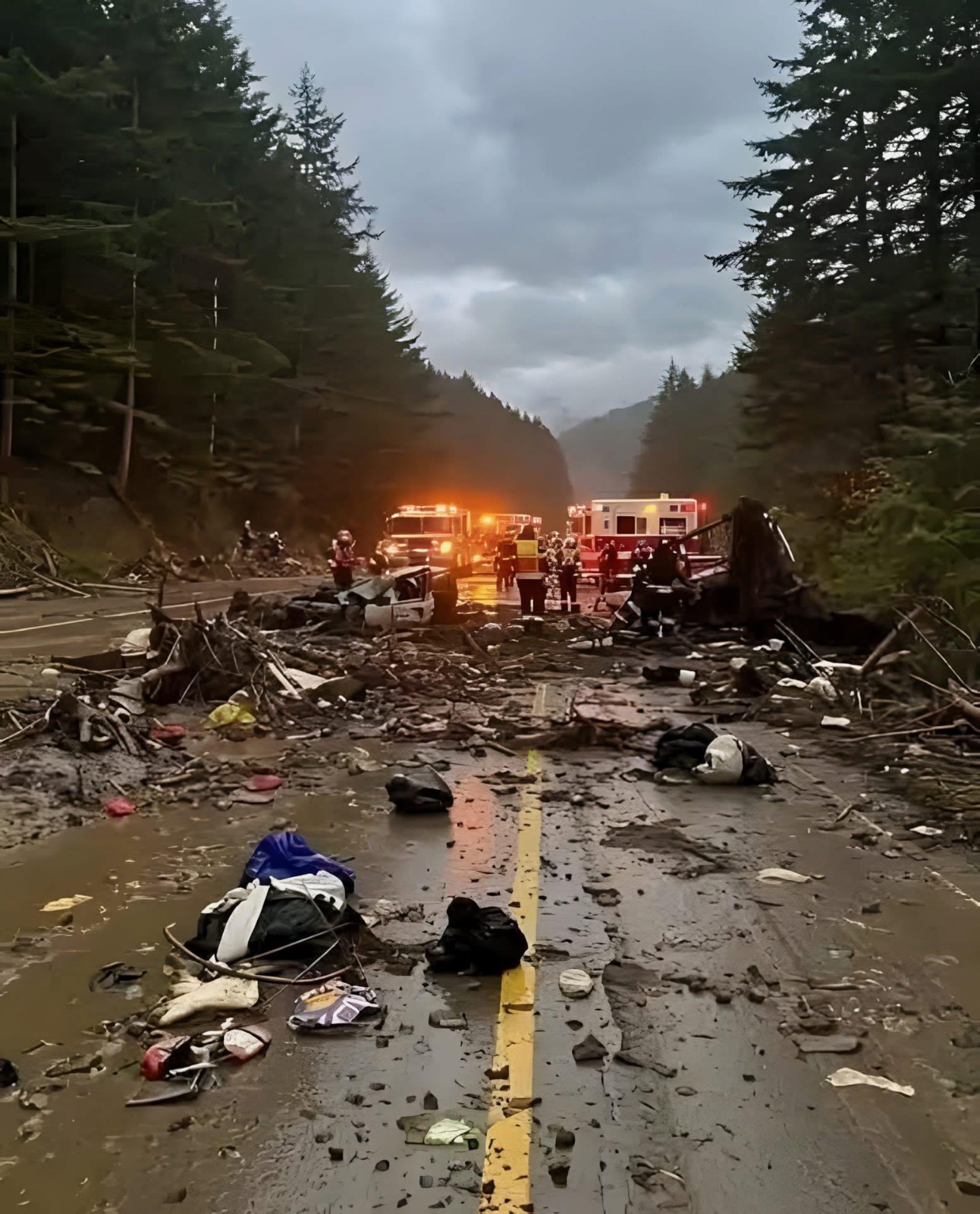
What began as a routine drive along one of British Columbia’s most scenic highways quickly turned into tragedy, leaving families mourning and an entire region in shock. On November 15, a massive mudslide swept across Highway 99 near Lillooet, turning a familiar mountain route into a deadly trap in mere moments. By the time the dust and debris settled, four people had lost their lives, one remained missing, and authorities were forced to face the grim reality that survival in such conditions was unlikely.
Highway 99 is more than just a road—it is a vital link connecting communities, used daily by commuters, transport vehicles, tourists, and locals familiar with every curve. On that day, however, heavy rainfall and unstable terrain combined to trigger a catastrophic collapse. Tons of mud, rock, and debris cascaded down the mountainside with overwhelming speed and force.
Emergency calls flooded in almost immediately. Witnesses described vehicles being swept away, some pushed off the road, others buried beneath thick layers of mud and rock. First responders raced to the scene, but the remote location and ongoing instability made access extremely dangerous. Rescue crews faced the constant threat of secondary slides, forcing them to balance urgency with their own safety.
Over the following days, search and recovery operations continued around the clock. Crews painstakingly navigated unstable ground and debris by hand, hoping to find survivors. Ultimately, four victims—a woman and three men—were recovered, each loss sending waves of grief through families and communities. The fifth person remained missing, their identity kept private as authorities continued the search under hazardous conditions.
As time passed and the terrain remained volatile, officials had to make a heartbreaking decision. Experts warned that continuing the search could put rescuers in grave danger. After careful evaluation, authorities suspended active search efforts, a stark reminder that natural disasters often overpower even the most determined human efforts.
Highway 99 was closed shortly afterward. Engineers, geologists, and safety officials began assessing the area, monitoring slopes, and evaluating the risk of further slides. Sections of the highway were deemed unsafe, and clearing the debris and reopening the road would take time.
For the families of the victims, the disaster brought unimaginable pain. What should have been a routine journey turned into a life-altering tragedy. Loved ones were left grappling with shock, unanswered questions, and the sudden absence of those who had simply set out to travel a familiar road. Local authorities offered support and resources as the community mourned together.
Residents of nearby towns felt the impact deeply. Lillooet and surrounding areas were accustomed to challenging geography and harsh weather, but the scale of this event shook them profoundly. Conversations turned somber as people reflected on how quickly conditions can change in mountainous regions, and how vulnerable even experienced travelers can be when nature strikes without warning.
The disaster also sparked broader discussions about infrastructure, climate patterns, and preparedness. Experts noted that increased rainfall, shifting weather systems, and unstable slopes are growing concerns across the region. While investigations into the specific causes of the slide continue, it is clear that extreme weather played a significant role in triggering this deadly event.
For first responders, the experience left a lasting mark. Search and rescue teams, police officers, firefighters, and medical personnel endured emotionally and physically exhausting conditions. Many quietly acknowledged the weight of the work—knowing families were awaiting answers while navigating the dangers of unstable terrain. Their dedication, even under threat, earned deep respect from the community.
As officials continue evaluating the area, the highway remains closed, and travelers are advised to avoid the region. Detours have disrupted daily life and commerce, but the precautions are necessary. The memory of what happened on that stretch of road is still fresh, and public safety remains the top priority.
Beyond statistics and official statements, the Highway 99 mudslide is a deeply human tragedy. Each life lost represents a story abruptly cut short, families forever changed, and futures that will never unfold as planned. The missing individual, whose search was halted, remains a painful reminder of nature’s unforgiving power.
In the aftermath, the community has come together in quiet solidarity. Vigils, condolences, and shared moments of remembrance reflect a collective grief and a shared understanding of the risks life in mountainous regions entails.
As recovery and assessment continue, the disaster near Lillooet will not be forgotten. Even ordinary journeys can be interrupted by forces far beyond human control. Highway 99 will eventually reopen, traffic will return, and routines will resume—but the memory of November 15 will remain etched in the region’s history, honoring those lost and reminding all travelers of nature’s immense and unpredictable power.